LANDSCAPE · E0033
武陵源:一片由石头长成的森林
Wulingyuan: A Forest Made of Stone
WORD BY WORD
进入逐词听读模式
顶部配图随进度轮播,未读文字为白色,读到后逐词变黄。
本期用英语介绍张家界武陵源,从石英砂岩峰柱如何形成,讲到云雾森林、谷底与高处的观看方式、土家织锦和世界遗产保护。
THREE THINGS TO KNOW
- 01
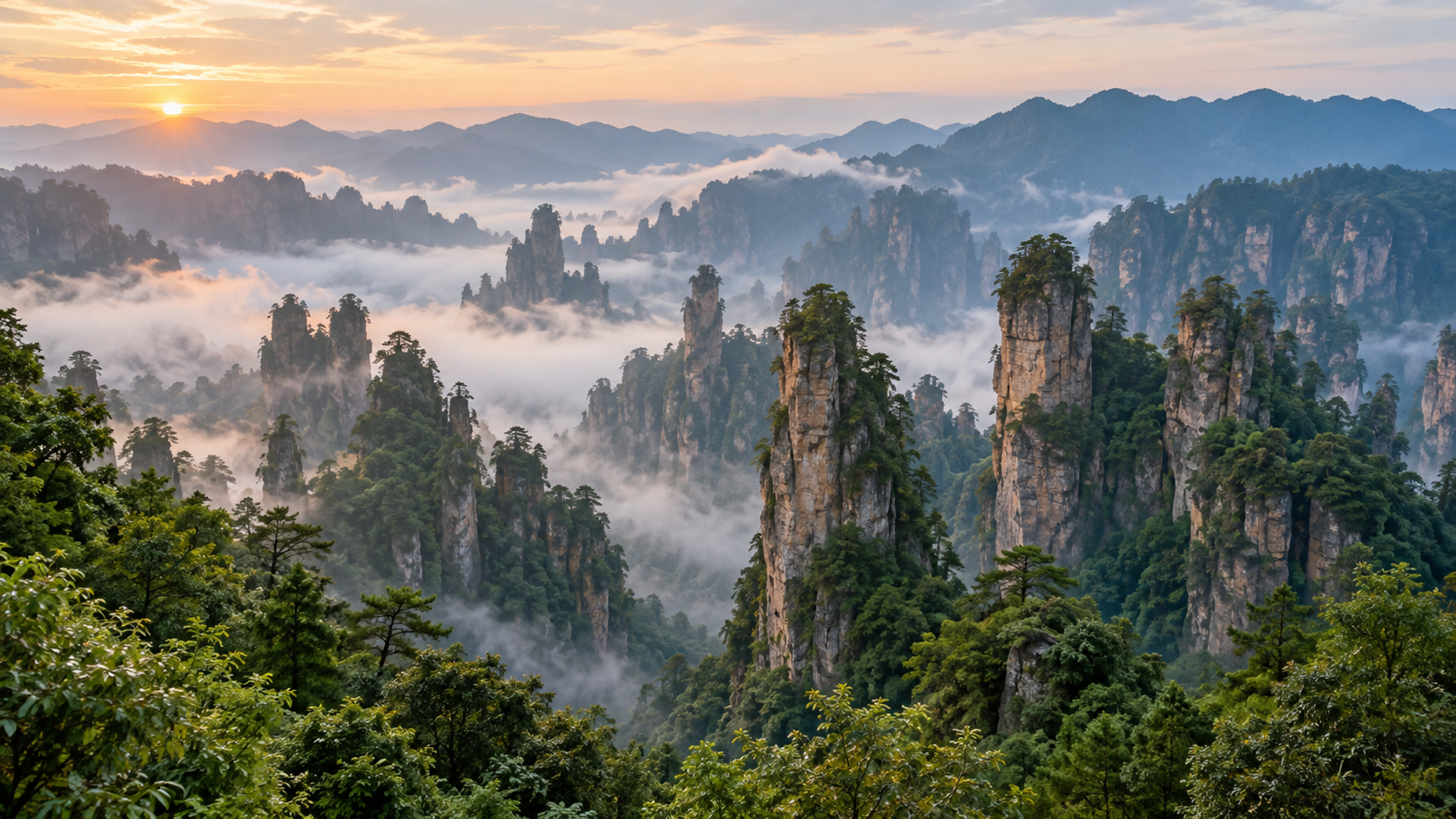
武陵源世界遗产地位于湖南,面积约26400公顷,拥有3000多座狭长的石英砂岩柱峰,其中许多超过200米,并于1992年列入《世界遗产名录》。
- 02
张家界地貌以近水平的泥盆纪石英砂岩为母岩,流水侵蚀、风化和重力崩塌沿垂直裂隙长期作用,形成峰墙、峰林和独立峰柱。
- 03
武陵源的砂岩柱峰与峡谷、溪流、池潭、瀑布、洞穴和茂密阔叶林共同构成景观,频繁出现的云雾进一步强化了其视觉特征。
BILINGUAL TRANSCRIPT
双语全文
Wulingyuan is one of the few places where a mountain range seems to rise as a forest of stone.
武陵源是少数让整片山地仿佛化作石头森林拔地而起的地方。
In northwestern Hunan, more than 3,000 narrow quartz sandstone pillars and peaks stand across an area of about 26,400 hectares.
在湖南西北部,3000多座狭长的石英砂岩柱峰分布在约26400公顷的区域内。
Many are over 200 metres high, and their number and scale make Wulingyuan known around the world.
其中许多超过200米,庞大的数量与尺度让武陵源闻名世界。
This view was not made in a single dramatic moment.
这样的景象并不是在某个剧烈瞬间形成的。
The rock layers lie nearly flat, but deep vertical cracks run through them.
这里的岩层近乎水平,内部却分布着很深的垂直裂隙。
Over a very long time, rain and streams entered the cracks, while weathering and gravity removed weaker rock.
在漫长岁月里,雨水与溪流进入裂隙,风化和重力也不断带走较脆弱的岩石。
By wearing away material around harder blocks, these forces slowly left separate walls, towers, and pillars behind.
这些力量不断磨去坚硬岩块周围的物质,逐渐留下彼此分开的石墙、石塔与峰柱。
What matters is not only the strength of the sandstone, but also the patient work of water.
关键不仅在于砂岩本身的坚硬,也在于流水耐心而长久的塑造。
The forest is not separate from the stone; together, they form one landscape.
森林与石峰并非彼此分离,它们共同组成了同一片景观。
Broadleaf trees cover the slopes, while streams, pools, waterfalls, ravines, and caves fill the spaces between the peaks.
阔叶林覆盖山坡,溪流、池潭、瀑布、沟壑与洞穴则分布在群峰之间。
Mist and clouds often move through this green landscape, hiding some pillars and revealing others.
云雾常常在这片绿色景观间流动,让一些峰柱隐去,又让另一些显现。
As a result, the same view can feel solid one minute and almost weightless the next.
于是,同一片景色前一刻还厚重坚实,下一刻却仿佛失去了重量。
To understand Wulingyuan, it helps to see it from more than one height.
要读懂武陵源,最好从不同高度去看它。
Along Jinbian Stream, walkers move through a narrow valley, with steep pillars rising on both sides.
沿着金鞭溪前行,游人穿过狭窄谷地,陡峭峰柱从两侧高高升起。
From high areas such as Huangshizhai or Yuanjiajie, visitors see the stone forest spread into the distance.
到了黄石寨或袁家界等高处,游人又能看到石峰之林向远方铺展开去。
Seen from below, each pillar feels like a wall; seen from above, hundreds of pillars become a pattern.
从谷底仰望,每根峰柱都像一面高墙;从高处远望,成百上千的峰柱又组成了完整的图案。
Local culture adds another pattern to the journey.
当地文化又为这段旅程增添了另一种图案。
Wulingyuan has Tujia villages, and Tujia weaving, called Xilankapu, keeps traditional designs alive through coloured threads.
武陵源有土家族村落,名为“西兰卡普”的土家织锦用彩色丝线延续着传统纹样。
It reminds us that this landscape is also a home, where natural forms and human skill share the same mountains.
它提醒我们,这片风景也是人们生活的家园,自然形态与人的技艺共存于同一片山地。
Yet beauty brings responsibility, especially when many people visit narrow paths and viewing areas.
然而,美景也意味着责任,尤其是在许多人共同走过狭窄步道与观景区时。
UNESCO notes that visitor numbers, seasons, and activities are managed to balance heritage protection with local life.
联合国教科文组织指出,当地对游客数量、季节分布和活动进行管理,以平衡遗产保护与地方生活。
By staying on paths and respecting local rules, each traveler helps protect both the rocks and the living culture around them.
沿规定步道行走并尊重当地规则,每位旅行者都能为保护岩石与周围鲜活的文化尽一份力。
Wulingyuan does more than offer a famous view; it shows how water, stone, mist, forest, and people can shape one unforgettable place together.
武陵源带来的不只是一幅著名风景,它还让我们看到水、石、云雾、森林与人如何共同塑造一个难忘之地。