LANDSCAPE · E0043
长江三峡:一条江的三种节奏
The Three Gorges: Three Rhythms on One River
WORD BY WORD
进入逐词听读模式
顶部配图随进度轮播,未读文字为白色,读到后逐词变黄。
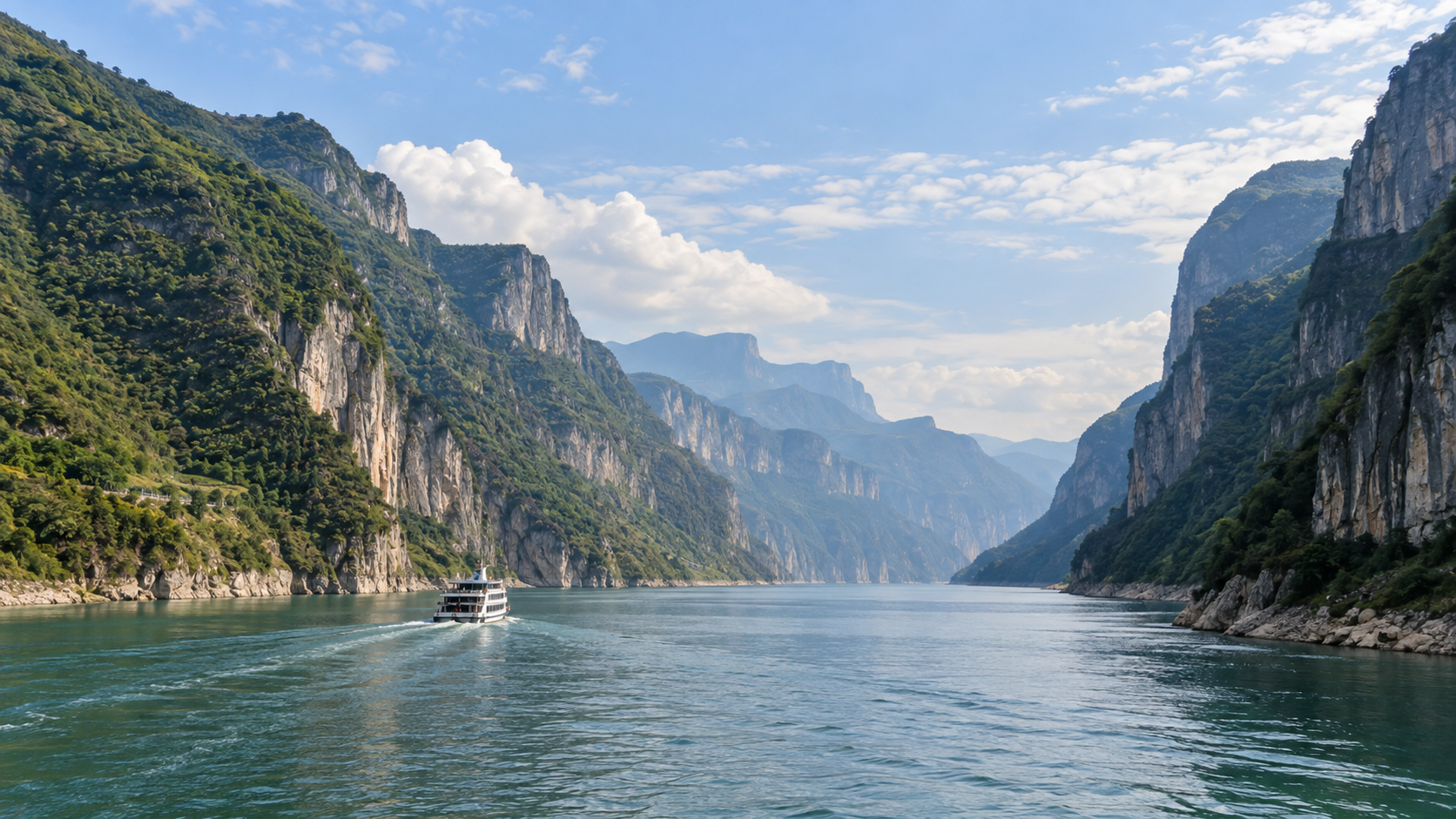
从瞿塘峡的骤然收紧、巫峡的云峰回转和西陵峡的险滩记忆出发,沿一条千年水路走进李白诗中的轻舟,再看水库、船闸、移民与文物保护如何改变峡江尺度。
THREE THINGS TO KNOW
- 01
长江三峡西起重庆奉节白帝城,东至湖北宜昌南津关,由瞿塘峡、巫峡、西陵峡及其间宽谷组成,峡区约193千米。
- 02
瞿塘峡长约8千米,是三峡中最短的一段,以短促陡峻的峡谷景观著称。
- 03
巫峡长约42千米,以幽深、连续的峡谷和山峰景观著称。
BILINGUAL TRANSCRIPT
双语全文
-
The Three Gorges does more than show high cliffs; it lets us feel one river change rhythm three times.
穿行长江三峡,不只是观看高耸的崖壁,更是在感受一条江如何三次改变自己的节奏。
-
Travelling east from Baidicheng, a boat enters Qutang Gorge, then Wu Gorge, and finally Xiling Gorge.
从白帝城乘船向东,先进入瞿塘峡,再经过巫峡,最后来到西陵峡。
-
Qutang is only about eight kilometres long, yet its entrance feels remarkably sudden.
瞿塘峡只有大约八千米长,正因为路程短,它的入口才显得更加突然。
-
At Kuimen, steep mountains close in, squeezing the wide Yangtze through a narrow gate.
在夔门,两岸陡峭山体彼此逼近,把宽阔的长江收进一道窄门。
-
As the boat advances, the sky seems smaller and the rock walls rise faster.
船向前行,天空仿佛变小,岩壁仿佛升得更快。
-
What gives Qutang power is not its length, but this sudden closing-in.
赋予瞿塘峡力量的不是它的长度,而是山水骤然收紧的冲击。
-
Wu Gorge stretches about forty-two kilometres through a longer, quieter line of mountains.
巫峡绵延约四十二千米,带着江水穿过一道更长、更幽静的山岭。
-
Here the river bends while peaks appear, disappear, and return through mist.
这里的航道不断转弯,群峰则在云雾中出现、隐去,又再次归来。
-
If Qutang is a stone gate, Wu Gorge is a long conversation between water and mountains.
如果说瞿塘峡像一道石门,那么巫峡就像水与山之间一场漫长的对话。
-
Xiling, about sixty-six kilometres long, is the longest and was historically known for rough shoals and fast water.
西陵峡长约六十六千米,是三峡中最长的一段,历史上以险滩和急流闻名。
-
Boatmen once read each current and rock, while difficult places needed towpaths, guides, and repeated repair.
过去,船工必须仔细判断每一道水流和礁石,艰险河段还需要纤道、当地引航与反复整治。
-
The gorges therefore gave each boat three movements: a squeeze, a winding passage, and a final test.
于是,三段峡谷给船带来三种动作:迅速收紧、曲折穿行,以及最后一段艰难考验。
-
Yet danger did not close the route; for centuries, it linked the southwest with regions farther downriver.
然而,危险并没有封闭这条通道;千百年来,这条水路把西南与长江下游更远的地区连接起来。
-
It carried goods and travellers, but also stories, songs, and poems between its shores.
它运送货物和旅人,也让故事、歌声与诗篇从一岸流向另一岸。
-
Li Bai's poem Leaving Baidi in the Morning turns a light boat among endless mountains into an image of freedom.
李白的《早发白帝城》把轻舟穿过万重山,写成了自由的意象。
-
Rather than giving a timetable, the poem shows how a river journey can shape imagination.
这首诗不是在提供一张时间表,而是在告诉我们,一次江上旅行可以怎样深刻地塑造想象。
-
A boat on this route today reads a river whose scale has changed.
今天,同一条航线上的船,读到的已是一条尺度发生变化的江。
-
After the reservoir began filling in 2003, much of its water became deeper and wider, and the current slowed.
2003年水库开始蓄水后,库区许多河段水更深、江面更宽,流速也更缓。
-
At the dam, five lock chambers raise or lower ships step by step across 113 metres.
在大坝处,五级船闸让船只逐级升降,跨越总计一百一十三米的水位差。
-
By managing the passage, modern engineering has changed the size of ships that travel here and how they move.
现代工程把危险航段变成可管理的通道,也改变了能够在此航行的船舶尺度与通行方式。
-
That change carried a human cost: more than a million people relocated, while historic sites were moved or protected under water.
这种变化也带来了人的代价:超过一百万人迁离故土,一些历史遗存被迁建,另一些则在水下得到保护。
-
What matters is seeing both scales: old knowledge of every bend and modern power that reshaped the route.
重要的是同时看见两种尺度:过去对每一道江湾的细密经验,以及今天重塑整条航线的巨大力量。
-
Through the Three Gorges, we travel not only between three landscapes, but also between ancient skill, poetic memory, and a changed river.
穿过长江三峡,我们经过的不只是三种不同的峡谷,也是古老技艺、诗歌记忆与一条已经改变的江。