CITY NOTES · E0008
西安:生活在古都格局之中
Xi'an: Living Inside an Ancient Capital
WORD BY WORD
进入逐词听读模式
顶部配图随进度轮播,未读文字为白色,读到后逐词变黄。
用约三分钟英语认识西安独一无二的城市辨识度:城墙和棋盘式路网如何影响今天的生活,汉唐长安如何连接丝路,北院门回坊与面食又如何让历史成为可以走进、听见和品尝的日常。
THREE THINGS TO KNOW
- 01
The present Xi'an City Wall was built from 1374 to 1378 on foundations connected with the Tang imperial city, and it forms a rectangle around the historic center.
- 02
Xi'an's protected historic pattern includes the wall, a chessboard street network, three historic axes and view corridors from the Bell Tower to the main gates.
- 03
Sui Daxing and Tang Chang'an used a broad central avenue and an east-west balanced plan, with large market areas and an ordered street system.
BILINGUAL TRANSCRIPT
双语全文
-
Welcome to Xi'an, a city where ancient walls still guide the rhythm of daily life.
欢迎来到西安。在这座城市,古老的城墙仍在引导日常生活的节奏。
-
More than a background for photographs, its old center keeps a clear order of gates, streets, and directions.
它的老城不只是照片里的背景,还保留着城门、街道与方向组成的清晰秩序。
-
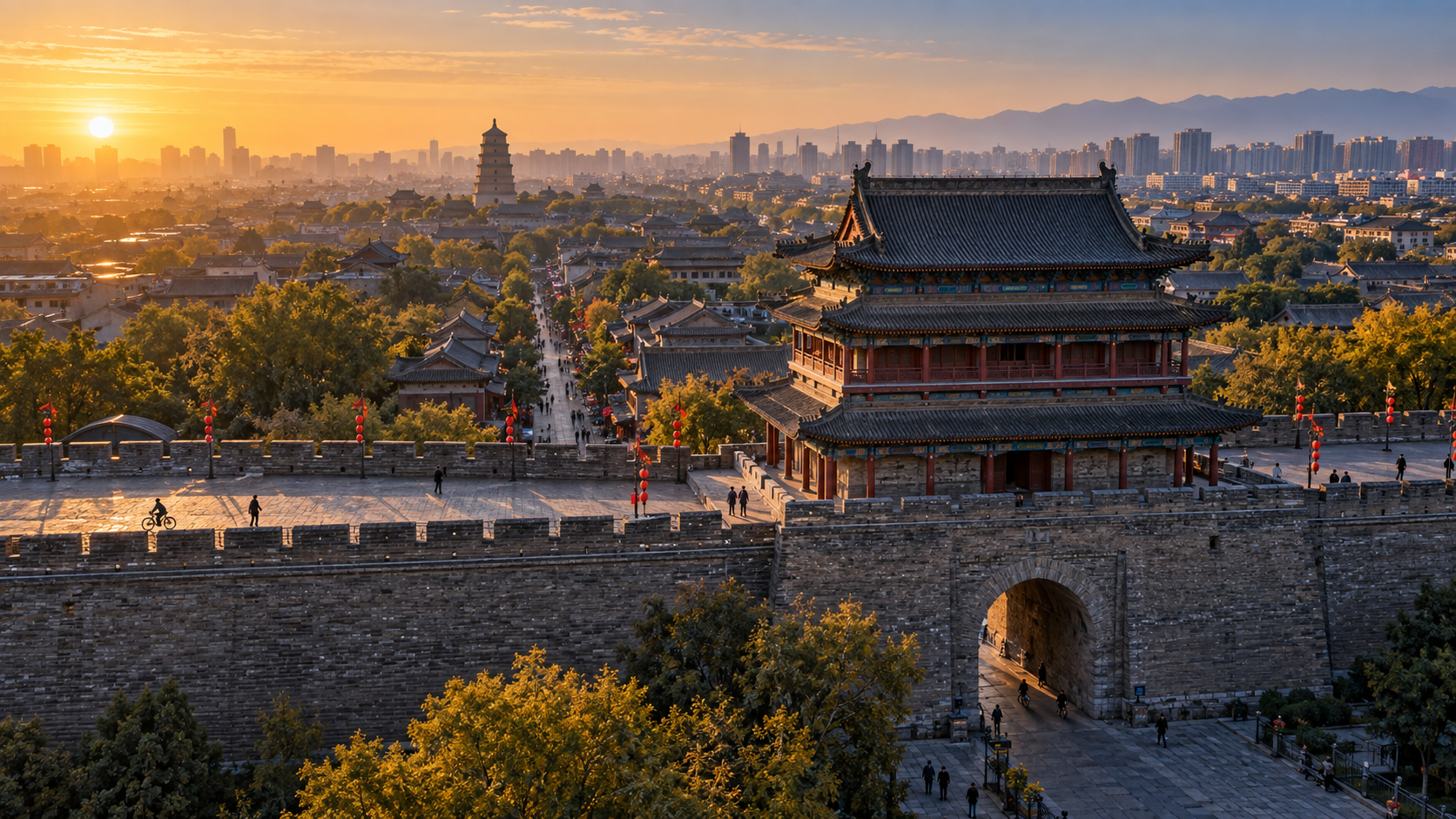
The present wall was built in the Ming Dynasty, forming a strong rectangle around the historic center.
现存城墙建于明代,以坚固的长方形围合历史城区。
-
Inside it, main roads cross like a chessboard, and the Bell Tower stands where four great streets meet.
城墙以内,主要道路如棋盘般交错,钟楼立在四条大街交会之处。
-
This order carries an older memory, because Sui and Tang Chang'an was planned around a broad central avenue and balanced eastern and western parts.
这种秩序承载着更早的记忆,因为隋唐长安围绕宽阔的中轴大道布局,东西两部分彼此平衡。
-
Even today, a simple trip across town can still be described through gates, walls, and the old center.
即使在今天,一次普通的城市出行,仍可以通过城门、城墙和老城中心来说明方向。
-
History in Xi'an therefore does more than fill museums; it helps people understand where they are.
因此,西安的历史不只存在于博物馆中,它还帮助人们理解自己身在何处。
-
Long before the present city took shape, Chang'an was a central capital of the Han and Tang dynasties and a key point on the Silk Road.
早在今天的城市形成之前,长安就是汉唐时期的重要都城,也是丝绸之路上的关键节点。
-
The Chang'an-Tianshan route reached across about five thousand kilometers, linking the capital with lands deep in Central Asia.
长安—天山廊道绵延约五千公里,把都城与中亚深处的土地连接起来。
-
Traders carried silk and other goods, but their journeys also moved music, beliefs, languages, and ways of cooking.
商人运送丝绸和其他货物,而他们的旅程也带动了音乐、信仰、语言与烹饪方式的交流。
-
That long exchange helps explain why Xi'an can feel deeply rooted and open to difference at the same time.
这段长久的交流说明了为什么西安既有深厚根基,也能同时接纳差异。
-
Around Beiyuanmen, the historic Muslim Quarter remains a neighborhood as well as a busy destination.
在北院门一带,历史悠久的回坊既是生活社区,也是热闹的城市去处。
-
Mosques, family shops, narrow lanes, and food stands show that cultural variety is part of ordinary urban life.
清真寺、家庭店铺、狭窄巷道和小吃摊表明,文化的多样性本就是城市日常的一部分。
-
Here, history is not silent: it rises with kitchen steam, friendly talk, and the sound of people sharing tables.
在这里,历史并不沉默;它随着厨房蒸汽、亲切交谈和人们共桌的声音一同升起。
-
Xi'an's flour-based food also tells a story about the dry northwest and the skill needed to turn simple grain into satisfying meals.
西安以面粉为主的饮食,也讲述着干燥西北地区的环境,以及人们把普通粮食做成饱足饭食的手艺。
-
A cook pulls wide noodles, a diner breaks bread into paomo soup, and warm roujiamo passes quickly across a counter.
厨师扯开宽面,食客把饼掰进泡馍汤里,热乎的肉夹馍从柜台上快速递出。
-
These foods matter because they turn geography and memory into something people can taste every day.
这些食物之所以重要,是因为它们把地理与记忆变成了人们每天都能尝到的味道。
-
After sunset, walkers and cyclists move along the wall while lanterns and city lights brighten the old bricks.
日落之后,行人与骑行者走上城墙,灯笼和城市灯光照亮古老的城砖。
-
A structure once built for defense has become a place for meeting, exercise, celebration, and a wider view of the city.
一座曾为防御而建的城墙,如今成为相聚、锻炼、庆祝和远望城市的地方。
-
In 2026, Xi'an continues to protect its wall, street pattern, and historic areas while allowing them to serve present life.
到了2026年,西安继续保护城墙、街巷格局和历史街区,也让它们服务于当下生活。
-
A city moves forward with greater confidence when it knows the shape of the road behind it, and Xi'an makes that road visible.
一座城市了解来路的形状,才能更有信心地向前;而西安让这条来路清晰可见。