LANDSCAPE · E0040
武夷山:从溪水、茶香与书院读懂一座山
Mount Wuyi: Reading a Mountain through Water, Tea, and Thought
WORD BY WORD
进入逐词听读模式
顶部配图随进度轮播,未读文字为白色,读到后逐词变黄。
沿九曲溪穿过丹霞峰壁,从风化岩土中的武夷岩茶走到朱熹讲学的武夷精舍,读懂山水、技艺与思想如何彼此塑造。
THREE THINGS TO KNOW
- 01
武夷山位于福建省东南部,1999年以文化、景观与生物多样性价值列入联合国教科文组织《世界遗产名录》。
- 02
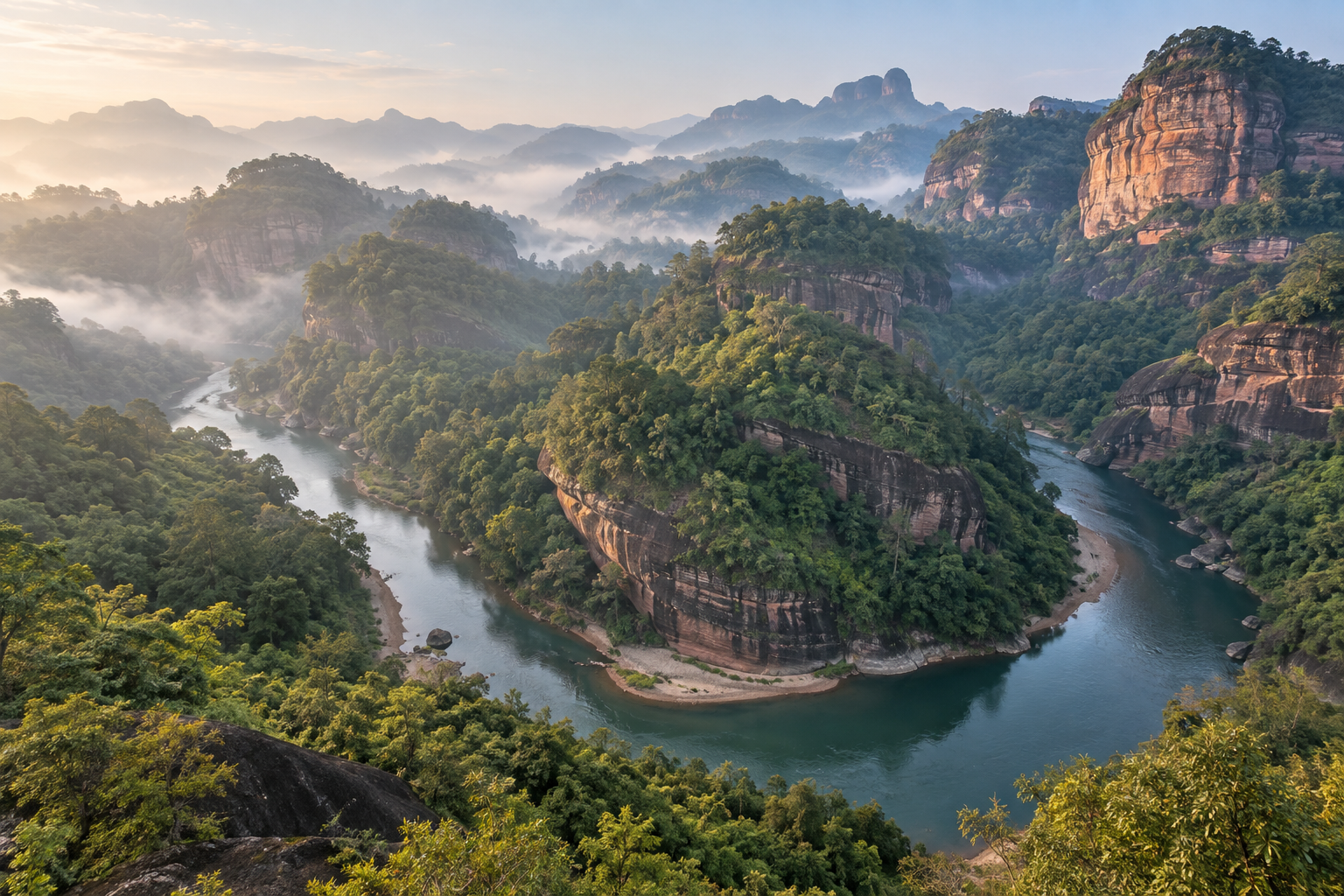
九曲溪周边东部景区以本地红砂岩形成的陡峭孤峰和崖壁为代表,岩体高出河床约200至400米。
- 03
九曲溪景区河段约9.5公里,溪流曲折穿行于丹崖群峰之间,竹筏是观察水、崖壁和群峰关系的代表性方式。
BILINGUAL TRANSCRIPT
双语全文
Mount Wuyi does more than offer red cliffs and green water; its landscape shapes travel, tea, and thought.
武夷山不只有丹崖碧水;这里的山水还塑造了旅行、茶与思想。
In Fujian, it entered the UNESCO World Heritage List in 1999 for both cultural and natural value.
武夷山位于福建,1999年因文化与自然双重价值列入联合国教科文组织《世界遗产名录》。
Its eastern area has Danxia landforms, shaped as weather and water worked on red sandstone.
它的东部景区分布着丹霞地貌,风雨与流水长久作用于红砂岩,塑造了这里的山形。
Smooth cliffs, deep gorges, and separate peaks now rise sharply above the river.
平滑的崖壁、幽深的峡谷与一座座独立山峰,如今陡然耸立在溪水之上。
It is through this rocky scene that the Nine Bend Stream turns for about 9.5 kilometres.
九曲溪正是从这片岩峰之间曲折穿行,代表性景区河段约9.5公里。
From a raft, visitors see cliffs reflected in clear water as the view changes at every bend.
坐在竹筏上,游人看见崖壁倒映在清水中,景色也随着每一道河湾不断变化。
The stream gives the landscape the rhythm of a moving Chinese scroll.
这条溪流让整片山水有了中国长卷徐徐展开般的节奏。
While water shapes the journey, weathered rock also helps explain why tea belongs here.
溪水塑造了旅行的路线,而风化的岩石也帮助我们理解茶为何生长在这里。
Warm, misty weather and soils formed from red sandstone and shale provide good conditions for Wuyi rock tea.
温暖多雾的气候,加上由红砂岩与页岩等形成的土壤,为武夷岩茶提供了良好条件。
What matters is not a magical stone flavour, but the bond among place, plant, and human skill.
重要的并不是什么神奇的“石头味”,而是环境、茶树与人的技艺之间的紧密联系。
Growers care for tea among rocky slopes, then turn the leaves into Wuyi rock tea through careful steps.
茶农在岩坡之间照料茶树,再通过一道道细致工序把鲜叶制成武夷岩茶。
Its making skills are not only a craft but also a living tradition passed through families and apprenticeships.
它的制作技艺不仅是一门手艺,也是一项通过家庭与师徒关系传下来的活态传统。
In 2022, its making skills entered UNESCO's intangible heritage list as part of China's traditional tea processing techniques and social practices.
2022年,武夷岩茶制作技艺作为“中国传统制茶技艺及其相关习俗”的组成部分,进入联合国教科文组织非遗名录。
Yet the same river landscape that supports tea also became a place for learning.
然而,这片滋养茶树的溪山,也曾成为读书求学的地方。
Rather than separating study from nature, scholars built academies beside the stream.
学者没有把读书与自然分开,而是在溪水旁建起书院。
UNESCO records at least thirty-five Confucian academies here, dating from the Northern Song to the Qing dynasty.
联合国教科文组织记录了这里至少35处儒家书院,年代从北宋延续至清代。
One of them is Wuyi Jingshe, which Zhu Xi built near the fifth bend in 1183.
其中一座是武夷精舍,朱熹于1183年把它建在九曲溪五曲附近。
By lecturing and writing there, Zhu Xi helped make the mountain a centre of Neo-Confucian thought.
朱熹在这里讲学、著述,推动武夷山成为朱子理学的重要中心。
This school renewed Confucian ideas and later influenced cultures across East Asia.
这种学说重新阐发儒家思想,后来影响了东亚多地的文化。
Here, mountains and water were more than scenery; they offered a place where observation and reflection could meet.
在这里,山水不只是景色,也让观察世界与反思人生在同一空间相遇。
What links the raft, the tea garden, and the academy is the habit of paying close attention to place.
连接竹筏、茶园与书院的,是人们对一方水土的细致体察。
The cliffs guide the stream, broken rock feeds the soil, and quiet bends invite thought.
崖壁引导溪流,碎岩化为土壤,安静的河湾又引人思考。
Only when these parts remain together can Mount Wuyi stay itself: a mountain read, tasted, and remembered.
只有当这些部分彼此相连,武夷山才能保持自己的气质:一座可以阅读、品味并铭记的山。
资料来源
- Mount Wuyi - UNESCO World Heritage Centre
- 九曲溪 - 武夷山国家公园
- 武夷精舍 - 武夷山国家公园
- Mount Wuyi (China) - ICOMOS Advisory Body Evaluation
- 武夷岩茶地理标志产品保护要求 - 国家知识产权局
- 岩骨花香的秘密 - 武夷山国家公园
- 福建省传统制茶技艺保护传承取得显著成效 - 文化和旅游部
- Traditional tea processing techniques and associated social practices in China - UNESCO Intangible Cultural Heritage