LANDSCAPE · E0052
五台山:用脚步读懂的神圣地图
Mount Wutai: A Sacred Map Made by Walking
WORD BY WORD
进入逐词听读模式
顶部配图随进度轮播,未读文字为白色,读到后逐词变黄。
沿五座台顶与朝台路线,理解五台山如何把文殊信仰、千年建筑和亚洲文化交流连成一片文化景观。
THREE THINGS TO KNOW
- 01
五台山位于山西省东北部,名称意为‘五座台地之山’,五座山峰顶部开阔、圆缓而少树。
- 02
佛教传统把五座台顶与象征智慧的文殊菩萨及其五种智慧联系起来,使山地形态本身具有宗教意义。
- 03
五台山长期是朝圣中心,连接五座台顶和重要寺院的传统巡礼路线约75公里,通常需要四天。
BILINGUAL TRANSCRIPT
双语全文
Mount Wutai does more than hold temples; its five flat peaks turn the whole landscape into a map of Buddhist belief.
五台山不只是承载着寺院;五座平坦的台顶让整片山河成为一幅佛教信仰地图。
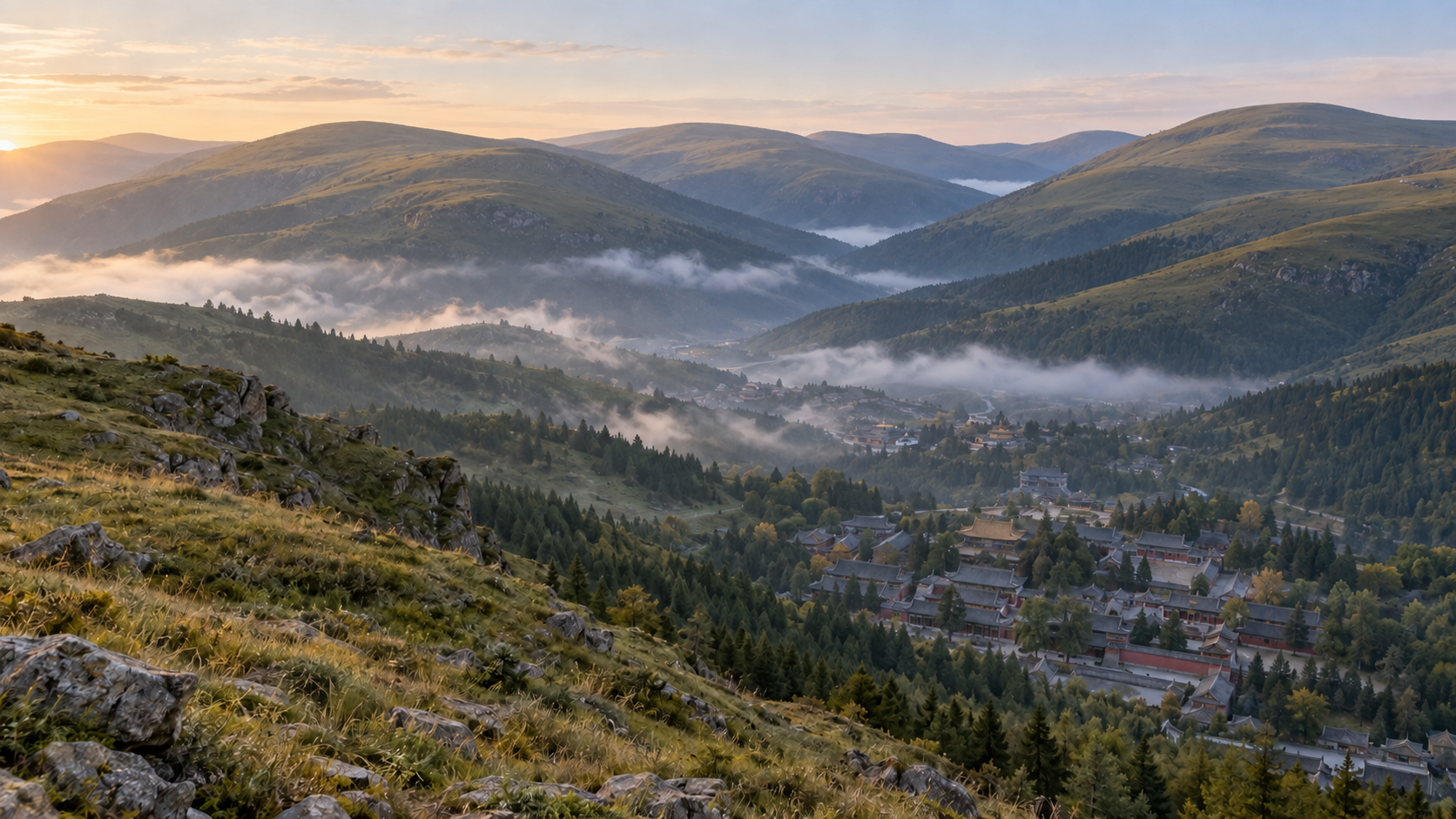
In northeastern Shanxi, the name Wutai means Five Terraces, referring to the broad, nearly treeless tops around Taihuai.
在山西东北部,“五台”就是五座台地,指的是台怀周围宽阔而近乎无树的山顶。
Buddhist tradition links them with the five kinds of wisdom represented by Manjusri, a figure who stands for wisdom.
佛教传统把它们与文殊菩萨的五种智慧相连;文殊菩萨是智慧的象征。
What matters is not the shape alone, but the way belief gives every direction a deeper meaning.
重要的不只是山形本身,而是信仰如何赋予每个方向更深的意义。
For centuries, pilgrims have traveled from temple to temple and climbed toward the five high terraces.
几个世纪以来,朝圣者从一座寺院走向另一座寺院,并向五座高台攀登。
A traditional circuit across all five peaks is about seventy-five kilometers and can take four days.
走遍五座台顶的传统朝台路线约有75公里,可能需要四天。
By walking this route, people join peaks, paths, and temples into one sacred landscape.
沿着这条路线行走,人们也把山峰、道路与寺院连成一片神圣景观。
This is why Mount Wutai cannot be understood as a simple list of famous buildings.
因此,理解五台山不能只靠一张著名建筑清单。
Temples were built into this landscape from the first century to the early twentieth century.
从公元1世纪到20世纪初,寺院不断被建入这片山地景观。
Together, they record not only changes in Buddhism, but also fifteen centuries of building methods.
它们共同记录的不仅是佛教的变化,也是约十五个世纪建筑方法的演进。
Imperial support lasted about a thousand years, with especially strong influence during the Tang and Qing dynasties.
皇家支持延续约一千年,其中唐代与清代的影响尤其突出。
Yet royal support did not close the mountain to ideas from outside China.
然而,皇家的支持并没有让这座山对外来思想关闭大门。
During the Tang dynasty, monks arrived from many parts of Asia, while Wutai culture later traveled outward.
唐代,僧人从亚洲多地来到这里,而五台山文化后来也传播到外部世界。
Han and Tibetan Buddhist traditions also developed side by side on the mountain.
汉传佛教与藏传佛教传统也在这座山上并存发展。
At Pusading, one stone inscription carries a Qing emperor's poem in Manchu, Mongolian, Chinese, and Tibetan.
在菩萨顶,一方石碑用满文、蒙古文、汉文和藏文刻下了一位清代皇帝的诗。
Architecture, meanwhile, allows several distant moments to remain visible at once.
与此同时,建筑让相隔久远的多个时代仍能同时被看见。
Foguang Temple's East Main Hall was built in 857 and has remained largely unchanged since the Tang dynasty.
佛光寺东大殿建于857年,自唐代以来基本保持原貌。
Its great timber frame and life-size clay figures preserve Tang craft in its original mountain setting.
宏大的木构架与真人大小的彩塑,让唐代工艺仍留在原有山地环境之中。
The White Pagoda at Tayuan Temple was rebuilt in 1301 by Anika, an architect from Nepal.
塔院寺白塔于1301年由来自尼泊尔的建筑师阿尼哥重建。
Rather than staying in one country, Buddhist ideas took new forms as people and skills moved.
佛教思想并未停留在一个国家,而是随着人员与技艺的流动形成新的样貌。
At Shuxiang Temple, about five hundred Ming figures turn Buddhist stories into a three-dimensional mountain scene.
在殊像寺,约五百尊明代造像把佛教故事化为一幅立体山水画。
These works do not simply occupy the mountain; they show how people understood it across time.
这些作品并非只是占据山间,而是展现不同时代的人如何理解这座山。
When Mount Wutai entered the World Heritage List in 2009, it was recognized as a cultural landscape.
2009年五台山列入《世界遗产名录》时,它被认定为一处文化景观。
Only when peaks, paths, temples, and religious traditions are protected together can this map of wisdom remain complete.
只有把山峰、道路、寺院与延续至今的宗教活动共同保护,这幅智慧地图才能保持完整。