LANDSCAPE · E0051
当整座山成为道场
Where the Mountain Becomes the Temple
WORD BY WORD
进入逐词听读模式
顶部配图随进度轮播,未读文字为白色,读到后逐词变黄。
沿着武当山的石阶与宫观,理解道教建筑如何顺应山势,并认识明代营建、武当武术与文化景观保护。
THREE THINGS TO KNOW
- 01
武当山古建筑群位于湖北省的山峰、沟谷与坡地之间,其宫殿和庙宇同时包含宗教与世俗建筑。
- 02
武当山自唐初成为道教中心,部分道教建筑可追溯至7世纪。
- 03
现存建筑展现元、明、清三代成就,建筑群在明代大规模营建中达到鼎盛。
BILINGUAL TRANSCRIPT
双语全文
Wudang Mountain does more than hold old temples; it makes a journey through nature part of Chinese culture.
武当山不只是承载着古老宫观;它让一段自然之旅也成为一段中国文化之旅。
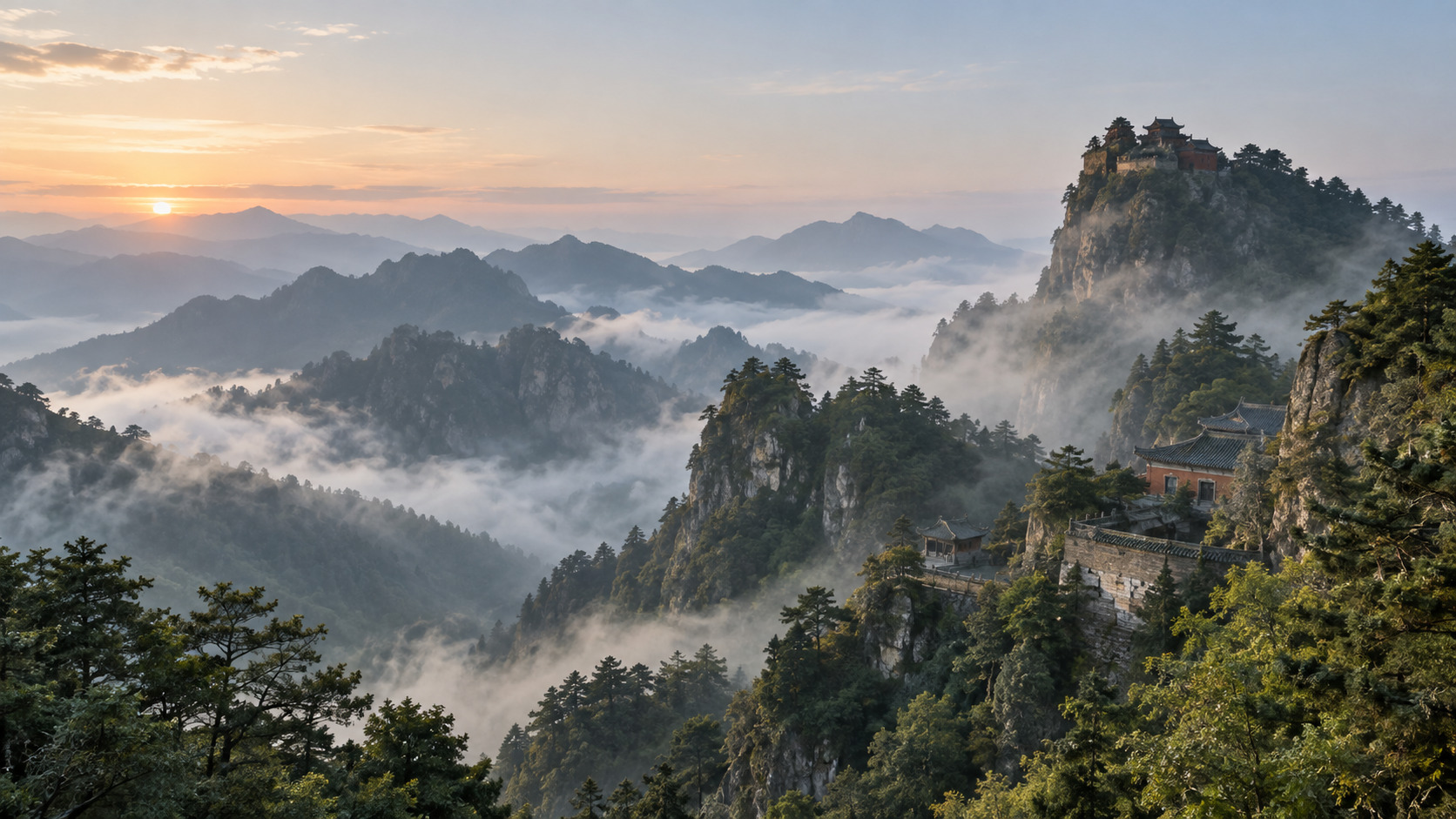
In Hubei Province, its palaces and shrines stand among peaks, deep valleys, and steep slopes.
在湖北省,武当山的宫殿和祠庙分布在群峰、深谷与陡坡之间。
What makes the place unusual is not one grand building, but how many buildings follow the mountain's shape.
这里的不凡之处不在某一座宏伟建筑,而在众多建筑如何回应山势。
Walking upward, a visitor passes stone steps and forest paths before reaching the highest sacred spaces.
一路向上,游人会经过石阶、林间小路、开阔远景与安静庭院,最后抵达高处的神圣空间。
The route slows the body, while the changing landscape prepares the mind.
山路让脚步慢下来,而不断变化的景色也让心安静下来。
Wudang became a Daoist center in the early Tang dynasty, and some buildings date to the seventh century.
武当山在唐代早期成为道教中心,其中一些建筑可追溯到公元7世纪。
Its surviving halls and temples record the work of the Yuan, Ming, and Qing dynasties.
现存殿宇与庙观记录着元、明、清三代的营造历程。
During the Ming dynasty, Emperor Zhu Di ordered a huge building campaign, and the complex reached its greatest scale.
明代,朱棣皇帝主持大规模营建,武当山建筑群由此达到鼎盛。
This work not only expressed religious belief, but also connected imperial power with Daoism.
这些营建不仅表达宗教信仰,也把皇权与道教联系起来。
Yet the architecture does not simply push nature aside to show human power.
然而,这些建筑并没有为了展示人的力量而把自然推到一旁。
By placing halls between cliffs and trees, the builders made the mountain part of the design.
建造者把殿宇安放在峭壁与树林之间,也让山本身成为设计的一部分。
The bronze Golden Shrine shows remarkable craft, while nearby stone walls reveal Ming builders' ambition.
铜铸金殿展现了非凡工艺,周围的石墙则显出明代营建者的雄心。
Purple Heaven Palace carries centuries of change through building, rebuilding, and expansion.
紫霄宫承载着另一种时间感,因为它在数百年间历经始建、重建与扩建。
Together, such buildings helped the ancient complex enter the World Heritage List in 1994.
这些建筑共同构成的古建筑群于1994年被列入《世界遗产名录》。
What matters today is not only saving wood, stone, and bronze, but also protecting the landscape and living traditions around them.
今天重要的,不只是保护木、石与铜,也要守护它们周围的山水环境与鲜活传统。
That living side of Wudang can also be seen in its martial arts.
武当山鲜活的一面,也能从武当武术中看到。
Wudang martial arts became a national intangible cultural heritage item in 2006 and remain closely tied to Daoist culture.
武当武术于2006年成为国家级非物质文化遗产代表性项目,并与道教文化紧密相连。
Its ideas value both movement and stillness, as well as training the inner mind and the outer body.
它的理念既重视动与静,也重视内在心性的修炼与外在身体的锻炼。
The heritage record also passes on the familiar story of Daoist master Zhang Sanfeng.
非遗记录也传承着道士张三丰那则广为人知的故事。
Rather than letting one story explain everything, we can see what people built, what they practiced, and what they imagined.
与其让一个故事解释一切,我们更应看见人们建造了什么、实践了什么,又想象了什么。
What links these layers is a search for balance between human action and the larger world.
把这些层次连在一起的,是人与更广阔世界之间对平衡的追寻。
At dawn, mist moves across the roofs, and stone steps disappear into the forest above.
黎明时,薄雾掠过屋顶,石阶向上隐入树林。
Only when the path, the temple, and the mountain are seen together does Wudang reveal its quiet strength.
只有把山路、宫观与整座山放在一起看,武当山才显出它安静而坚定的力量。