CITY NOTES · E0026
乌鲁木齐:天山水汇入巴扎的地方
Urumqi: Where Mountain Water Meets the Bazaar
WORD BY WORD
进入逐词听读模式
顶部配图随进度轮播,未读文字为白色,读到后逐词变黄。
用约三分钟英语认识乌鲁木齐:从天山水源与绿洲地理走进国际大巴扎,在干果、馕、抓饭、拌面和远行包裹中,看一座城市如何连接全疆与更广阔的世界。
THREE THINGS TO KNOW
- 01
Urumqi is the capital of Xinjiang Uygur Autonomous Region, and its name comes from old Dzungar Mongolian words meaning beautiful pasture.
- 02
Urumqi lies on the northern foot of the central Tianshan Mountains and the southern edge of the Junggar Basin.
- 03
The Urumqi River rises near Glacier No. 1 in the Tianshan Mountains, crosses the city area, and has long supplied urban life and farming.
BILINGUAL TRANSCRIPT
双语全文
-
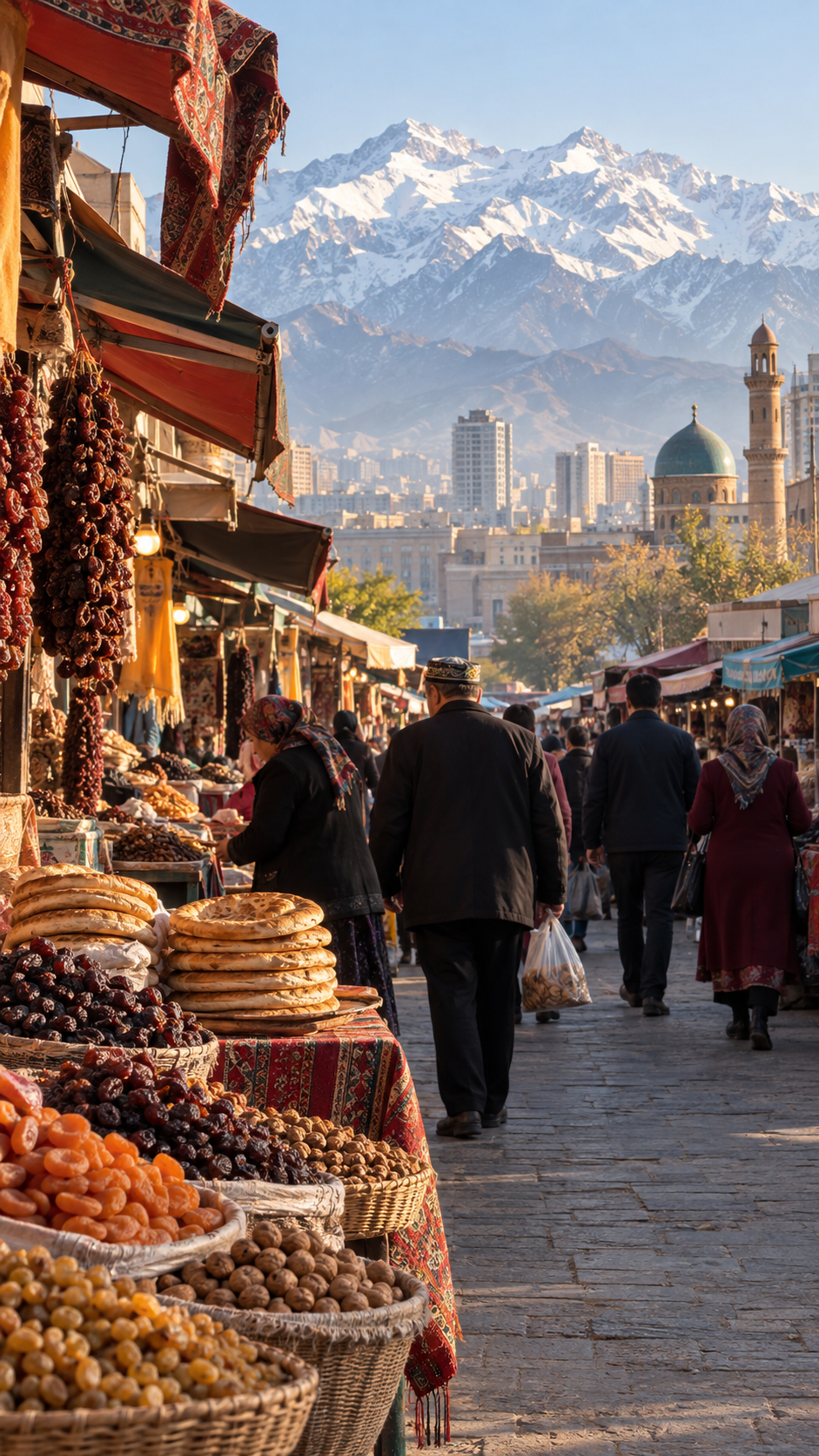
In Urumqi, snow-covered mountains stand beyond the colors and smells of a busy bazaar.
在乌鲁木齐,覆雪群山立在城市远方,热闹巴扎的街巷里则流动着丰富的色彩与香气。
-
This view does more than join nature and city; it shows how people and goods gather in a dry land.
这幅景象连接的不只是自然与城市生活,也解释了乌鲁木齐如何在干旱大地上汇聚人群与物产。
-
Urumqi is the capital of Xinjiang, and its old Mongolian name means beautiful pasture.
乌鲁木齐是新疆维吾尔自治区首府,它的古蒙古语名字意为“优美的牧场”。
-
What gives that name meaning is not grass alone, but the mountain water that makes life possible here.
让这个名字有分量的,不只是青草,更是让生命得以在此延续的高山之水。
-
The city lies between the northern foot of the Tianshan Mountains and the southern edge of the Junggar Basin.
这座城市位于天山中段北麓与准噶尔盆地南缘之间。
-
From the high Tianshan area, the Urumqi River runs north through the valley and has long supplied homes and fields.
乌鲁木齐河从天山高处向北流经河谷,长期为城市家庭与农田提供水源。
-
Without mountain water, a large settlement on this basin edge would be hard to sustain.
没有来自群山的水,在盆地边缘维持一座大型聚居地将困难得多。
-
Water supports an oasis, giving travelers a place to rest, trade, and continue their journeys.
水滋养绿洲,而绿洲让旅人得以歇脚、交易,再次启程。
-
Rather than ending here, roads across the Tianshan region made Urumqi a meeting point.
乌鲁木齐没有成为道路的终点,反而成为天山区域多条路线上的相遇之地。
-
A northern Silk Road branch passed through the city and continued west toward Ili and Central Asia.
古丝绸之路的一条北道经过这里,再向西通往伊犁与中亚。
-
Those routes carried not only goods but also recipes, skills, and ideas.
这些道路运送的不只有珍贵货物,也有食谱、技艺与理解世界的方式。
-
A bazaar, the local word for a market, still carries that spirit.
这种交流气质在巴扎里格外鲜明;“巴扎”是当地对集市的常见称呼。
-
Walking through Urumqi's International Grand Bazaar, visitors pass dried fruit, instruments, metalwork, woodcraft, clothes, and food stalls.
走进乌鲁木齐的新疆国际大巴扎,人们会经过干果、乐器、铜木工艺、服饰与美食摊位。
-
Raisins from Turpan and figs from Atushi show how harvests from different oases meet on one street.
吐鲁番的葡萄干与阿图什的无花果,让不同绿洲的收获在同一条街上相遇。
-
Each fruit carries sunlight, water, and work from the oasis where it grew.
每一颗干果都带着绿洲产地的阳光、水源与劳动。
-
Nearby, naan, pilaf, laghman noodles, and kebabs turn regional products into an everyday meal.
在附近的餐桌上,馕、抓饭、拌面与烤肉把各地物产变成一顿日常饭食。
-
It is around a shared table that geography becomes something people can taste and remember.
正是在共享的餐桌旁,地理变成了人们能够品尝和记住的东西。
-
Naan is a round baked bread widely eaten across Xinjiang in many forms.
馕是一种在新疆广泛食用的圆形烤面饼,有着多种样式。
-
The bazaar places craft displays and music beside shopping, so buying and learning share one space.
巴扎还把工艺展示与音乐带到购物空间,让购买与了解在同一处发生。
-
What matters is not whether every object is ancient, but whether the market still allows different places to speak to one another.
重要的不是每件物品是否古老,而是市场是否仍让不同地方彼此对话。
-
Today, visitors can choose dried fruit at a stall and send the parcel to a distant home.
今天,游客可以在摊位挑选干果,再把包裹直接寄往远方的家。
-
Only by caring for limited water can this inland city keep its oasis and market active.
只有珍惜有限的水源,这座内陆城市才能让绿洲生活与开放市场持续运转。
-
When evening lights come on, the mountains darken, while the bazaar stays bright with food, voices, and outgoing parcels.
夜灯亮起时,群山渐暗,巴扎却依然被食物、谈笑声和即将启程的包裹照亮。
-
What links these scenes is clear: mountain water creates Urumqi's oasis, and the bazaar opens it to the wider world.
这些画面由一个清晰的判断相连:在乌鲁木齐,天山水孕育绿洲,而巴扎让绿洲通向更广阔的世界。