FESTIVAL · E0402
北方小年为何常在腊月二十三?
Why Is Northern Xiaonian Often on the Twenty-Third Day of the Twelfth Lunar Month?
WORD BY WORD
进入逐词听读模式
顶部配图随进度轮播,未读文字为白色,读到后逐词变黄。
面向中学生解释北方小年的农历位置、历史证据、祭灶传说、扫尘实践与地域边界。
THREE THINGS TO KNOW
- 01
“北方小年”通常指农历十二月二十三;不少南方地区把十二月二十四称作小年,全国还存在其他地方安排。
- 02
农历兼顾月球运行和太阳季节位置,是阴阳合历。
- 03
朔望月平均为29.5306日,十二个朔望月比回归年短十日以上,因此以闰月协调月份与季节。
BILINGUAL TRANSCRIPT
双语全文
-
Northern Xiaonian usually means the twenty-third day of the twelfth lunar month.
北方小年通常指农历十二月二十三。
-
It is a regional year-end marker, not a uniform national festival date.
它是一个带有地域特点的岁末标记,并非全国各地以完全相同方式遵守的统一节日日期。
-
This episode asks how calendars, records, legends, and household actions give it meaning.
本期要回答的是:历法、历史记载、民间传说和家庭行动怎样共同赋予这一天意义。
-
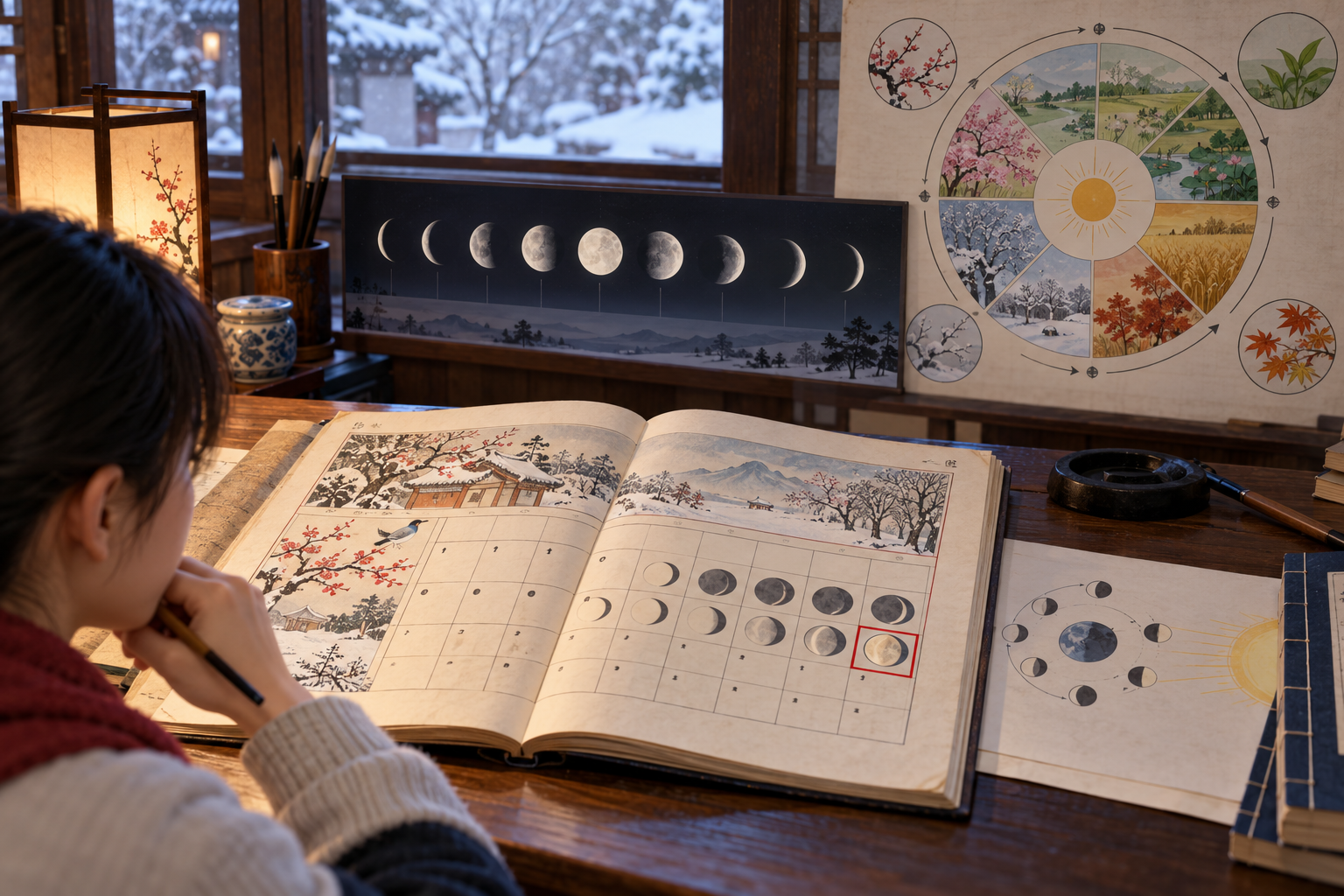
China’s agricultural calendar is lunisolar, linking lunar months with the solar seasons.
中国农历是阴阳合历,把月相形成的月份与太阳所标记的季节周期联系起来。
-
A lunar month begins at a new moon, so its dates do not stay on fixed Gregorian dates.
农历月份从朔开始,因此农历日期不会固定落在同一个公历日期上。
-
Twelve lunar months are more than ten days shorter than a solar year, and leap months help restore seasonal alignment.
十二个朔望月比一个回归年短十日以上,闰月用来帮助月份重新对齐季节。
-
This keeps the twelfth lunar month near winter year-end while its Gregorian position changes.
这一机制让农历十二月保持在冬季岁末附近,同时它对应的公历位置会变化。
-
Day twenty-three stands near month-end, roughly one week before Lunar New Year’s Day.
二十三日也已接近月末,距离正月初一大约还有一周。
-
To identify it, find lunar month twelve, day twenty-three, in an official calendar rather than memorizing one Gregorian date.
要辨认这一天,应先在官方历法中查找农历十二月二十三,而不是死记某个公历日期。
-
Historical evidence does not give one simple date story.
历史证据并没有提供一个只有单一日期的简单故事。
-
A Southern Song poem by Fan Chengda says an old stove rite took place on the twenty-fourth day.
南宋范成大的诗写到旧时腊月二十四祭灶。
-
A government article records one explanation linking the northern twenty-third to Qing court influence, but calls it uncertain.
一篇当代政府文章记录了把北方二十三与清宫影响相联系的一种说法,同时明确提醒这类解释并不确定。
-
A 2023 Palace Museum page presents the twenty-third-day stove rite as a museum story.
与此同时,故宫博物院2023年的页面把“腊月二十三小年祭灶”作为博物馆故事呈现。
-
Rather than mixing them, we should label the dated text, later explanation, and museum presentation separately.
我们不应把它们混在一起,而要分别标明有年代的文字、后来的解释和博物馆的当代呈现。
-
The best-known legend says the Kitchen God reports a household’s conduct to heaven.
最常见的传说说,灶神会上天报告一家人的行为。
-
Some families therefore offered sweets or other foods, hoping for kind words and good fortune.
因此,一些家庭会供上糖食或其他食物,希望得到好话和吉祥。
-
This is evidence of a ritual and its symbolism, not proof that the legend describes a historical event.
这能证明一种仪式及其象征,却不能证明传说描述的是历史事件。
-
Sweeping creates another visible practice: people clean corners, arrange rooms, and prepare the home.
扫尘形成了第二种清楚可见的实践:人们清理角落、整理房间,为过年准备家居。
-
Its practical result is a cleaner space, while its symbolic layer expresses leaving the old year behind.
它的实际结果是让空间更整洁,象征层则表达辞旧迎新。
-
Many northern communities use the twenty-third and many southern areas the twenty-fourth, but this is no hard border.
许多北方地区以二十三为小年,许多南方地区以二十四为小年,但这不是一道绝对的文化分界线。
-
Local calendars and family practice are better evidence than assuming every household follows the same rule.
查看本地历法和家庭实际做法,比假定每家都遵守同一规则更可靠。
-
Today, formal stove worship is less visible, while sweets, cleaning, food preparation, and family plans remain observable.
今天,一些地方的正式祭灶仪式已不那么常见,但糖食、扫除、食物准备和家庭安排仍容易观察。
-
By comparing the date, the object, the action, and the explanation, students can separate shared patterns from local choices.
通过比较日期、器物、动作和解释,学生可以区分共同模式与地方选择。
-
Northern Xiaonian is therefore a moving lunar date, a layered historical subject, and a living way to enter the Spring Festival season.
因此,北方小年既是会在公历中移动的农历日期,也是层次分明的历史对象,还是进入春节时段的生活方式。