FESTIVAL · E0297
腊八准备:先看历法,再备食材
Laba Preparation: Check the Calendar Before the Pot
WORD BY WORD
进入逐词听读模式
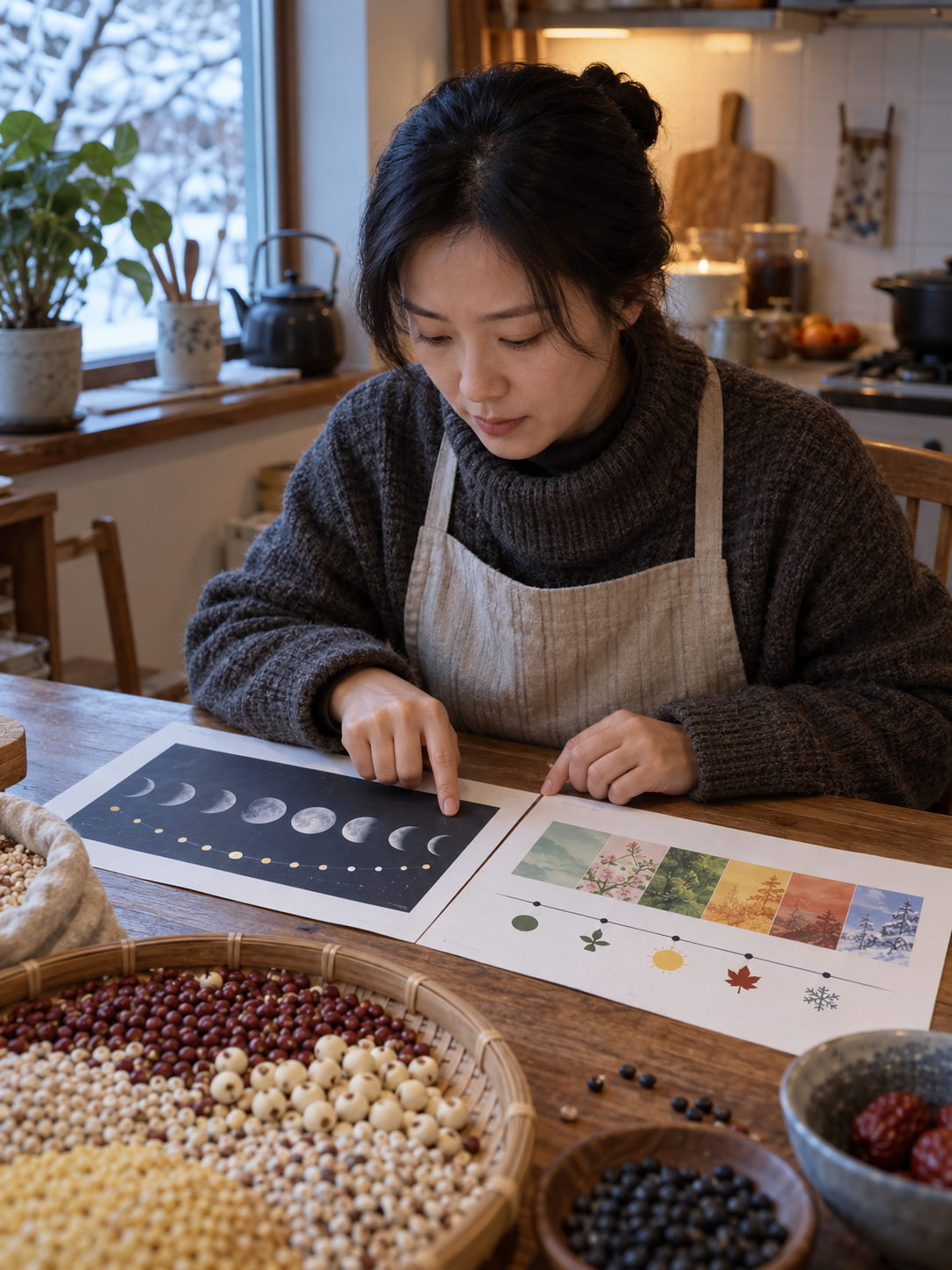
顶部配图随进度轮播,未读文字为白色,读到后逐词变黄。
从农历日期、宋清文献、地域食俗和备料时间线解释:为什么腊八准备必须先核日期、辨史料,再按本地做法行动。
THREE THINGS TO KNOW
- 01
腊八指农历十二月初八;中国农历按月相周期安排月份,因此同一农历日在公历中的日期会随年份移动。
- 02
香港天文台2026年对照表显示,2026年12月8日为农历十月三十,而不是农历十二月初八。
- 03
香港天文台2027年对照表显示,2027年1月15日为农历十二月初八。
BILINGUAL TRANSCRIPT
双语全文
-
Laba preparation begins with a calendar because Laba is the eighth day of the twelfth lunar month.
准备腊八,第一步是看历法,因为腊八是农历十二月初八。
-
A lunar date does not stay on one Gregorian date, so it moves across the school and work calendar.
农历日期不会固定落在某个公历日期上,因此它会在学校和工作使用的公历中移动。
-
For example, December 8, 2026 falls on lunar October 30, so it is not Laba.
例如,2026年12月8日对应农历十月三十,所以这一天不是腊八。
-
In the same winter, official tables place Laba on January 15, 2027, showing why the year must be checked.
在同一个冬季,官方历表显示腊八是2027年1月15日,这说明核对年份很重要。
-
History also needs checking because today's festival did not appear in one step.
历史也需要核对,因为今天的腊八节并不是一步形成的。
-
Older winter ceremonies called la did not always use a fixed date, so they are not automatically today's Laba.
古代名为“腊”的冬季祭祀并不总在固定日期,因此不能直接等同于今天的腊八。
-
A Song-dynasty Kaifeng record, however, describes temples giving seven-treasure, five-flavor porridge on the twelfth month's eighth day.
不过,一部记录北宋开封生活的文献写到,农历十二月初八,寺院会施送“七宝五味粥”。
-
It also says households cooked porridge with fruit and mixed ingredients, showing a food practice already recorded then.
文献还写到百姓用果子和多种材料煮粥,说明这种食俗在当时已有文字记录。
-
Buddhist tradition links the day with the Buddha's awakening, but this belief does not prove one complete origin.
佛教传统把这一天与佛陀成道联系起来,但这种信仰解释不能证明节日只有一个完整起源。
-
A Qing Beijing record says people prepared fruit and cleaned tools on the seventh day, then worked until dawn.
一部清代北京岁时记录写道,人们在初七准备果料、清洗炊具,再操作到清晨。
-
This shows that preparation, not only eating, was part of the recorded festival rhythm.
这说明在这份记录中,准备过程本身,而不只是食用,也是节日节奏的一部分。
-
There is no national recipe: grains, beans, nuts, seeds, and dried fruit appear in different combinations.
全国没有一张统一配方:谷物、豆类、坚果、种子和果干可以有不同组合。
-
Examples include Beijing Laba garlic, Guanzhong Laba noodles, Yixian Laba tofu, and other local salty foods.
例子包括北京腊八蒜、关中腊八面、黟县腊八豆腐,以及其他地方咸味食物。
-
A reliable plan asks what the family or community prepares instead of treating one online list as a national rule.
可靠的准备应先了解家庭或当地社区实际做什么,而不是把网上的一张配料表当成全国规则。
-
For porridge, choose sound ingredients, remove damaged pieces, and wash each type carefully.
煮腊八粥时,应选择状态良好的原料,去掉破损变质的部分,并按种类认真清洗。
-
Hard beans can be soaked early, while pits and other hard parts should be removed for children and older people.
较硬的豆类可以提前浸泡;给儿童和老人食用时,还应去掉果核等坚硬部分。
-
This explains why shopping, sorting, washing, and soaking may begin before festival morning.
这解释了为什么采购、挑拣、清洗和浸泡往往要在节日当天早晨之前开始。
-
Laba garlic has another timetable: clean cloves enter vinegar, then need time to change color and flavor.
腊八蒜有另一套时间安排:把清洁的蒜瓣放进醋里,再给它时间改变颜色和风味。
-
Today, some temples and communities share porridge, while families make only what they need.
今天,一些寺院和社区会分享腊八粥,家庭也会按需要控制分量。
-
Good preparation checks three things: the lunar date, records versus beliefs, and the local practice people will really follow.
做好腊八准备,要核对三件事:农历日期、文献记录与信仰解释的区别,以及人们真正采用的本地食俗。