FESTIVAL · E0276
冬至的日期为什么会变化?
Why Does the Date of Winter Solstice Move?
WORD BY WORD
进入逐词听读模式
顶部配图随进度轮播,未读文字为白色,读到后逐词变黄。
用A2-B1英语解释冬至为何落在12月21日至23日前后,并从测影、历史沿革、地域食俗与当代实践认识这个节气和节日。
THREE THINGS TO KNOW
- 01
二十四节气按太阳视黄经划分,每15度一个节气;冬至对应太阳视黄经270度,是一个具体时刻而非固定公历日期。
- 02
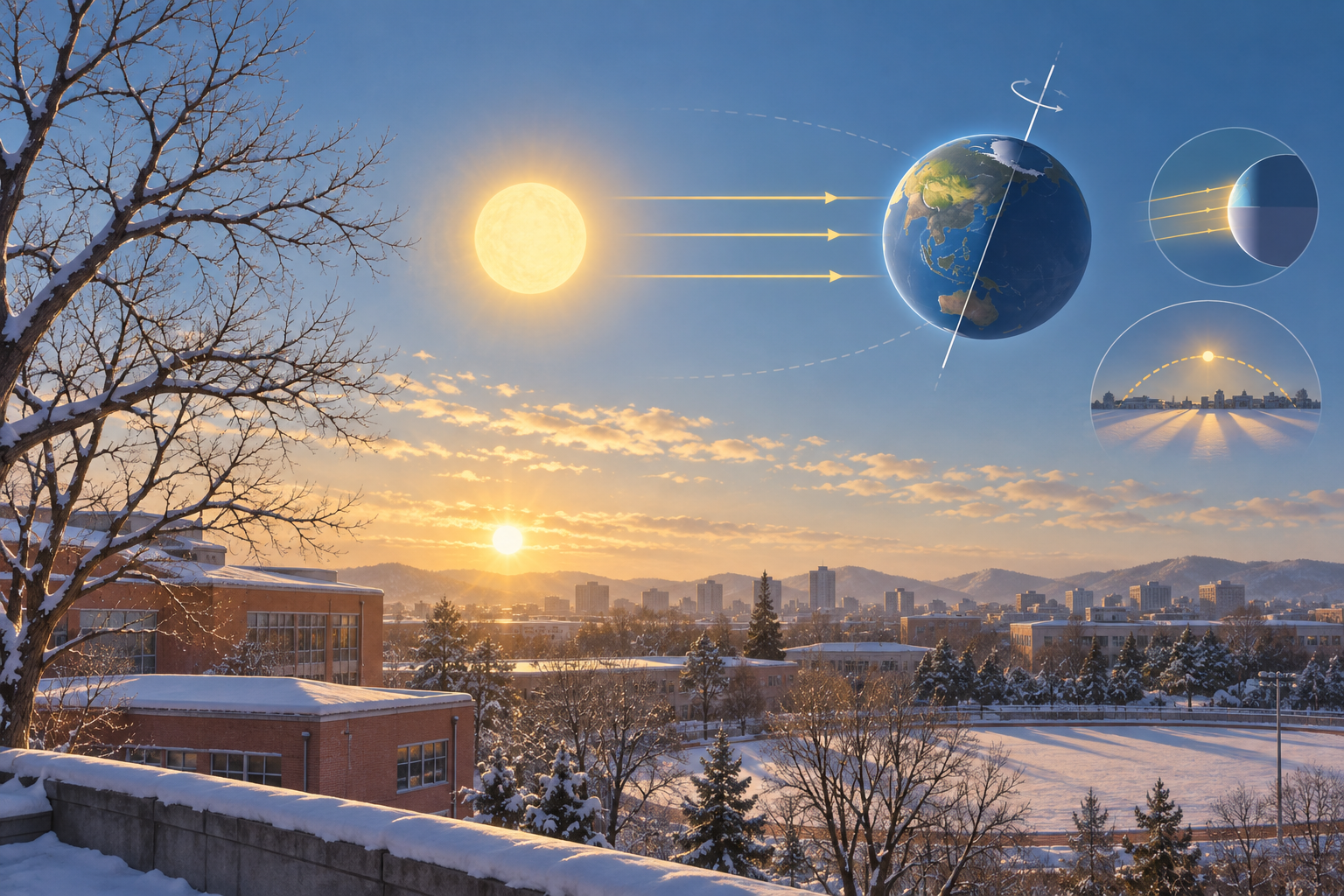
由于地轴倾斜,北半球冬至时太阳正午高度最低,白昼最短、黑夜最长;可通过日出日落时刻与正午太阳高度观察。
- 03
回归年约为365.2422日,公历以365日平年和366日闰年校准季节,因此至日时刻会逐年漂移数小时并在闰年后回调;具体民用日期还受午夜与时区影响。
BILINGUAL TRANSCRIPT
双语全文
-
Winter Solstice is a solar term and a living festival, but why does its date move from December 21 to 23?
冬至既是节气,也是仍在生活中的节日,但它的日期为什么会在12月21日至23日前后变化?
-
It is not chosen by a fixed day in the Gregorian calendar.
它并不是由公历中的一个固定日期决定的。
-
Astronomers define it as the moment when the Sun's apparent longitude reaches 270 degrees.
天文学上,冬至是太阳视黄经到达270度的时刻。
-
Earth's tilted axis then makes the Northern Hemisphere lean farthest away from the Sun.
此时,倾斜的地轴使北半球最明显地背向太阳。
-
The noon Sun is lowest, so this hemisphere has its shortest daylight and longest night.
正午太阳到达全年最低位置,因此北半球迎来最短的白昼和最长的夜晚。
-
You can compare sunrise and sunset times, or measure a vertical stick's noon shadow for several days.
你可以比较日出日落时间,或连续几天测量一根竖直杆在正午的影子。
-
Near the solstice, daylight reaches its minimum and the low noon Sun makes a relatively long shadow.
在冬至前后,白昼长度达到最低值,较低的正午太阳也会形成相对较长的影子。
-
However, one cycle of the seasons does not fit exactly into 365 calendar days.
不过,一个季节循环年并不能正好装进365个公历日。
-
The Gregorian calendar uses common and leap years to stay close to this cycle of seasons.
公历用平年和闰年来接近这个季节循环。
-
So the solstice time shifts by several hours each year, and a leap day shifts it earlier on the calendar.
因此,冬至时刻每年会移动几个小时,而闰日又会把它向前调回。
-
Crossing midnight or changing time zones can also change the date written on a calendar.
如果这个时刻跨过午夜,或换到另一个时区,日历上写出的日期也可能改变。
-
That is why Winter Solstice usually appears around December 21 to 23, not on one fixed date.
这就是冬至通常出现在12月21日至23日前后,而不是固定在某一天的原因。
-
Ancient observers lacked modern longitude numbers, but they watched the Sun and measured shadows with a gnomon.
古代观察者没有现代黄经数字,但他们会观察太阳,并用圭表测量日影。
-
Records say Zhou-period observers used shadows, and the solstices were among the earliest solar terms identified.
资料记载,周代观察者已经使用日影,而二至也是最早被确定的节气之一。
-
By the Han period, Winter Solstice was an official winter festival with rest and court celebrations.
到汉代,冬至已经成为带有休息和朝廷庆贺活动的正式冬节。
-
Later, state ceremonies, paying respect to ancestors, family meals, and visits gave the day wider social meanings.
后来,国家礼仪、敬祖、家庭饮食和往来又给这一天增加了更广的社会意义。
-
Ming and Qing emperors held a major Heaven-worship ceremony at Beijing's southern altar on Winter Solstice.
明清皇帝会在冬至于北京南郊举行重要的祭天礼。
-
Food customs, however, never formed one rule for the whole country.
不过,冬至食俗从未形成一条全国统一的规则。
-
Dumplings or wontons are common in many northern communities, while tangyuan and other rice foods appear in many southern places.
许多北方地区常见饺子或馄饨,许多南方地区则可见汤圆和其他米食。
-
Local and family choices still differ, so a custom should be linked to a named place.
各地和各家的选择仍有差异,因此说明习俗时应点明具体地区。
-
Today, the festival continues through family meals, community lessons, heritage work, and seasonal food sales.
今天,冬至通过家庭饮食、社区讲解、遗产传承和节令食品销售继续存在。
-
To recognize it, check the exact solar-term time, observe the short daylight, and ask how local people mark the day.
要辨认冬至,可以查看当年节气的准确时刻,观察较短的白昼,并了解当地人如何度过这一天。
-
Its moving date comes from astronomy and the civil calendar, while its meanings come from history and local practice.
它会移动的日期来自天文周期与民用历法的配合,而它丰富的意义来自历史和地方实践。
资料来源
- The 24 Solar Terms
- Tropical Solstice Shadows
- Leap Years
- 践行大食物观——顺时而食·冬至
- 二十四节气之大雪 冬至
- 二十四节气融媒体专题丨冬至:试数窗间九九图 馀寒消尽暖回初
- 祭天
- 冬至阳生春又来
- The Twenty-Four Solar Terms, knowledge in China of time and practices developed through observation of the sun's annual motion
- 2025“你好,北京”冬至主题活动举行 冬至阳生 春韵将启
- 一起重温舌尖上的冬至记忆
- Night Sky Network December Solstice (2019)