FESTIVAL · E0255
彝族年:一个节日怎样连接家庭、村寨与记忆
The Yi New Year: How a Festival Connects Families, Villages, and Memory
WORD BY WORD
进入逐词听读模式
顶部配图随进度轮播,未读文字为白色,读到后逐词变黄。
每天听一篇用英语介绍彝族年:理解凉山等地为什么没有全国统一日期,祭祖、团聚、食物分享、走亲访友与公共活动怎样组织共同时间、维系关系并传递记忆,也认识地域和当代实践的边界。
THREE THINGS TO KNOW
- 01
彝族年彝语常称‘库史/库施’,2011年以四川省凉山彝族自治州申报的民俗项目列入第三批国家级非物质文化遗产代表性项目名录。
- 02
国家级非遗项目页将彝族年的分布写为川、滇、黔、桂广大彝族地区,并指出凉山代表性地区包括昭觉、美姑、布拖、喜德等县。
- 03
凉山不少社区在秋收后过年,通常没有全地区固定日期;传统上可由自然村寨择日,常落在农历十月至十一月或公历11月20日前后。
BILINGUAL TRANSCRIPT
双语全文
-
How can a festival organize shared life and turn it into community memory?
一个节日怎样组织共同生活,并把它变成社区记忆?
-
The Yi New Year offers one answer, but every Yi community does not follow exactly the same custom.
彝族年提供了一种答案,但并非每个彝族社区都遵循完全相同的习俗。
-
A national heritage record calls it Kushi and lists Liangshan in Sichuan as the reporting area.
国家级非遗记录称它为“库史”,申报地区是四川凉山。
-
Related celebrations appear in Yi areas of Sichuan, Yunnan, Guizhou, and Guangxi, with local differences.
相关年节见于四川、云南、贵州和广西的彝族地区,并存在地方差异。
-
In many Liangshan villages, people choose a date after the autumn harvest, not one fixed national day.
在凉山许多村寨,人们在秋收后择日,而不是采用全国统一的一天。
-
Some local accounts describe ten thirty-six-day months plus year-end days, yet this is not today's only rule.
一些地方说明会讲十个三十六天的月份和若干年末日,但这不是今天唯一的规则。
-
Modern schedules vary too: one county announced separate late-November leave dates for Yi employees in 2026.
现代安排也会不同:有一个县为彝族职工公布了2026年十一月下旬的假期日期。
-
Related written records reach back to the Tang and Five Dynasties, but they prove no single origin story.
相关文字记录可追溯到唐代和五代,但它们不能证明单一起源故事。
-
The 2011 heritage listing records a living tradition, not an ancient scene frozen in time.
2011年的非遗名录记录的是活态传统,而不是凝固不变的古代场景。
-
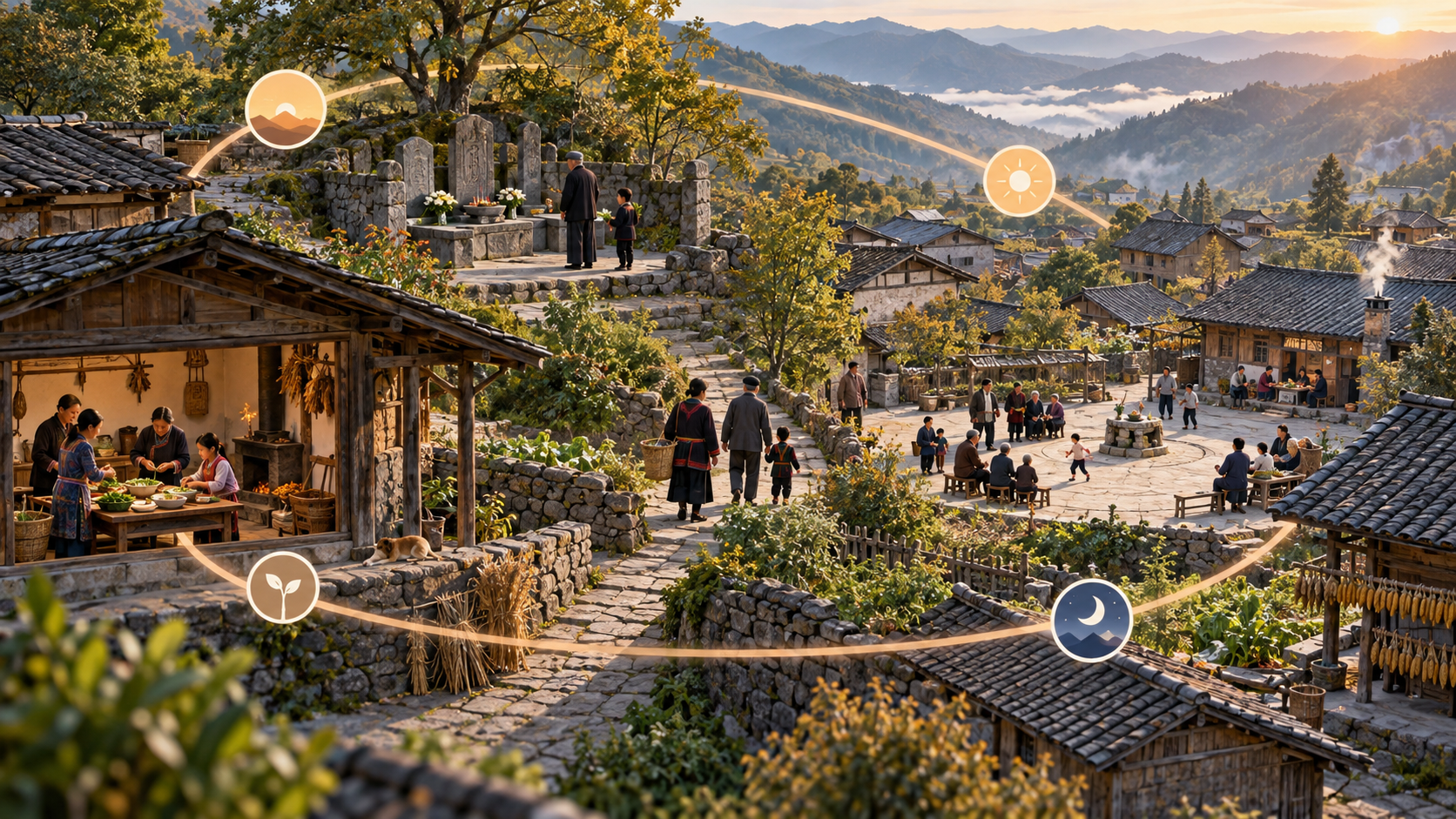
Before the festival, some Liangshan families clean, collect firewood, prepare food, brew drink, or make tofu.
节日前,凉山一些家庭会清扫、备柴、备食、酿酒或制作豆腐。
-
Celebration thus begins with coordinated household work, not costumes or a stage show.
因此,节庆从家庭协作开始,而不是从服饰或舞台表演开始。
-
In documented Liangshan practices, families offer food to ancestors, share meals, and welcome the new year.
在有记录的凉山实践中,家庭向祖先献食、共同进餐并迎接新年。
-
Pork and drink may become offerings, shared food, and gifts, though details differ by place and family.
猪肉和酒可以成为祭品、共享食物和礼物,不过细节会因地方和家庭而异。
-
Visits to parents, relatives, other elders, and sometimes village seniors renew relationships through direct exchange.
探望父母、亲属、其他长辈,有时也包括村中老人,会通过直接交换重新确认关系。
-
Shared dates coordinate time for ancestors, family, neighbors, and guests in a recognizable order.
共同日期按可辨认的顺序协调祭祖、团聚、邻里和待客时间。
-
Repeated foods, objects, routes, and greetings become memory cues, so young people learn by joining.
反复出现的食物、器物、路线和问候成为记忆线索,让年轻人通过参与来学习。
-
To observe the festival, ask who set the date, what families prepared, whom they visited, and what was public.
观察这一节日,可以询问日期由谁确定、家庭准备了什么、拜访了谁,以及哪些活动属于公共空间。
-
This is better than judging by clothing, because dress and festival practices vary across regions and groups.
这比只看服饰更可靠,因为服饰与节庆实践都会因地区和群体而异。
-
Today, some events add wrestling, group dance, heritage displays, performances, or public films.
今天,一些活动会加入摔跤、集体舞、非遗展示、文艺演出或公益电影。
-
Yet public programs are not the whole festival, and tourism should not interrupt core family rites.
不过,公共活动并不等于节日全部,旅游活动也不应打断核心家庭仪式。
-
The festival balances continuity and change: communities repeat key relationships while adapting schedules and public forms.
这一节日在延续与变化之间取得平衡:社区重复关键关系,同时调整时间安排和公共形式。
-
Shared memory grows when people return to responsibilities, explain them, and practice them together.
当人们共同回到责任、解释它们并一起实践时,共享记忆便不断生长。