FESTIVAL · E0234
小雪腌菜:节令、盐与保存机制
Minor Snow Pickling: Season, Salt, and Preservation
WORD BY WORD
进入逐词听读模式
顶部配图随进度轮播,未读文字为白色,读到后逐词变黄。
每天听一篇用英语介绍小雪腌菜:从太阳节气与南京、苏州等地的冬储习俗,到盐致失水、乳酸发酵、温度和低氧条件怎样影响保存,并学习用验证配方和异常迹象守住食品安全边界。
THREE THINGS TO KNOW
- 01
小雪是二十四节气中的第二十个节气、冬季第二个节气;太阳到达黄经240度时交节,通常在公历11月22日或23日。
- 02
二十四节气依据太阳周年视运动划分,因此在公历中的日期变化较小,在农历中的日期并不固定。
- 03
小雪反映季节性的气候特征,不表示各地当天都会下一场气象学意义上的小雪;中国不同区域的降雪和入冬进度明显不同。
BILINGUAL TRANSCRIPT
双语全文
-
Why did some Chinese communities begin pickling vegetables around Minor Snow?
为什么中国部分地区会在小雪前后开始腌菜?
-
Minor Snow is the twentieth solar term and begins when the sun reaches 240 degrees of solar longitude.
小雪是二十四节气中的第二十个节气,在太阳到达黄经240度时交节。
-
It usually arrives on November 22 or 23, while its date in the lunar calendar is not fixed.
它通常在公历11月22日或23日到来,而在农历中的日期并不固定。
-
Its name marks a seasonal climate stage rather than promising a small snowfall everywhere on that day.
这个名称标记的是季节性气候阶段,并不表示各地当天都会下一场小雪。
-
The solar-term system grew from observing the sun and seasons and entered UNESCO's heritage list in 2016.
整个节气体系源于对太阳与季节的长期观察,并于2016年列入联合国教科文组织非遗名录。
-
Minor Snow is a solar term, not a nationwide festival; its pickling custom is regional, not universal.
小雪是节气,不是全国统一节日;与它相连的腌菜习俗也具有地域性,并非全国统一传统。
-
Nanjing records describe pickling vegetables for winter and mention cabbage prepared around Minor Snow.
南京地方记录写到腌菜御冬,也提到小雪前后腌白菜。
-
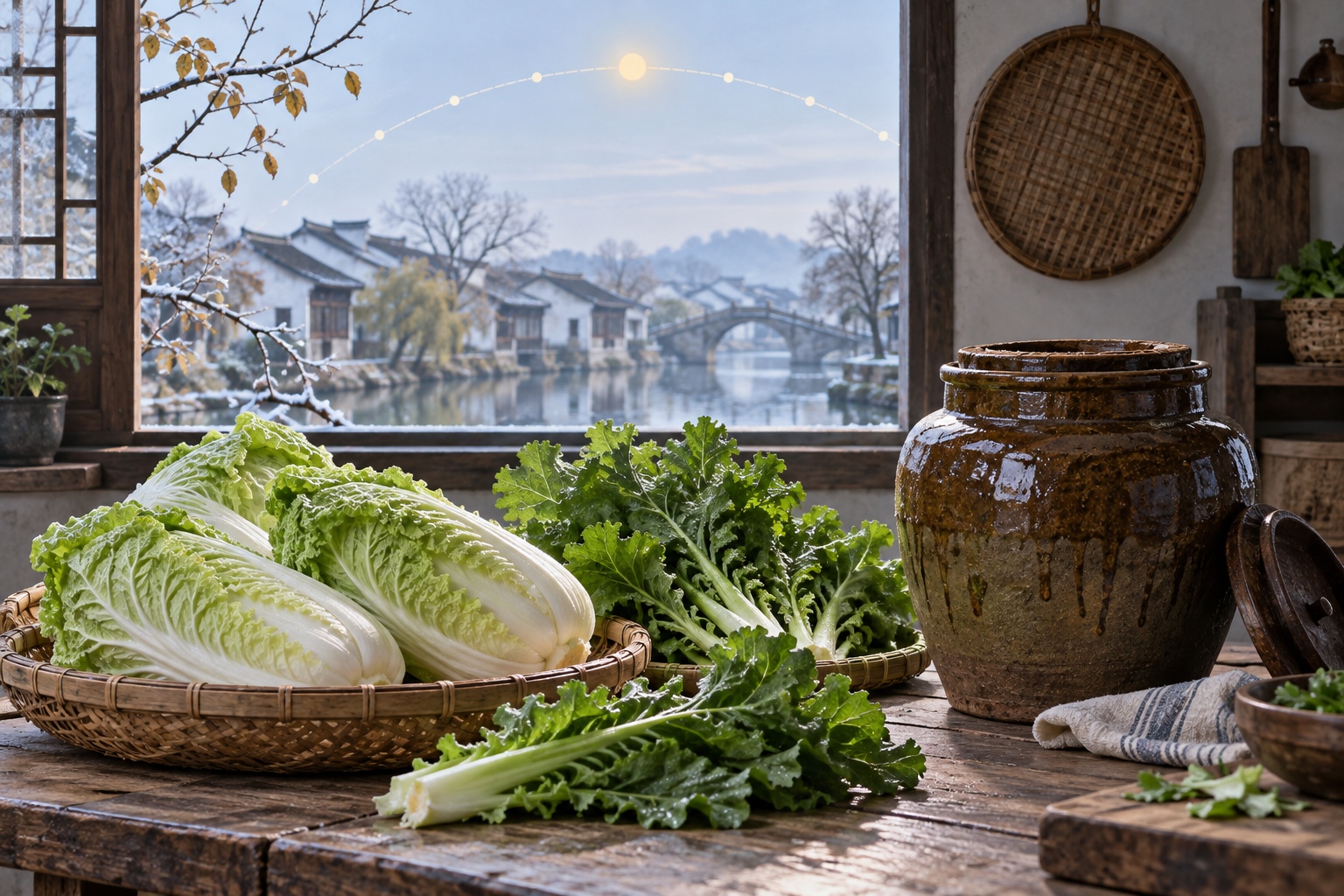
In old Suzhou practice, families cleaned and partly dried snow mustard, layered it with salt, and pressed it in a jar.
在老苏州的做法中,人们把雪里蕻清理、洗净并略晾,再分层加盐,压入缸中。
-
Such work helped store local autumn vegetables for months when fresh winter produce was once harder to obtain.
在过去冬季新鲜蔬菜较难获得时,这些劳动有助于把本地秋菜保存下来。
-
The same Suzhou account also describes salted, air-dried meat, but curing meat is a different practice from brining vegetables.
同一份苏州资料也记录了加盐风干的肉类,但制作腊味与用盐水腌蔬菜是不同的实践。
-
As greenhouses and transport improved supplies, large home batches became less necessary in Haizhou, although teaching continues.
随着大棚和运输改善供应,在海州,家庭大批量腌菜逐渐不再是必需,但教育活动仍在延续这种实践。
-
What happens inside the jar starts with salt, which does more than add flavor.
缸里的变化从盐开始,而盐的作用不只是增加味道。
-
Through osmosis, water moves out of vegetable cells toward the saltier side, so the leaves soften and liquid gathers.
通过渗透,水会从蔬菜细胞移向盐分更高的一侧,于是菜叶变软,液体逐渐汇集。
-
In fermented pickles, tested salt levels favor useful bacteria and slow other microbes, so guessing a lower amount is unsafe.
在发酵腌菜中,验证配方规定的盐量有助于有益菌生长并抑制其他微生物,因此不能凭感觉减盐。
-
Still, pickling is not one single process: some products use added acid, some stay refrigerated, and only some are fermented.
不过,腌制并不是单一工艺:有的产品直接加酸,有的需要冷藏,只有一部分通过发酵制成。
-
During lactic-acid fermentation, useful bacteria consume vegetable sugars, produce acid, and release carbon dioxide.
在乳酸发酵中,有益细菌利用蔬菜中的糖,产生酸并释放二氧化碳。
-
The falling pH brings sourness, while carbon dioxide may appear as bubbles in the brine.
pH下降带来酸味,二氧化碳则可能表现为盐水中的气泡。
-
Temperature controls their activity: too cold can inhibit fermentation, while too warm can cause over-fermentation and spoilage.
温度会控制这些微生物的活动:过冷可能抑制发酵,过热则可能造成过度发酵和腐败。
-
They also need controlled low-oxygen conditions, so the vegetables stay below the brine rather than above it.
它们还需要受控的低氧环境,因此蔬菜要浸没在盐水下,而不是露在液面上。
-
What matters is a tested recipe with its stated salt, temperature, time, and acidity checks, not a family guess.
关键是采用经过验证的配方,并遵守其中规定的盐量、温度、时间和酸度检查,而不是凭家庭经验猜测。
-
Water and bubbles are only clues; leaking, swelling, spurting, mold, strange color, or bad smell means discard the food, and never test safety by tasting.
出水和气泡只是线索;若容器泄漏、鼓胀、喷液,或食物发霉、变色、有恶臭,就应丢弃,绝不能靠试吃判断安全。
-
Minor Snow pickling connects a solar term, regional winter storage, preservation methods, food science, and modern safety choices.
小雪腌菜把太阳节气、地方冬储、不同保存方法、食品科学和现代安全选择联系在了一起。
资料来源
- 中国天气网:“小雪”由来和习俗
- 中国科学院紫金山天文台:历书科普问题解答
- 文化和旅游部:二十四节气正式列入联合国教科文组织人类非物质文化遗产代表作名录
- 南京市地方志工作办公室:第五章 加工——民间蔬菜加工
- 苏州市地方志编纂委员会办公室:二十四节气|小雪:诗意与美食同在的节气
- 连云港市地方志办公室:腌菜——海州民生琐忆之七
- University of Minnesota Extension: Preserving food at home: Pickling produce
- University of Minnesota Extension: Preserving food at home: Fermentation
- U.S. CDC: Home-Canned Foods
- 淮安市清江浦区人民政府:迎冬小雪至 应节晚虹藏
- National Center for Home Food Preservation: Complete Guide to Home Canning, Guide 1