FESTIVAL · E0171
霜降饮食:同一时点,不同餐桌
Frost's Descent Food: One Date, Different Tables
WORD BY WORD
进入逐词听读模式
顶部配图随进度轮播,未读文字为白色,读到后逐词变黄。
THREE THINGS TO KNOW
- 01
霜降是二十四节气中的第十八个节气;太阳到达黄经210度时交节,常见公历约期为10月23日或24日。
- 02
二十四节气依据太阳周年运动,在公历中的日期变化较小,但在设置闰月的农历中日期不固定。
- 03
二十四节气是逐步形成、服务生产生活的时间知识体系;2006年列入首批国家级非物质文化遗产,2016年列入联合国教科文组织人类非物质文化遗产代表作名录。
BILINGUAL TRANSCRIPT
双语全文
-
How does Frost's Descent connect one calendar point with different local tables?
霜降如何把同一个历法节点与各地不同的餐桌联系起来?
-
It is China's eighteenth solar term and begins when the sun reaches 210 degrees of solar longitude.
霜降是中国二十四节气中的第十八个节气,在太阳到达黄经210度时交节。
-
This moment usually falls around October 23 or 24, but its exact time changes yearly.
这一时刻通常在公历10月23日或24日前后,但准确时间每年有所变化。
-
Because solar terms follow the sun's yearly path, their Gregorian dates change little, while their lunar-calendar dates are not fixed.
因为节气依据太阳周年运动,所以公历日期变化较小,而农历日期并不固定。
-
The system formed gradually for production and daily life, rather than through one person's invention.
这套时间知识体系为生产生活服务、逐步形成,并非由某个人单独发明。
-
It entered China's national intangible heritage list in 2006 and UNESCO's representative list in 2016.
二十四节气于2006年列入中国国家级非物质文化遗产名录,并于2016年列入联合国教科文组织人类非物质文化遗产代表作名录。
-
Yet one solar term does not bring the same season to every part of China.
然而,同一个节气并不会把同一种季节带到中国各地。
-
In usual climate patterns, many northern places are already in winter, while middle and lower Yangtze cities often remain in autumn.
按常年气候来看,北方不少地方已经入冬,而长江中下游许多城市仍处在秋季。
-
Some southern cities, including Nanning and Xiamen, may only be entering autumn around this time.
包括南宁、厦门在内的一些南方城市,常常到这时才进入秋季。
-
Nor does the name mean nationwide frost that day; first frost usually comes later farther south and down from mountains.
这个名称也不表示交节当天全国都会结霜;初霜通常由北向南、由高山向平原推迟。
-
Traditional seasonal signs described changes in animals and plants, but they were historical observations, not modern rules for every region.
传统物候用动物和植物的变化描述时序,但它们是历史观察,并非适用于各地的现代定律。
-
These climate differences help explain why Frost's Descent has no single national menu.
这些气候差异有助于解释为什么霜降没有一张全国统一的菜单。
-
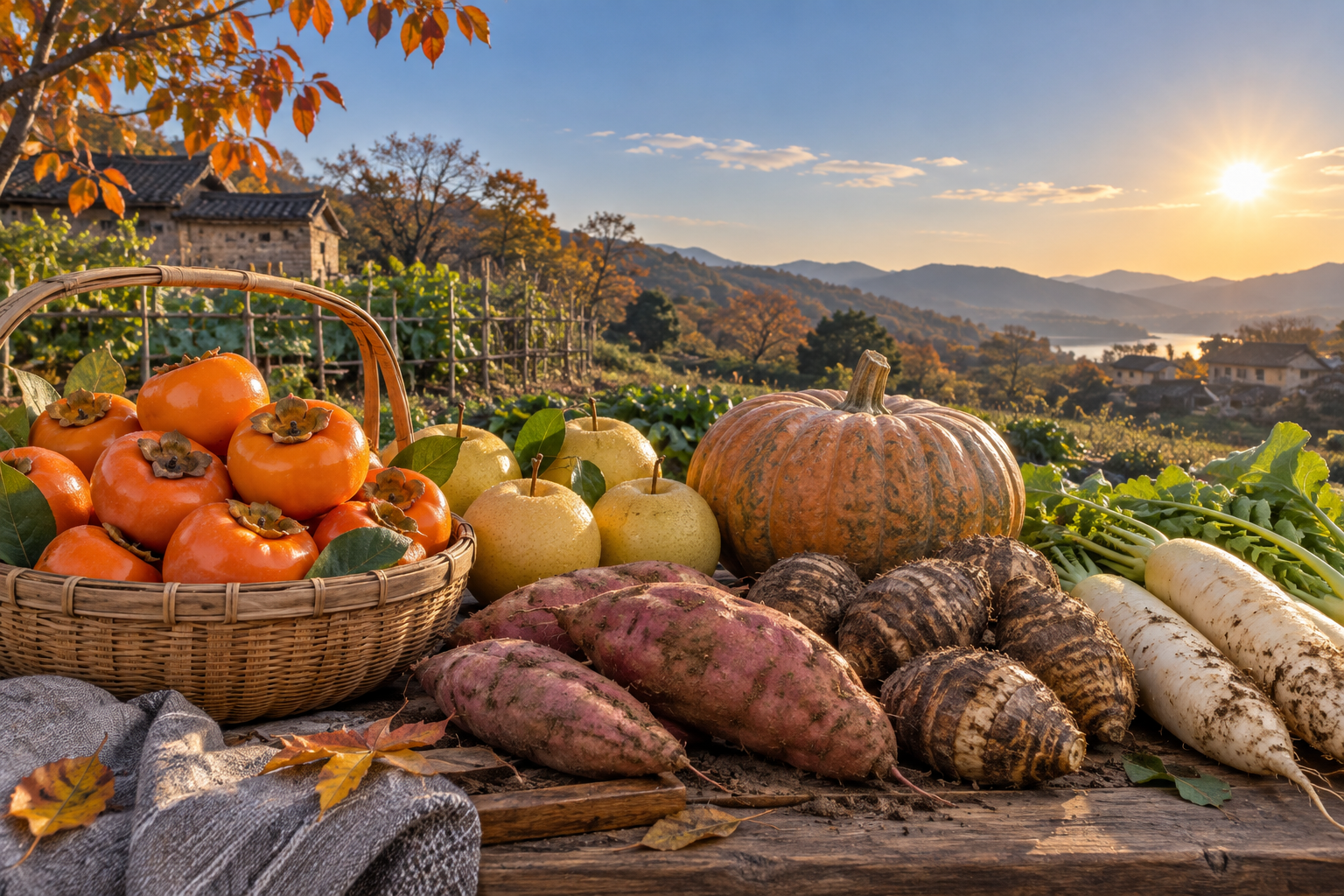
As cold-sensitive crops stop growing or are harvested, persimmons, pears, pumpkins, sweet potatoes, taro, and radishes may reach local kitchens.
随着不耐寒作物停止生长或被收获,柿子、梨、南瓜、红薯、芋头和萝卜等可能进入当地厨房。
-
What is available still depends on place, variety, height, farming methods, and today's supply chains.
实际能买到什么,仍取决于地区、品种、海拔、种植方式和今天的供应链。
-
In Fuzhou, eating persimmons at Frost's Descent is recorded as a local custom, not proof of a medical effect.
在福州,霜降吃柿子被记录为地方习俗,而不是具有医疗功效的证据。
-
A different example comes from the Zhuang Frost's Descent Festival in parts of western Guangxi and eastern Yunnan.
另一个例子来自广西西部部分地区和云南东部的壮族霜降节。
-
After the late-rice harvest, local families prepare foods called cina and yingshuang zong to welcome relatives and friends.
晚稻收获后,当地家庭会准备名为“糍那”和“迎霜粽”的食物招待亲友。
-
These practices belong to particular communities; they should not be turned into habits shared by all Chinese people.
这些实践属于特定社区,不应被说成全体中国人共有的习惯。
-
Persimmons also show why careful science matters: there are both astringent and non-astringent varieties.
柿子也说明严谨科普的重要性:它既有涩型品种,也有非涩型品种。
-
In astringent fruit, soluble tannins are linked to a dry feeling in the mouth; overripening or controlled removal of astringency can reduce it.
涩型柿中的可溶性单宁与口中干涩感有关;果实过熟或经过脱涩处理后,涩感可以下降。
-
Therefore, frost alone is not the answer, and neither persimmons nor meat gains a special medical power on this date.
因此,霜本身并不是唯一答案,柿子或肉类也不会因为在霜降这天食用就获得特殊医疗功效。
-
By choosing a varied diet, separating raw and cooked food, cooking thoroughly, and storing leftovers safely, we connect seasonal knowledge with modern life.
通过选择多样膳食、生熟分开、彻底煮熟并安全储存剩余食物,我们把季节知识与现代生活连接起来。