FOOD NOTES · E0111
竹竿压面怎样做出细而有弹性的竹升面?
How Does Bamboo-Pole Pressing Make Fine, Springy Noodles?
WORD BY WORD
进入逐词听读模式
顶部配图随进度轮播,未读文字为白色,读到后逐词变黄。
待独立内容审查;禁止发布。
THREE THINGS TO KNOW
- 01
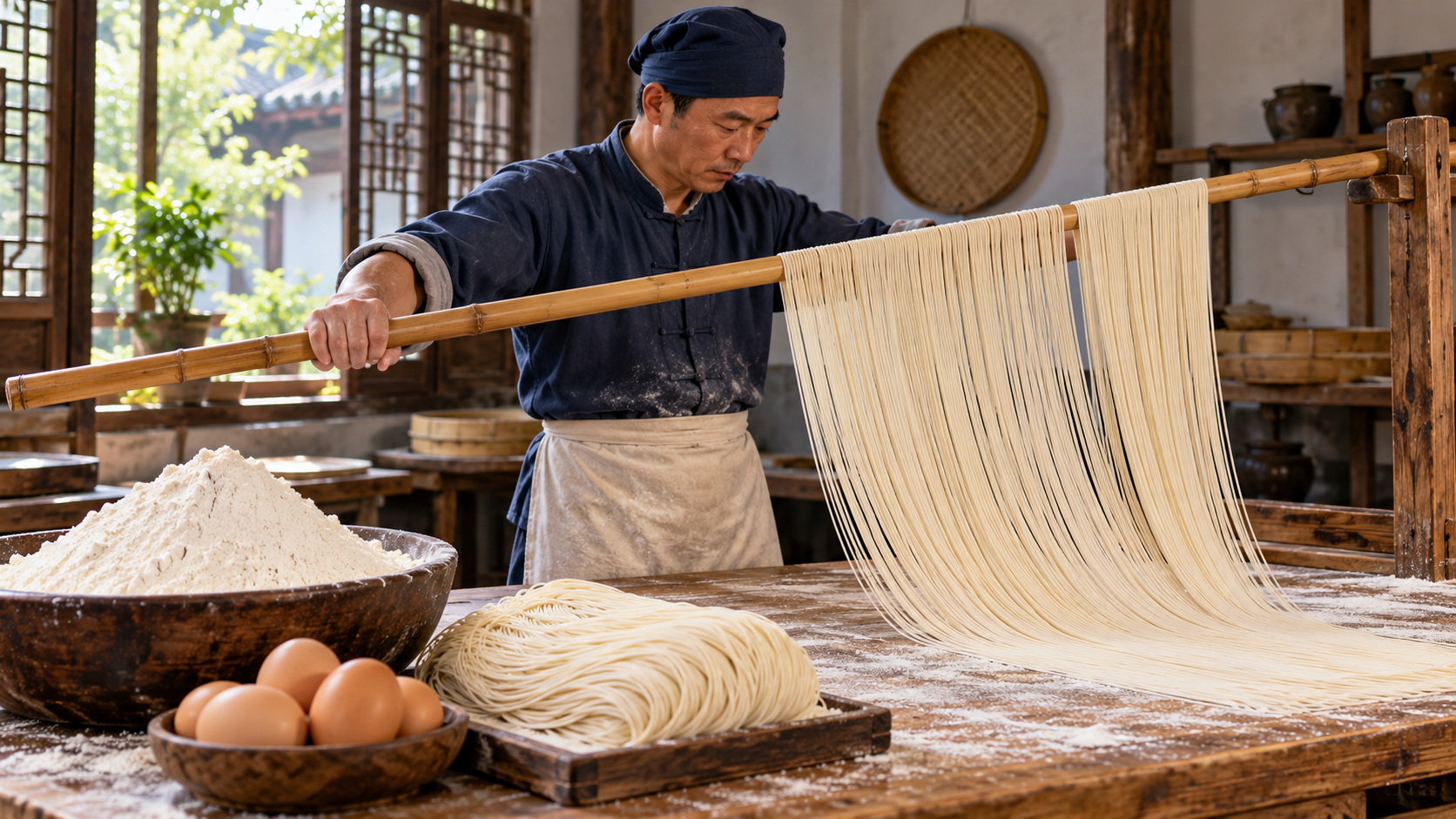
香港非物质文化遗产办事处的活动页记录:一种竹升面做法把面粉和鸡蛋混合,并以竹竿压制成细而有弹性的面条。
- 02
同一官方页面把原料比例和压制力度列为会影响面条质地的变量。
- 03
同一官方页面记录机器制面已大量取代竹竿手压,手工竹升面日渐少见;这说明工具会变化,但不等于机器产品必然低质。
BILINGUAL TRANSCRIPT
双语全文
-
Bamboo-pole noodles are fine wheat noodles shaped by repeated pressing with a long bamboo pole.
竹升面是一种细小麦面,制作特点是用长竹竿反复压制面团。
-
This episode asks how ingredients, hydration, alkaline salts, and repeated pressing help create fine, springy strands.
本期要回答:原料、面团含水状态、碱盐和反复压制怎样帮助形成细而有弹性的面条。
-
An official Hong Kong heritage programme records one method that mixes flour with egg before bamboo-pole pressing.
香港非物质文化遗产办事处记录的一种做法,是先把面粉与鸡蛋混合,再用竹竿压制。
-
The same record says ingredient proportions and pressing force can affect the final texture.
同一记录还指出,原料比例和压制力度会影响最终质地。
-
That example is evidence of a practice, not a universal recipe for every noodle shop.
这个例子能证明一种做法,却不是所有面店都必须遵守的统一配方。
-
A noodle review lists flour, water, and salt as basic ingredients, while the Hong Kong record describes an egg-based example.
一篇面条综述把面粉、水和盐列为基本原料,而香港官方记录描述的是一种加鸡蛋的实例。
-
During mixing, flour should hydrate evenly, and the dough must stay strong enough for sheeting without becoming difficult to thin.
混合时,面粉应较均匀地吸水;面团既要能承受压片,又不能强韧到难以减薄。
-
These sources describe useful conditions, not one fixed formula for every bamboo-pole noodle maker.
这些来源说明的是有用条件,不是所有竹升面制作者都采用的固定配方。
-
Alkaline salts are another adjustable ingredient rather than a magic sign of authenticity.
碱盐也是可以调整的原料,而不是判断“正宗”的神奇标志。
-
Studies show that they change interactions among protein, starch, and water and may strengthen the noodle structure.
研究显示,碱盐会改变蛋白质、淀粉与水的相互作用,并可能加强面条结构。
-
Their effects depend on type and amount, so more alkaline salt is not automatically better.
其效果取决于种类和用量,所以碱盐也不是越多越好。
-
After mixing, the long pole repeatedly presses the dough across the work surface.
混合后,长竹竿会在操作台上反复压过面团。
-
The visible action matters because each pass changes how the dough sheet resists force and stretches.
这个可见动作很重要,因为每次压片都会改变面片抵抗外力和拉伸的表现。
-
In controlled experiments, resistance first rose then fell, while different measurements peaked at different stages.
在对照实验中,抗断阻力先升后降,而不同指标在不同压片阶段达到峰值。
-
So repeated pressure changes dough structure, but the safe lesson is control, not 'the more, the better.'
因此,反复压力会改变面团结构,但稳妥结论是要控制次数,而不是“越多越好”。
-
General noodle processing then combines sheets, reduces their thickness step by step, and cuts them into strands.
一般制面流程随后会复合面片、逐步减薄,再切成面条。
-
The bamboo pole belongs mainly to the pressing stage; it does not replace mixing, thinning, or cutting.
竹竿主要属于压制阶段,并不能取代混合、减薄和切条。
-
Thin, even strands are therefore one observable result of controlled pressing and cutting.
因此,细而较均匀的面条,是受控压制和切条的一项可观察结果。
-
After cooking, look for fine strands with springy resistance instead of judging only by colour.
煮熟后,可以观察细面是否仍有弹性阻力,而不要只凭颜色判断。
-
Colour alone cannot prove authenticity because egg, alkaline salts, flour, moisture, and processing can all vary.
颜色本身不能证明“正宗”,因为鸡蛋、碱盐、面粉、水分和加工方式都可能变化。
-
Official records place documented practices in Guangzhou’s Liwan area and in Hong Kong’s everyday food culture.
官方记录把一些有据可查的做法放在广州荔湾和香港日常饮食文化的具体语境中。
-
These records show regional practice, but they do not establish one recipe for every place or period.
这些记录能说明地域实践,却不能建立适用于所有地方和时代的唯一配方。
-
The Hong Kong heritage page also notes that machines have largely replaced hand pressing, making the manual craft rarer.
香港非遗页面还指出,机器已经大量取代手工压面,使这项手艺更少见。
-
What matters is the evidence chain: suitable ingredients, even hydration, controlled pressing, gradual thinning, and fine resilient strands.
重要的是证据链:合适的原料、均匀吸水、受控压制、逐步减薄,以及细而有韧性的面条。
资料来源
- Bamboo Pole Noodle Making Technique — Meet the Masters 2026
- 广式云吞面
- 广州市文化广电旅游局关于公布第八批市级非物质文化遗产代表性项目保护单位的通知
- Asian noodles: History, classification, raw materials, and processing
- Effect of alkaline salts on physicochemical properties and composition changes of fresh wet noodles during storage
- Effects of repeated sheeting on rheology and glutenin properties of noodle dough