FESTIVAL · E0108
国庆节怎样进入公共空间
How National Day Enters Public Space
WORD BY WORD
进入逐词听读模式
顶部配图随进度轮播,未读文字为白色,读到后逐词变黄。
用B1英语理解国庆节的公历日期、国旗展示、天安门花坛与预约参观秩序,并分清北京案例与全国制度的边界。
THREE THINGS TO KNOW
- 01
1949年12月2日,中央人民政府委员会第四次会议通过《关于中华人民共和国国庆日的决议》;决议采纳政协第一届全国委员会的建议,宣布自1950年起以每年10月1日为中华人民共和国国庆日。
- 02
现行《全国年节及纪念日放假办法》把国庆节列为全体公民放假的节日,法定放假3天,日期为10月1日至3日;调休形成的较长假期不等于国庆节法定日期被改写。
- 03
按2020年修正的《中华人民共和国国旗法》,国庆节等重要节日、纪念日,各级国家机关、各人民团体以及大型广场、公园等公共活动场所应当升挂国旗;企业事业组织、村(居)民委员会和居民院(楼、小区)在有条件时可以升挂国旗。
BILINGUAL TRANSCRIPT
双语全文
-
China's National Day enters public space through its date, flags, flower displays, and rules for visiting busy places.
中国国庆节通过日期、国旗、花卉景观以及繁忙场所的参观规则进入公共空间。
-
It is observed on October 1 in the Gregorian calendar, rather than on a date that moves with the lunar calendar.
它在公历10月1日举行,而不是按农历变动日期。
-
A resolution passed on December 2, 1949, made October 1 National Day from 1950 onward.
1949年12月2日通过的一项决议,确定自1950年起以10月1日为国庆日。
-
Today's rules make October 1 to 3 the legal holiday, although adjusted workdays may create a longer break.
现行规定把10月1日至3日定为法定假日,不过调休可能形成更长的假期。
-
In other words, a longer holiday arrangement does not change the festival's legal dates.
换句话说,较长的放假安排并没有改变这个节日的法定日期。
-
The national flag does more than mark a building; it makes National Day visible in shared space.
国旗不只是标示一座建筑,它还让国庆节在共享空间中变得可见。
-
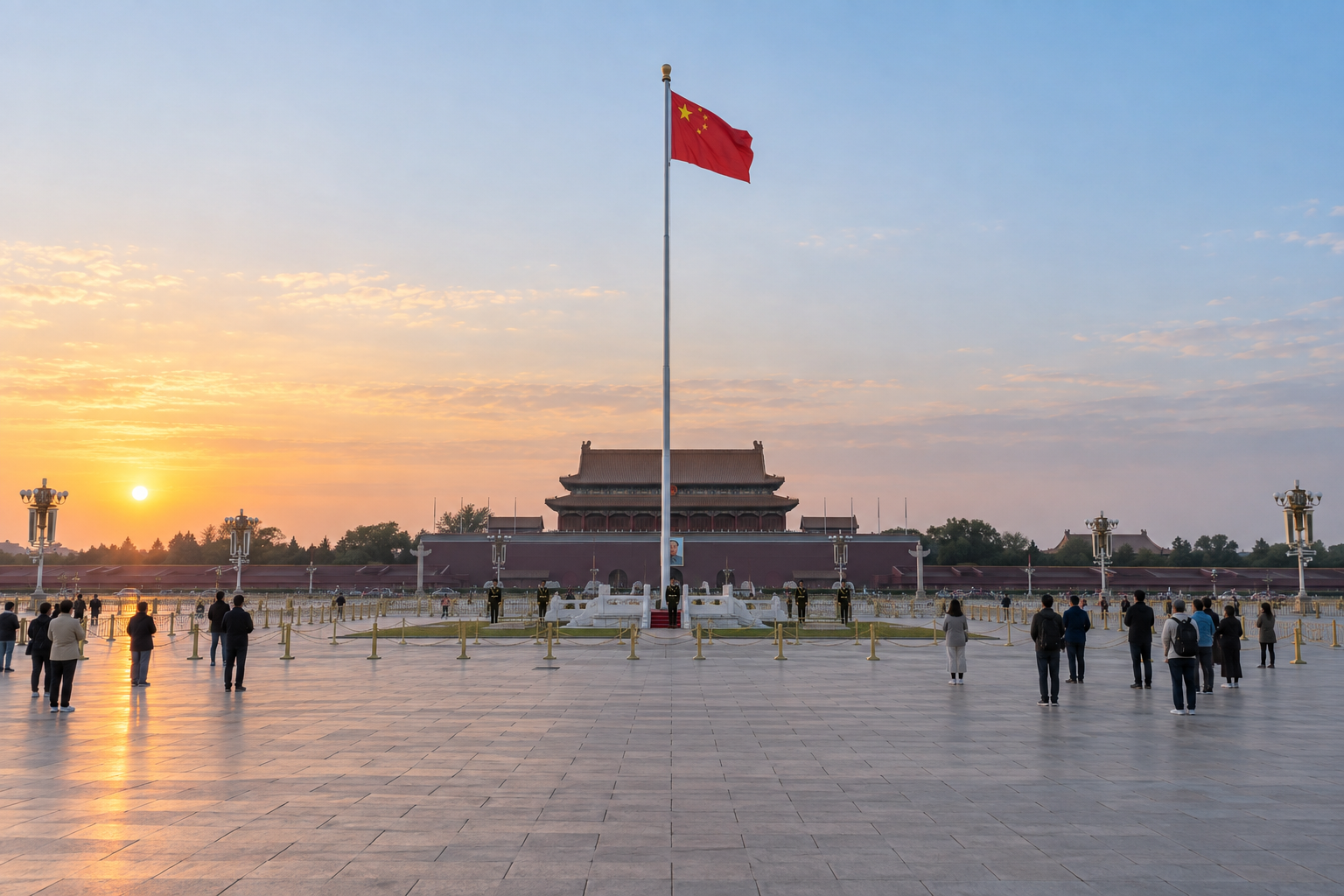
However, the setting matters: Tian'anmen Square in Beijing is a special place where the national flag is raised every day.
不过,具体场所很重要:北京天安门广场是每天升挂国旗的特定场所。
-
Large squares and parks follow festival rules, but this does not mean every square holds the same daily ceremony.
大型广场和公园遵守节日升挂规则,但这并不意味着每个广场每天都举行同样的仪式。
-
What matters is separating a national system from one famous Beijing scene.
重要的是,把全国性的制度与北京这一知名场景区分开来。
-
Festival flowers also show how National Day can reshape a public place without changing its basic function.
节日花卉也说明,国庆节怎样在不改变公共场所基本功能的情况下重塑其景观。
-
Tian'anmen Square first received festival flower displays in 1984, and its first three-dimensional flower beds appeared in 1986.
天安门广场于1984年首次布置节日花卉,1986年首次出现立体花坛。
-
From 1986 to 1999, a central flat flower bed worked with four three-dimensional corner displays.
从1986年到1999年,中心平面花坛与四角立体花坛共同构成布局。
-
By spreading viewing points around the square, this layout helped organize where visitors gathered.
这种布局把观赏点分布在广场各处,从而帮助组织游客聚集的位置。
-
From 2000, flower displays used green areas on both sides like a long picture, while the center stayed open.
从2000年起,花卉布置利用东西两侧绿地展开,如同一幅长卷,同时保持中心区域开阔。
-
From 2011, a giant flower basket in the center was joined by flower columns and balls on both sides.
从2011年起,中心巨型花篮与两侧花柱、花球共同组成景观。
-
These changes show that a flower bed is not only decoration but also a tool for guiding attention and movement.
这些变化说明,花坛不仅是装饰,也是引导视线与人流的工具。
-
Today, entering Tian'anmen Square requires planning as well as interest.
今天,进入天安门广场不仅需要参观意愿,也需要提前规划。
-
The reservation system divides visits into flag-raising, morning, afternoon, and flag-lowering periods, so services can match visitor numbers.
预约制度把参观分为升旗、上午、下午和降旗四个时段,以便服务保障力量与游客人数相匹配。
-
During major events, even people with reservations may be unable to enter because temporary controls can apply.
遇到重大活动时,由于可能采取临时管控措施,即使已经预约也可能无法进入。
-
In the National Day crowds of 2024, visitors needed real-name reservations, time-based entry, identity checks, and security checks.
在2024年国庆大客流情境中,游客需要实名预约、分时入场,并接受证件核验和安全检查。
-
People also had to follow temporary crowd guidance, while some routes became one-way and dangerous items were not allowed.
人们还需要服从临时客流疏导,同时部分路线实行单向通行,危险物品不得带入。
-
Thus, in this Beijing example, National Day becomes public not through one symbol alone, but through dates, flags, landscapes, and shared order.
因此,在北京这一案例中,国庆节并非只通过一个标志进入公共空间,而是通过日期、国旗、景观与共同秩序实现。