FOOD NOTES · E0107
广东云吞面:三部分怎样组成一碗好面
Cantonese Wonton Noodles: How Three Parts Build One Bowl
WORD BY WORD
进入逐词听读模式
顶部配图随进度轮播,未读文字为白色,读到后逐词变黄。
用B1英语认识广东云吞面:从碱水细面的结构、猪肉鲜虾馅的口感实例,到多种汤料熬出的清鲜层次,再观察浸泡后面条为何变软。全文限定广州/荔湾实例,不宣称唯一正宗、唯一原产或固定配方。
THREE THINGS TO KNOW
- 01
广式云吞面制作技艺列入广州市第八批市级非物质文化遗产代表性项目名录;这支持广州地方实践身份,不证明唯一原产地。
- 02
荔湾区政府报道把广式云吞面称为西关人生活习俗中不可或缺的一部分,并以荔湾店铺与竹竿压面呈现地方日常。
- 03
香港非物质文化遗产办记录的竹升面技艺以面粉和鸡蛋和面,用竹竿压制后切成细面;机器制面后来取代了大量手工,这是与云吞面相关的一种传统工艺。
BILINGUAL TRANSCRIPT
双语全文
-
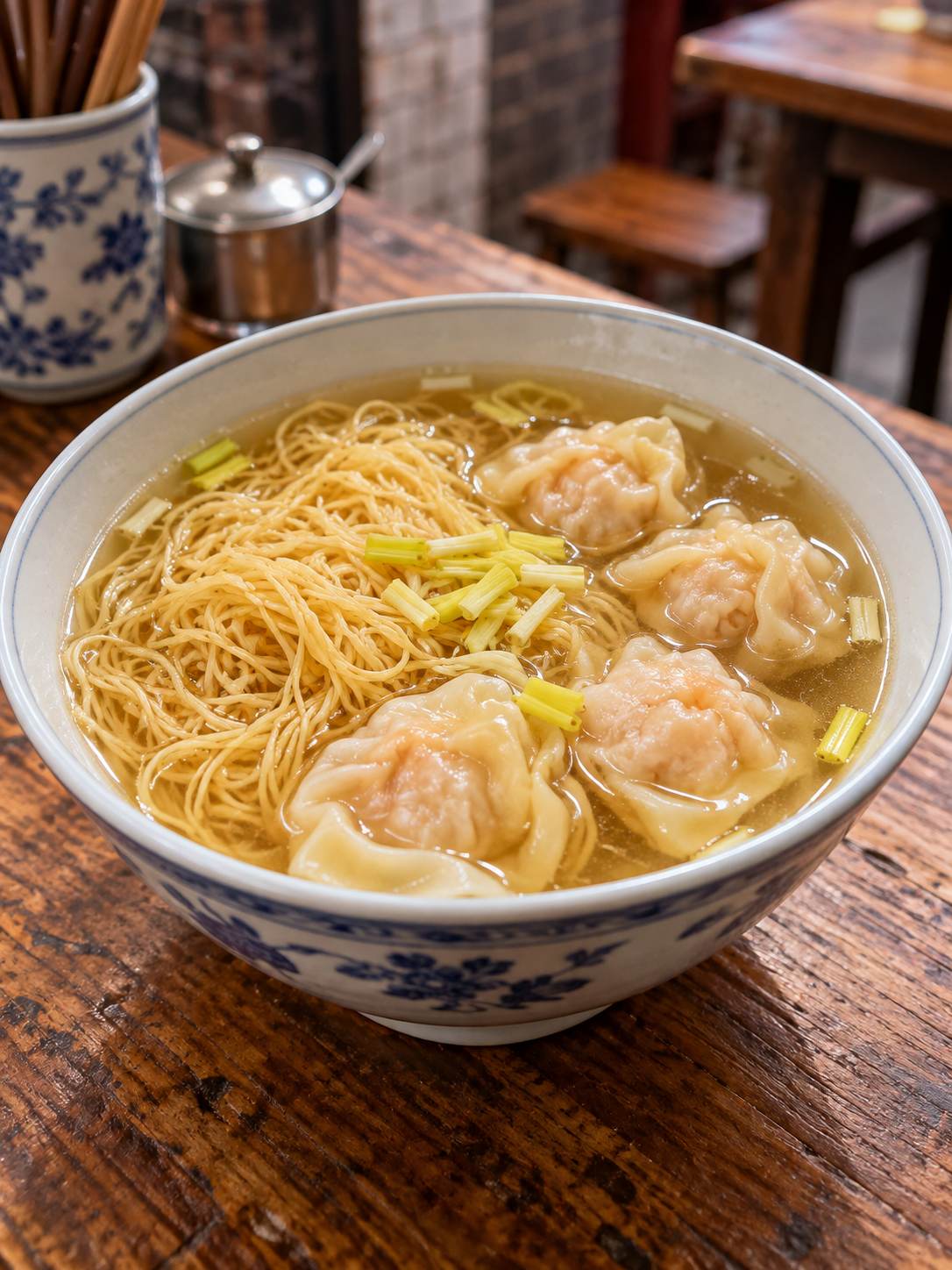
Cantonese wonton noodles combine three parts: thin noodles, small wontons, and a clear broth.
广东云吞面由三部分组合而成:细面、小云吞和清汤。
-
How do these parts create springy, tender, and savory layers in one bowl?
这三部分怎样在一碗里形成弹、嫩、鲜香的层次?
-
Guangzhou’s official list includes the making craft as municipal intangible cultural heritage.
广州市政府正式名录把广式云吞面制作技艺列为市级非物质文化遗产。
-
That local record does not prove one origin story or one recipe for all Guangdong.
这项地方记录并不能证明全广东只有一种起源故事或一份配方。
-
In one documented bamboo-pole method, flour and eggs become fine noodles.
在一种有记录的竹升面做法中,面粉和鸡蛋被制成细面。
-
The dough is pressed flatter with a bamboo pole, folded, and cut into thin strips.
面团用粗竹竿压薄,再折叠并切成细条。
-
Machines can now do much of this work, so bamboo-pole pressing is one traditional method, not a universal rule.
现在机器可以完成其中许多工序,因此竹升压面是一种传统方法,并非普遍规则。
-
Food studies show that alkaline salts alter protein, starch, and water interactions and can make noodles firmer and chewier.
食品研究表明,碱性盐会改变蛋白质、淀粉和水的相互作用,并可使面条更紧实、更有嚼劲。
-
They also help create the yellow appearance associated with yellow alkaline noodles.
碱性盐也有助于形成黄碱面常见的黄色外观。
-
Observe slender, separate strands and a firm bite, but never use color or texture alone to prove authenticity.
可以观察面条是否细长分明、入口紧实,但不能只凭颜色或口感判断是否“正宗”。
-
Wontons add a soft wrapper around a juicy filling, creating a second texture beside the noodles.
云吞用柔软的皮包住多汁的馅,在面条之外形成第二组口感。
-
One documented Cantonese recipe combines fresh shrimp and pork, while ratios and seasonings vary by maker.
一个有记录的广府食谱把鲜虾和猪肉合成馅料,但比例和调味会因制作者而异。
-
In one bite, the soft wrapper contrasts with the firmer shrimp-and-pork filling.
一口咬下,柔软的云吞皮与更紧实的虾肉猪肉馅形成对比。
-
Check whether the wrapper stays whole and whether the filling remains distinct from the noodles.
可以观察云吞皮是否完整,以及馅料能否与面条保持清楚的口感区别。
-
The broth surrounds both noodles and wontons and carries flavor between them.
汤包围着面和云吞,也在两者之间传递味道。
-
One documented Cantonese recipe uses dried flounder and shrimp shells to build the broth.
一个有记录的粤式食谱用大地鱼干和虾壳来熬制汤底。
-
Those ingredients contribute layered seafood aromas rather than one single note.
这些材料带来有层次的海鲜香气,而不是单一味道。
-
A clear-looking broth can still carry layered flavor; clear does not mean plain.
看起来清澈的汤仍可以有层次;清澈并不等于寡淡。
-
Garnishes vary, so they should not be treated as proof of authenticity.
配菜会有变化,因此不能把它们当作判断“正宗”的证据。
-
A useful observation is whether the broth leaves the slender strands visible and the wontons easy to distinguish.
一个实用的观察方法是:汤里是否仍能看清细面,并容易分辨云吞。
-
Serving time matters because cooked wheat noodles continue taking up water in liquid.
上桌时间很重要,因为煮熟的小麦面条在液体中会继续吸水。
-
In immersion tests, longer soaking reduced firmness, which helps explain prompt serving.
在浸泡测试中,浸泡越久,面条硬度越低,这有助于解释为何要及时上桌。
-
Documented methods vary in fillings, broth materials, tools, and portions, so there is no single frozen standard.
有记录的做法在馅料、汤料、工具和分量上各有变化,因此不存在一个冻结不变的单一标准。
-
The balance matters: firm strands, tender wontons, and clear savory broth stay distinct while improving one another.
关键在平衡:紧实的面、柔嫩的云吞和清鲜的汤各自分明,又彼此增色。
资料来源
- 广州市文化广电旅游局关于公布第八批市级非物质文化遗产代表性项目保护单位的通知
- 穿越百年时光,一碗云吞面见证广州西关味道
- Bamboo Pole Noodle Making Technique — Meet the Masters 2026
- Asian noodles: History, classification, raw materials, and processing
- Effect of alkaline salts on physicochemical properties and composition changes of fresh wet noodles during storage
- Effect of alkaline salts on the quality characteristics of yellow alkaline noodles
- 云吞面食谱|鼎爷教整云吞面4大技巧 大地鱼汤鲜甜惹味
- Elevated soak resistance of ready-to-eat cooked noodles: Protein network enhancement mediated by accelerated post-ripening of wheat grains