FOOD NOTES · E0104
福州线面:小麦面团怎样变成细长柔韧的面条
Fuzhou Xianmian: From Wheat Dough to Fine Strands
WORD BY WORD
进入逐词听读模式
顶部配图随进度轮播,未读文字为白色,读到后逐词变黄。
每天听一篇带你阅读福州线面英文介绍:从小麦面粉、面筋网络与拉伸晾干,认识细长柔韧的面条。以闽清鸡汤线面和茶油拌线面为地方实例,再区分生日祝愿与健康事实,不把供应地当作种植产地,也不宣称全国统一配方。
THREE THINGS TO KNOW
- 01
福州线面以小麦面粉为基础;闽清、闽侯的实例均位于福州地区。
- 02
线面细长如线,名称关联这种外形。
- 03
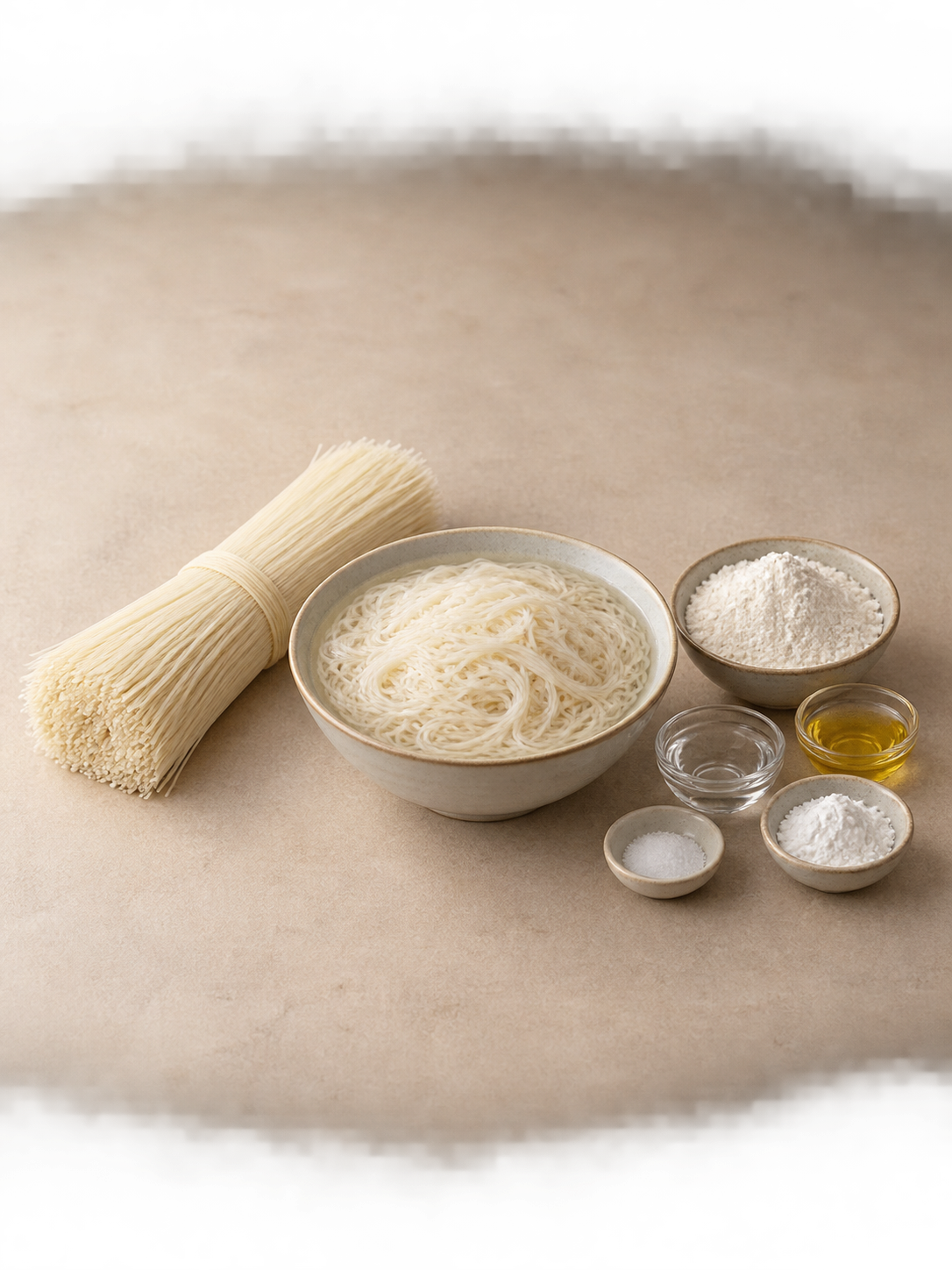
闽清介绍的一种传统原料组合包括面粉、清水和少量盐、油、薯粉。
BILINGUAL TRANSCRIPT
双语全文
-
Fuzhou xianmian are thin wheat noodles from the Fuzhou area, named for their threadlike shape.
福州线面是福州地区的一种细小麦面条,名字来自它细如线的形状。
-
How can simple flour become long, flexible strands that work in different local meals?
简单的面粉怎样成为细长、柔韧,又能搭配不同地方餐食的面条?
-
The answer begins with the dough, not with a special sauce or a fixed topping.
答案从面团开始,而不是从某种特殊酱料或固定浇头开始。
-
An official description from Minqing, within Fuzhou, lists flour, water, salt, oil, and starch.
福州所辖闽清的一份官方介绍列出的原料有面粉、水、盐、油和薯粉。
-
This describes one local tradition; it does not prove that every maker follows identical proportions.
这描述的是一种地方传统,并不能证明所有制面者都使用同样的配比。
-
The wheat flour matters because it contains proteins that can form a connected gluten network.
小麦面粉很重要,因为其中的蛋白质能够形成相互连接的面筋网络。
-
When flour and water are mixed and kneaded, that network develops into a stretchy dough.
面粉与水混合并经过揉制后,这个网络逐渐形成,面团因而可以拉伸。
-
Think of it as a flexible structure inside the dough, rather than a separate added ingredient.
可以把它理解为面团内部可伸展的结构,而不是另外添加的一种原料。
-
This general wheat dough science helps explain how makers can stretch the noodles into long strands.
这一关于小麦面团的一般科学原理,有助于解释制面者为什么能把面条拉长。
-
In Puqian village, Minhou, making xianmian includes mixing, shaping, threading, pulling, sun drying, and bundling.
在闽侯埔前村,制作线面包括和面、成条、串面、拉面、日晒和挽面等环节。
-
Shaping and pulling turn the dough into much thinner strands before the outdoor drying stage.
在晾晒之前,连续的成形和拉伸把面团变成细得多的面条。
-
Drying then reduces their water content, producing the dry noodles seen in bundles for sale.
晾晒随后降低面条的含水量,形成售卖时可见的成束干线面。
-
Traditional outdoor drying depends on suitable weather, so rain can interrupt this part of production.
传统的户外晾晒依赖合适的天气,因此降雨会影响这一生产环节。
-
The village has also developed indoor processing facilities, showing that an old craft can change.
这个村也发展了室内加工设施,说明老手艺同样能够发生变化。
-
To recognize xianmian, look first at the long, very fine strands, rather than the garnish.
辨认线面时,先观察它细长的面条,而不是碗上的配菜。
-
The local description also notes a smooth, flexible cooked texture: thin does not simply mean brittle.
地方介绍还记录了煮熟后滑润、柔韧的口感:细并不简单等于易碎。
-
The noodles provide the texture, while the choice of broth or oil changes the meal.
面条提供口感,而汤或油的选择让餐食呈现不同样貌。
-
Minqing records describe chicken broth poured over xianmian, with ingredients including ginger, mushrooms, and dried clams.
闽清的地方资料记载了用鸡汤浇线面的吃法,相关配料包括姜、香菇和蛏干。
-
The same county also records xianmian mixed with camellia oil, another way to serve it.
同一个县也记载了茶油拌线面,这是线面的另一种吃法。
-
These examples connect a wheat noodle with local cooking habits, not with one compulsory national recipe.
这些实例把小麦面条与地方烹饪习惯联系起来,而不是给全国规定同一份必用配方。
-
In Fuzhou birthday celebrations, long noodles and eggs can also carry wishes for a peaceful life.
在福州的生日庆祝中,长长的面条与鸡蛋也可以寄托平安生活的祝愿。
-
That is a cultural meaning, not evidence that eating long noodles makes someone live longer.
这是一种文化寓意,并不是吃长面条能让人更长寿的证据。
-
In 2023, a Fuzhou handmade product was presented as low in salt at a local food exhibition.
2023年,一款福州手工线面产品曾在当地粮食展会上以低盐分为特点进行介绍。
-
So read the ingredients, notice the strands, and separate the noodle itself from its changing accompaniments.
因此,可以查看配料、观察面条,并把面条本身与不同的搭配区分开来。