FIELD NOTE · E0101
碑刻拓印:石面凹槽怎样变成纸上白字?
How Does a Stone Rubbing Turn Carved Grooves into White Letters?
WORD BY WORD
进入逐词听读模式
顶部配图随进度轮播,未读文字为白色,读到后逐词变黄。
用B1英语理解碑刻拓印:湿润宣纸怎样贴入阴刻凹槽,拓包为何让较高区域受墨、凹处留白,并区分碑拓与印章直接印压。
THREE THINGS TO KNOW
- 01
拓印是在纸上取得石刻等硬质表面文字、纹样与起伏信息的复制方法;拓片不是原石本体。
- 02
专业拓印前要调查石刻材质、污染、裂隙、酥粉、空鼓等保存状况,并先清除表面尘土;文物状况影响是否及如何继续。
- 03
拓纸通常先润湿、闷纸,使纸张柔软且湿度较均匀,再覆盖于石刻表面。
BILINGUAL TRANSCRIPT
双语全文
-
A stone inscription and its rubbing are not the same object.
石碑与它的拓片不是同一个物件。
-
How can grooves cut into stone become clear white letters on a sheet of paper?
石面上刻下的凹槽,怎样会在纸上变成清楚的白字?
-
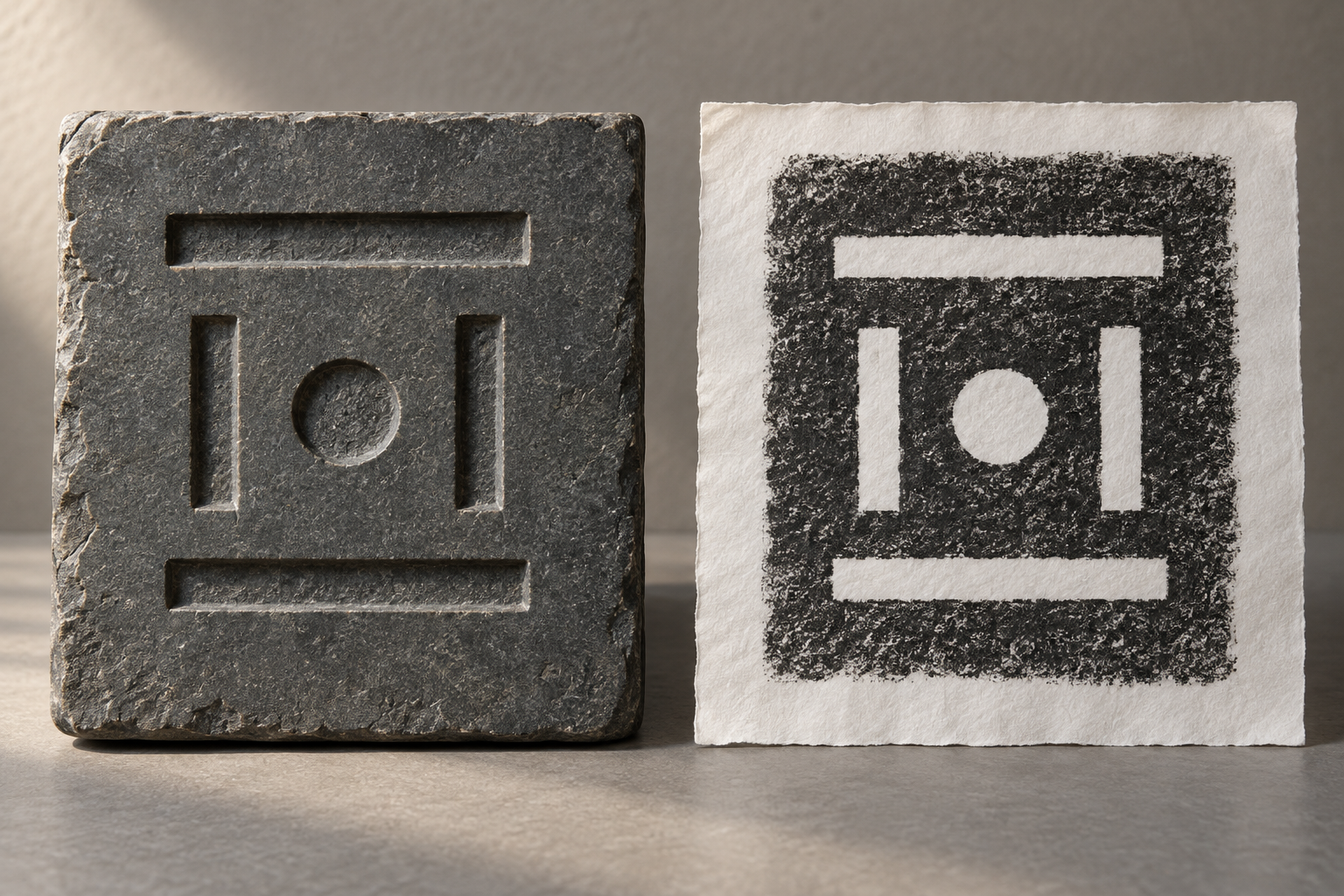
In an incised inscription, the strokes lie below the surrounding stone surface.
在阴刻碑文中,文字笔画低于周围石面。
-
A rubbing records this relief without removing the stone.
拓印记录这种起伏,而不移动石头。
-
Before touching a relic, trained workers inspect dust, cracks, powdering, and loose areas.
接触文物之前,专业人员要检查尘土、裂隙、酥粉和松动部位。
-
Stone condition decides whether work can continue and what protection is needed.
石刻的保存状况决定工作能否继续,以及需要怎样的保护。
-
For the wet-paper method, xuan paper is moistened and rested until its dampness becomes more even.
在湿纸拓法中,宣纸先被润湿并闷放,使湿度更加均匀。
-
The softened paper is spread over the inscription, with wrinkles and air pockets removed.
变软的纸覆盖在碑文上,褶皱和气泡要被排除。
-
A brush and small padded tools tap the paper so that it fits the flat surface and sinks into each carved stroke.
鬃刷和小拓包轻轻捶打纸张,使它贴住平面并陷入每一道刻痕。
-
This contact stage copies the shape of the surface before any black ink is added.
这个贴合阶段先复制表面形状,此时还没有上黑墨。
-
When the paper reaches a suitable dampness, an inked rubbing pad is tapped lightly across its upper surface.
纸张达到合适湿度后,蘸墨拓包在纸面上方轻轻拍拓。
-
Several light passes can deepen the tone, while heavy pressure or wet ink may blur details.
多次轻拍可以加深墨色,重压或墨过湿却可能让细节模糊。
-
The paper over the higher stone plane receives ink, but the paper inside the lower grooves should not.
较高石面上的纸会受墨,陷在较低凹槽里的纸则不应受墨。
-
That height difference produces the common black field and white letters of an incised-stone rubbing.
这种高低差形成了阴刻碑拓常见的黑底白字。
-
After inking, the sheet is lifted carefully and dried flat, leaving a portable paper record.
上墨后,纸张被小心揭下并平整晾干,成为可移动的纸面记录。
-
You can test the mechanism by viewing the original stone in side light and finding the recessed strokes.
可以用侧光观察原石,找出下凹笔画,来检验这个机制。
-
On the rubbing, those shapes should appear light while the surrounding higher areas appear dark.
在拓片上,这些形状应当较白,而周围较高区域较黑。
-
This comparison explains how the image formed; it cannot by itself prove the rubbing’s age or authenticity.
这种比较能解释图像怎样形成,却不能单独证明拓片的年代或真伪。
-
A seal works differently: its inked face is turned over and pressed directly onto paper or another receiver.
印章的动作不同:带印料的印面被反扣,直接压在纸张或其他受印载体上。
-
In stone rubbing, paper first conforms to a fixed carved surface, and ink then arrives from above the paper.
碑刻拓印则先让纸贴合固定刻面,之后墨从纸的上方拍入。
-
So a seal transfers pigment by direct impression, whereas a rubbing reveals relief through paper contact and selective inking.
因此,印章靠直接印压转移颜色,拓印则靠纸面贴合和选择性着墨显出起伏。
-
By the Tang dynasty, inscriptions were already being preserved and circulated in both rubbings and books.
到唐代,碑刻文字已经通过拓片和书籍得到保存与流传。
-
Later scholars valued rubbings for preserving words and calligraphic form; today, libraries also digitize them for study.
后来的学者重视拓片保存文字和书法形态;今天,图书馆还把它们数字化供研究。
-
Preservation comes first: students should study approved copies or museum images, not make unsupervised rubbings from ancient monuments.
保护必须优先:学生应研究获准的复制品或博物馆图像,而不能擅自给古碑拓印。