FOOD NOTES · E0100
厦门沙茶面:浓酱怎样变成汤底
Xiamen Shacha Noodles: From Paste to Soup
WORD BY WORD
进入逐词听读模式
顶部配图随进度轮播,未读文字为白色,读到后逐词变黄。
解释沙茶酱的制备、调汤和汤面组装,并认识可观察线索与本地口味变化。
THREE THINGS TO KNOW
- 01
厦门沙茶面是以沙茶调成汤头的面食,典型汤味鲜香微辣。
- 02
沙茶酱是厦门沙茶面汤头的核心,配料可以变化。
- 03
该规程的一种方法把花生、小葱、扁鱼干分别油炸,再把花生、小葱、鱼末、香料与热油混合研磨成酱。
BILINGUAL TRANSCRIPT
双语全文
-
In Xiamen, on the Fujian coast, shacha noodles bring a rich, slightly spicy soup to an ordinary meal.
在福建沿海的厦门,沙茶面以一碗醇厚、微辣的汤面融入日常饮食。
-
How does a thick seasoning paste become the soup that gives this noodle dish its character?
浓稠的调味酱怎样变成汤底,赋予这碗面鲜明的特点?
-
The key is to follow the sauce, rather than focus only on the ingredients placed on top.
关键是沿着酱料的制作过程观察,而不只关注面上放了哪些配料。
-
A local cooking standard describes one traditional method, not the only recipe that every shop must follow.
一份地方制作规程介绍了一种传统做法,并不意味着所有店家都只能采用这一种配方。
-
In this method, peanuts are fried until golden, while dried fish and scallions are also fried.
在这种做法中,花生炸至金黄,扁鱼干和小葱也分别经过油炸。
-
The peanuts, scallions, fish and spices are then ground with oil to make a thick paste.
随后,花生、小葱、鱼末和香料与油一同研磨,成为细腻的酱。
-
Garlic, chili and shrimp paste are cooked separately until their aroma develops, then ground into another paste.
大蒜、辣椒和虾酱另外煸炒至散发香气,再研磨成另一份酱。
-
These mixtures are combined with other seasonings and heated while the cook keeps stirring to remove moisture.
两份酱与其他调味料结合,厨师边加热边搅拌,使水分蒸发。
-
This produces a concentrated sauce, bringing the ingredients together before they enter the noodle soup.
这样得到的是浓稠的酱料:各种原料在进入面汤之前,已先结合起来。
-
Stock is prepared separately; the same standard gives an example made by simmering pork bones in water.
高汤另行制作;同一规程给出了用水熬煮猪骨的实例。
-
The cook adds the sauce to the stock, heats it and stirs until the mixture is evenly blended.
厨师把酱料加入高汤,加热并搅拌,直到两者均匀混合。
-
Adding liquid changes a thick seasoning into a soup that can be poured over the noodles.
加入液体,把浓稠的调味酱变成了可以浇在面条上的汤。
-
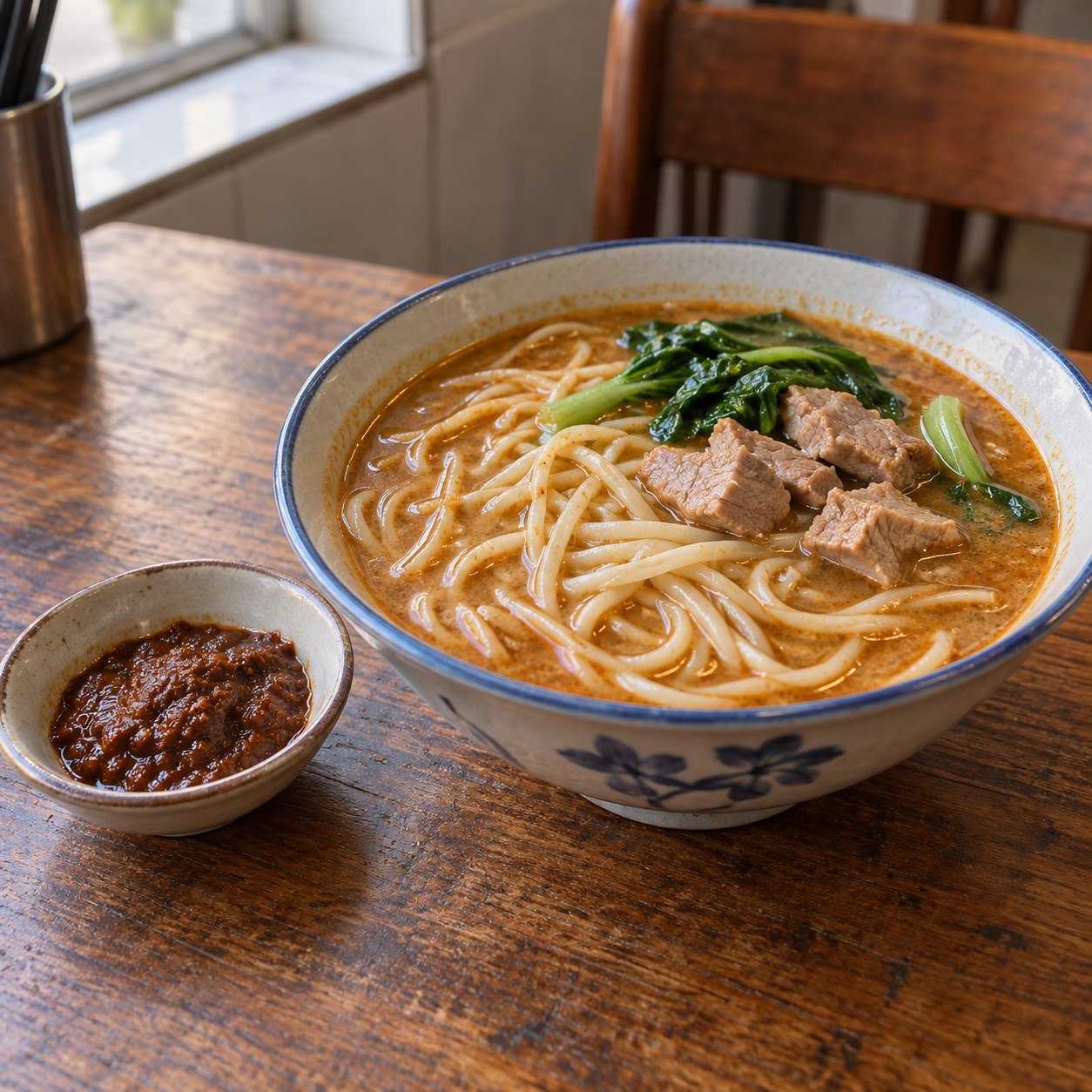
Look for a red-yellow broth with a full texture, a layered spicy flavor and a slightly sweet finish.
可以留意红黄色的汤汁、醇厚的质感、复合的香辣味,以及微辣后的回甘。
-
These are useful clues, but color alone cannot prove how a particular bowl was made.
这些是有用的线索,但仅凭颜色,不能证明某一碗面的具体制作过程。
-
The standard uses wheat noodles made with edible alkali and describes their texture as pleasantly chewy.
规程采用加入食用碱制作的小麦面条,并将其口感描述为筋道。
-
The noodles and leafy greens are cooked in boiling water before being placed in the bowl.
面条和绿叶菜先在沸水中焯熟,再放进碗里。
-
Hot shacha soup is added, along with cooked toppings that turn the sauce into a complete meal.
再加入热沙茶汤和熟配料,把调味酱组合成一餐。
-
Examples include pork, squid, shrimp and fried tofu, rather than one required combination of toppings.
配料可以有猪肉、鱿鱼、虾仁和炸豆腐,并不是必须采用某一种组合。
-
Seafood and meat therefore offer different choices while the shacha soup remains the dish's central link.
因此,海鲜和肉类提供不同选择,而沙茶汤仍是这道面食的核心纽带。
-
The seasoning also shows how a flavor associated with Southeast Asia became part of southern Fujian cooking.
这种调味料也体现了与东南亚有关的风味怎样融入闽南烹饪。
-
Returning overseas Chinese brought shacha back, and local makers adjusted the saltiness, spice and oil to suit local tastes.
归来的华侨带回沙茶,本地制作者又调整咸度、辣度和油脂比例,使其适合当地口味。
-
So, recognize the bowl by its sauce-based soup, chewy noodles and flexible toppings, not a single fixed ingredient list.
因此,辨认这碗面,要看以酱调成的汤、筋道的面条和可变的配料,而不是一张固定原料表。