FIELD NOTE · E0099
中国印章:工具与载体怎样留下痕迹
Chinese Seals: Tools, Surfaces, and Traces
WORD BY WORD
进入逐词听读模式
顶部配图随进度轮播,未读文字为白色,读到后逐词变黄。
B1双语科普:从印章实物、湿泥封检、纸上印色与印谱记录,解释载体与使用动作怎样改变可见痕迹。
THREE THINGS TO KNOW
- 01
印章实物与由它留下的印迹是不同对象;印谱可记录印迹,不能用印迹替代印章实物的形制描述。
- 02
馆方列出的印材包括铜、玉、瓷与各类石材,因此不能把中国印章一概视为石印。
- 03
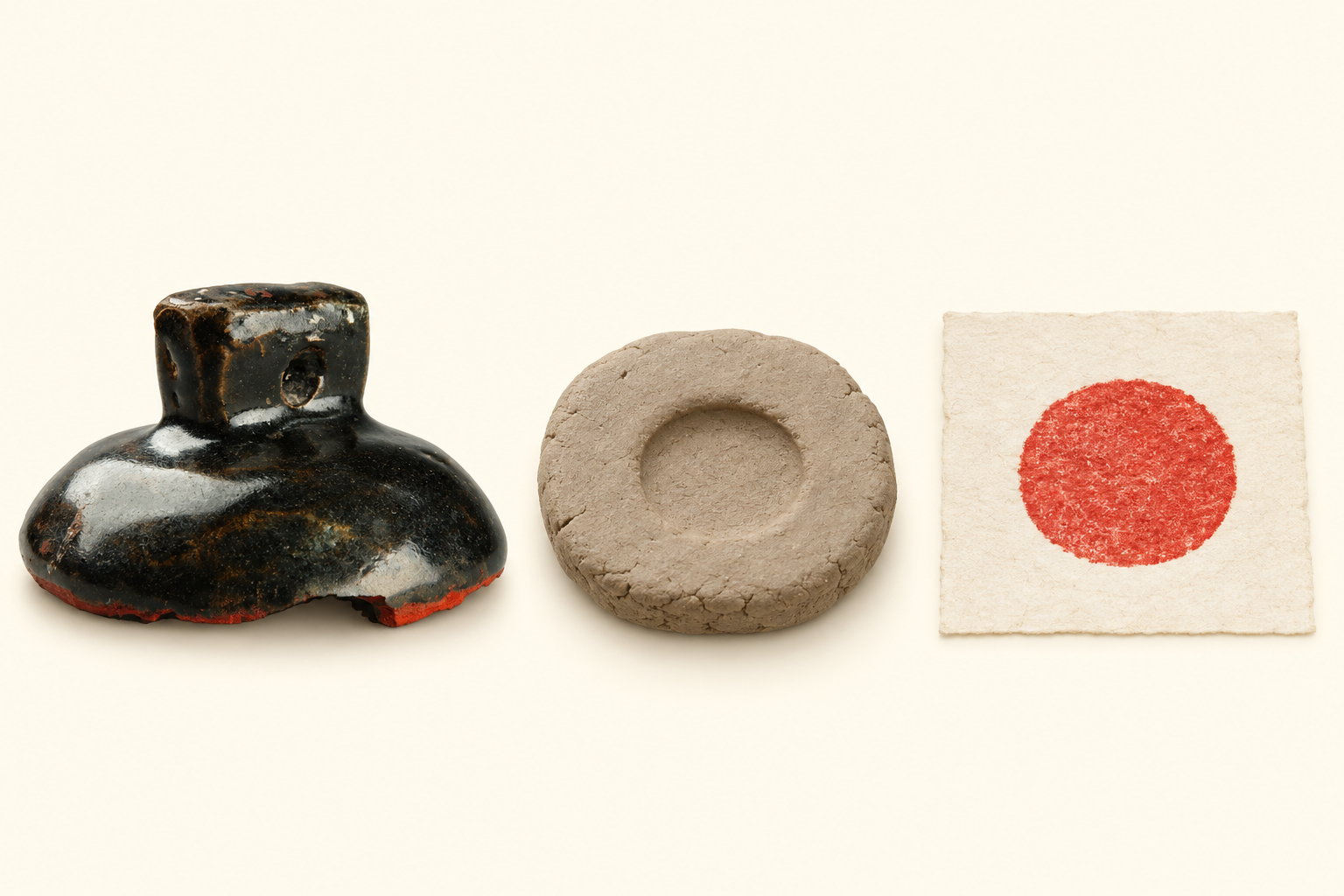
河南博物院记载:唐代瓷“龙福寺印”为黑釉橛钮(直柄钮);印面边长6.8厘米、通高3.5厘米,1971年禹州苌庄乡出土,印文四字为楷书。
BILINGUAL TRANSCRIPT
双语全文
-
A Chinese seal is a solid tool; its impression is the mark left behind.
中国印章是一件实物工具;印迹则是留下的痕迹。
-
What changes when the mark is left on soft clay rather than paper?
当痕迹留在软泥而不是纸张上时,会发生什么变化?
-
The answer involves the seal, the receiving material, and the way they meet.
答案涉及印章、承接痕迹的材料,以及两者接触的方式。
-
Museum collections include metal, jade, porcelain, and stone seals, so Chinese seals are not all stone objects.
博物馆藏品包括金属印、玉印、瓷印和石印,因此中国印章并不全是石制品。
-
Consider a Tang dynasty porcelain seal found in Yuzhou, Henan, with a straight handle above its body.
例如,一枚出土于河南禹州的唐代瓷印,印体上方有一个直柄钮。
-
The museum lists its face measurement as 6.8 centimetres, while the whole object is 3.5 centimetres tall.
馆方记载它的印面边长为6.8厘米,而整件印章的通高为3.5厘米。
-
Its four characters read Longfu Temple Seal, according to the museum's description.
根据博物馆的说明,它的四字印文读作“龙福寺印”。
-
Its handle, material, and dimensions describe the tool, not simply the words appearing in an impression.
它的钮式、材质和尺寸描述的是工具本身,而不只是印迹中出现的文字。
-
In an ancient document-sealing method, bamboo slips were covered by another wooden piece with a groove.
在古代一种封缄文书的方法中,竹简外加有一块带槽的木片。
-
Cord tied this cover in place, and wet clay was pressed into the groove over the knot.
绳索把这块检捆好,湿泥被按入槽中,盖住绳结。
-
A seal then pressed its design into the clay, producing a visible mark within the sealing arrangement.
随后,印章在泥上打出印文,在这套封缄结构中留下可见痕迹。
-
Here, clay was not just a drawing surface: it covered part of the tied closure itself.
这里的泥不只是承接图案的表面:它还覆盖了捆扎封口的一部分。
-
The National Museum describes this method alongside a Western Han clay sealing bearing the Qi Iron Office inscription.
中国国家博物馆在介绍一件带有“齐铁官印”印文的西汉封泥时,说明了这种方法。
-
With paper becoming more widely used, seals were increasingly applied directly to paper using a coloring material.
随着纸张应用扩大,印章更多地直接蘸印色,把印文钤盖在纸上。
-
This changed the receiving surface and the action, rather than making the solid seal itself into paper.
这改变了受印表面和使用动作,而不是把印章实物变成纸张。
-
However, paper use does not mean that every kind of clay sealing immediately disappeared.
但是,纸张应用并不意味着所有类型的封泥都立刻消失。
-
Tang packaging sealings found at the Daming Palace have red impressions and ink writing on their surfaces.
大明宫出土的唐代包装封泥,表面留有红色印文和墨书题记。
-
Many also carry basket marks on the back, offering another visible clue about their contact with packaging.
许多封泥背面还留有筐笼印痕,为它们与包装的接触提供另一条可见线索。
-
Paper also provided a way to collect and preserve seal impressions in specialist albums known as yinpu.
纸张也为在专门的印谱中汇集和保存印迹提供了载体。
-
These records helped people study and share seals, without every reader handling the original solid object.
这些记录帮助人们研究和传播印章,不必让每位读者都接触原来的印章实物。
-
Today, we can safely compare these carriers in museum photographs, without carving a seal or touching an ancient object.
今天,我们可以通过博物馆照片安全地比较这些载体,不必刻印,也不必触碰古代文物。
-
Ask whether you see a complete tool, a clay sealing with attached traces, or an impression recorded on paper.
可以问:看到的是完整工具、带有接触痕迹的封泥,还是记录在纸上的印迹?
-
This comparison explains objects and uses; it does not establish their age, maker, or authenticity by itself.
这种比较用于理解器物和用途;仅凭它,不能确定年代、制作者或真伪。
-
A seal leaves traces through contact, but the carrier helps explain their purpose.
印章通过接触留下痕迹,而载体帮助我们理解这些痕迹的用途。