FOOD NOTES · E0098
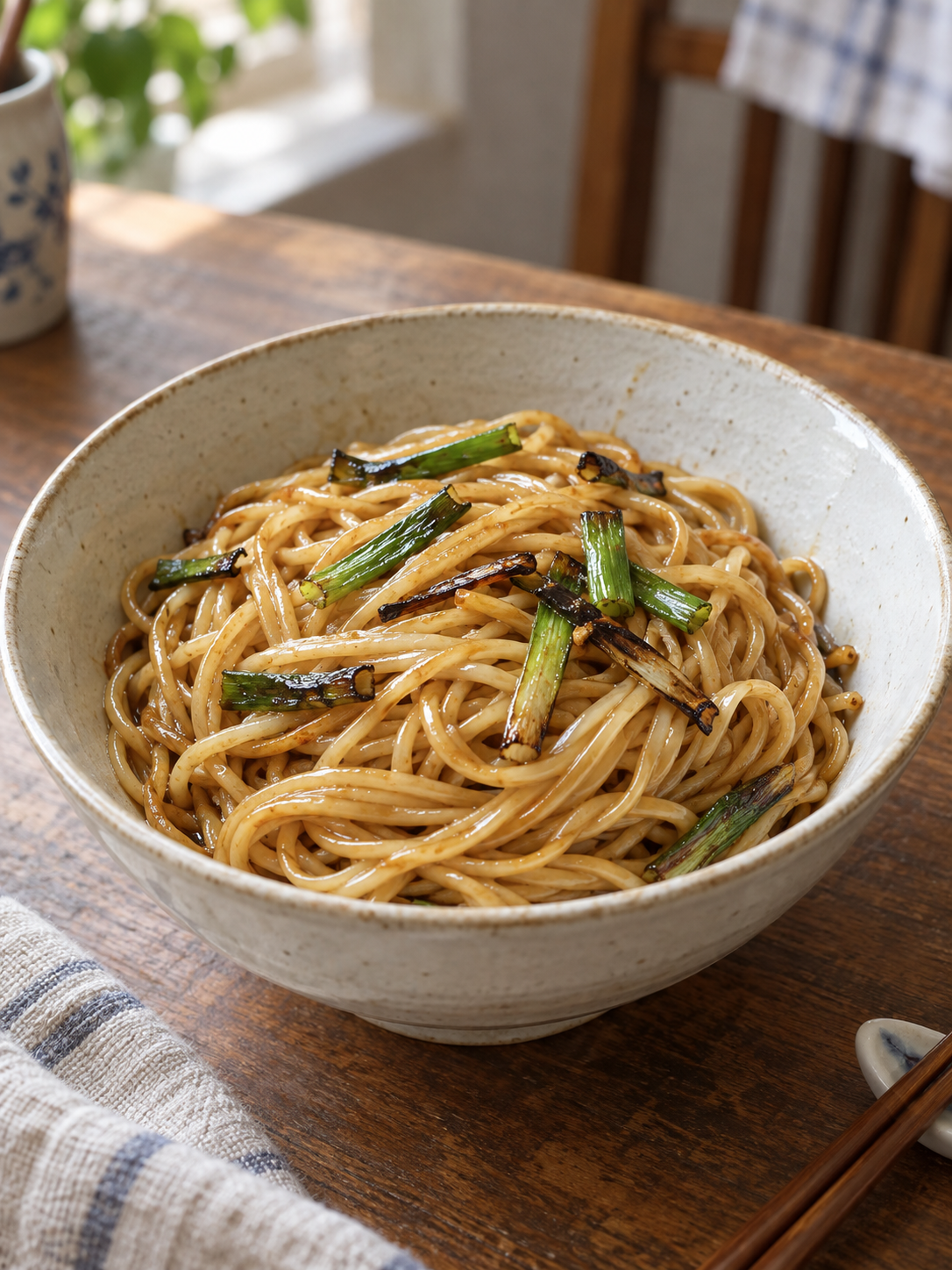
上海葱油拌面:葱香怎样裹住面条
Shanghai Scallion Oil Noodles: How Aroma Coats the Strands
WORD BY WORD
进入逐词听读模式
顶部配图随进度轮播,未读文字为白色,读到后逐词变黄。
用B1英语解释香葱怎样在油中形成熟香,葱油和酱油又怎样通过沥水与翻拌均匀接触面条。
THREE THINGS TO KNOW
- 01
上海市政府英文门户把葱油拌面描述为上海家常风味食品,基本组合是面条、葱油和酱油,食用前通过拌制让面条均匀裹上葱油与酱油。
- 02
该上海市政府页面给出的家庭做法包括香葱洗切后擦干、先热油再转小火缓慢炸至金黄酥脆、面条煮好沥水后与葱油和酱油拌匀。
- 03
上海市政府页面说明生抽与老抽可共同使用,前者主要增加咸味、后者加深颜色;糖、开洋及其他浇头属于可选变化,并非每一碗的固定组成。
BILINGUAL TRANSCRIPT
双语全文
-
Shanghai scallion oil noodles are a home-style dish built from wheat noodles, scallion-infused oil, and soy sauce.
上海葱油拌面是一种家常面食,以小麦面、葱油和酱油为基本组合。
-
How can these ordinary ingredients create a strong aroma and an even coating without a heavy soup?
这些普通食材没有浓汤,为什么仍能形成明显香气和均匀包裹感?
-
The process begins with fresh scallions that are cut and dried before they meet hot oil.
制作先从新鲜香葱开始:切段并擦干后,再放入热油。
-
Cooks then fry them gently until the pieces lose water, shrink, and become golden and crisp.
随后用较温和的火力慢慢炸制,直到葱段失水、收缩,变得金黄酥脆。
-
Studies of fried green onion oil show that heating changes both the amount and balance of its aroma compounds.
葱油研究显示,加热会改变香气成分的数量和相对组合。
-
In these studies, cooked, oily, and browned notes become easier to notice as frying continues.
这些研究显示,随着炸制进行,熟香、油香和褐变香气更容易被感知。
-
Compounds containing sulfur, together with another group of aroma compounds called aldehydes, help shape the fried-scallion smell.
含硫化合物与另一类名为醛类的香气成分,共同参与形成炸葱香。
-
Oil carries aroma from the scallions and later spreads it across the noodles.
油把香葱的香气带出来,之后再把这些香气分布到面条上。
-
Different vegetable oils produce different aroma profiles, so one oil cannot be treated as the only correct choice.
不同植物油会形成不同的香气轮廓,因此不能把某一种油当作唯一正确选择。
-
Light soy sauce mainly adds saltiness, while dark soy sauce gives the noodles a deeper brown color.
生抽主要增加咸味,而老抽让面条呈现更深的棕色。
-
Some versions add sugar or dried shrimp, but Shanghai shops and homes do not all follow one fixed formula.
有些版本会加糖或开洋,但上海店家和家庭并不都遵循同一套固定配方。
-
The noodles mainly provide a warm, flexible surface that can carry the dressing.
面条主要提供温热而柔韧的表面,用来承接调味。
-
Boiling softens their starch-rich structure, but the strands still need enough firmness to survive tossing.
煮制会软化面条富含淀粉的结构,但面条仍要保持足够韧性,才能经得住拌制。
-
After cooking, draining removes free surface water before the oil and sauce are added.
面条煮好后先沥水,再加入葱油和酱油,以减少表面的游离水。
-
When hot noodles meet scallion oil and soy sauce, mixing moves the dressing across many strands.
热面遇到葱油和酱油后,拌制会让调味接触更多面条。
-
Tossing then forms a thin, glossy layer instead of leaving all the seasoning at the bottom.
继续拌匀会形成薄薄的光泽层,而不是让调味全沉在碗底。
-
You can observe the mechanism by watching scallions change from fresh green to softened, golden, and dry.
可以观察香葱从鲜绿到变软、金黄和干爽的变化,理解这一机制。
-
Watch an adult compare their color, size, and smell, stopping before they turn very dark.
观察成年人比较葱段的颜色、大小和气味,并在颜色变得过深前停止加热。
-
Next, compare small portions of plain and coated noodles for gloss, aroma, and how easily the strands separate.
接着比较少量原味面与拌好后的面,观察光泽、香气以及面条是否容易分开。
-
This is a kitchen observation, not a scientific rating of the fastest oil or the most authentic bowl.
这只是厨房观察,不是对哪种油最快或哪一碗最正宗的科学评级。
-
The dish is closely linked with everyday Shanghai cooking, yet its exact toppings, noodle thickness, sauce balance, and oil can vary.
这道面与上海日常饮食紧密相关,但浇头、面条粗细、酱油比例和用油都可能变化。
-
What matters is the system: scallions flavor the oil, soy sauce balances it, cooked noodles provide structure, and tossing joins everything together.
关键是系统协作:香葱给油增香,酱油调节味道,熟面提供结构,拌制把各部分连接起来。
资料来源
- Scallion oil noodles: A taste of simplicity and flavor
- Dynamic variation and interrelation in the volatile and non-volatile fractions of deep-fried green onion (Allium fistulosum L.) oil with different frying temperatures
- Flavor formation in frying process of green onion (Allium fistulosum L.) deep-fried oil
- Effect of Different Vegetable Oils on the Flavor of Fried Green Onion (Allium fistulosum L.) Oil
- A Review of the Impact of Starch on the Quality of Wheat-Based Noodles and Pasta