FIELD NOTE · E0094
端砚怎样管理研墨水与墨液
How a Duan Inkstone Manages Water and Liquid Ink
WORD BY WORD
进入逐词听读模式
顶部配图随进度轮播,未读文字为白色,读到后逐词变黄。
用B1英语解释端石细粒结构、磨面阻力与砚堂—砚池分工怎样协同研墨、调水、汇集并暂存墨液。
THREE THINGS TO KNOW
- 01
端砚以广东肇庆古端州一带所产端溪石制成;国家级非遗项目页把肇庆黄岗白石村、宾日村及羚羊峡斧柯山、北岭山一带列为发源、制作核心区域和原料产区。
- 02
故宫博物院说明,不同岩坑所产端石特点各异,可见青花、胭脂晕火捺、蕉叶白、石眼等天然纹理;因此不能把某一坑口写成全部端砚的唯一标准。
- 03
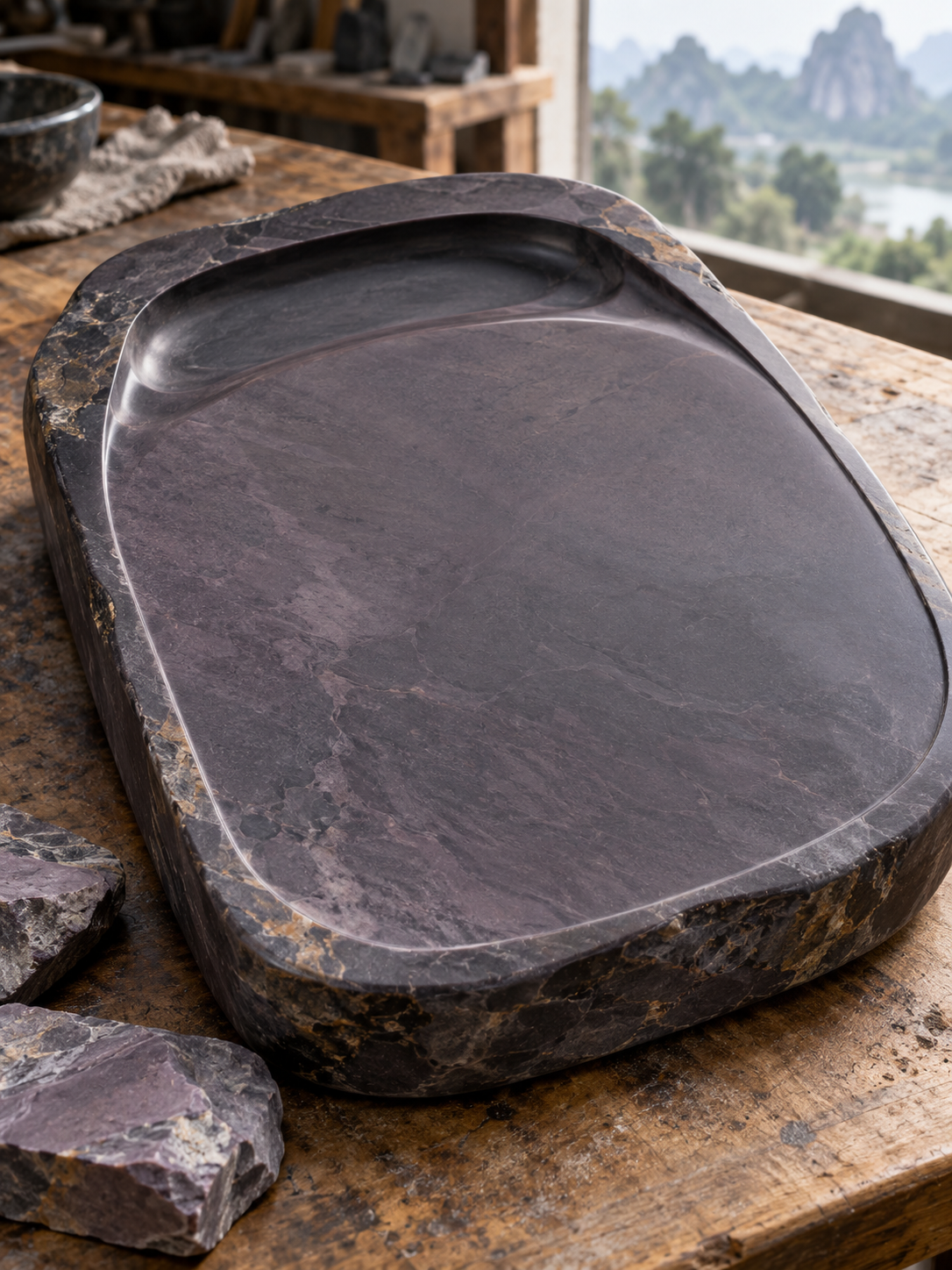
砚堂是砚面中央较空阔的研墨处,便于墨锭旋转和移动;砚池是砚面较深凹的贮墨处。故宫所藏端石砚实例可见宽阔砚堂、方井式砚池,或砚堂与砚池相通。
BILINGUAL TRANSCRIPT
双语全文
-
A Duan inkstone is a stone tool from Zhaoqing, Guangdong, used to turn an inkstick and water into liquid ink.
端砚是广东肇庆的一种石制工具,用来把墨锭和水转化为墨液。
-
How do its stone, finished surface, grinding hall, and ink pool manage water and ink together?
它的石质、磨面、砚堂和砚池怎样协同管理研墨用水与墨液?
-
Duan stone comes from the Duanxi area near ancient Duanzhou, but different pits produce different patterns and qualities.
端石产自古端州附近的端溪一带,但不同岩坑的纹理和使用特点并不相同。
-
A broader study of southern inkstones found that some good samples contain very fine minerals packed closely together.
一项范围更广的南方砚石研究发现,一些优质样品含有排列致密的细小矿物。
-
Their kinds and arrangement form tiny cutting edges that act on the inkstick during grinding.
这些矿物的种类和排列会形成微小砚锋,在研磨时作用于墨锭。
-
This helps explain why a useful surface can feel fine when dry, yet give gentle resistance under water.
这有助于解释:实用砚面干燥时可以手感细腻,加水研磨时却仍有适度阻力。
-
Performance depends on both the raw stone and the maker's final grinding and polishing, not on a famous pit name alone.
使用表现既取决于原石,也取决于制作者最后的磨面与打磨,不能只看某个名坑名称。
-
The broad central working area is the yantang, or grinding hall, with open space for controlled movement.
中央宽阔的工作区叫砚堂,它为受控研磨动作留出空间。
-
The lower hollow is the yanchi, or ink pool, and some historical Duan inkstones connect the two areas directly.
较低的凹处叫砚池,有些历史端砚把砚堂与砚池直接连通。
-
To begin, the user puts a small amount of clean water on the hall and moves the inkstick in circles.
开始时,使用者在砚堂放少量清水,让墨锭作圆周运动。
-
The surface removes solid ink little by little and mixes those particles into a thin water layer.
砚面一点点磨下固体墨料,并让这些颗粒混入薄薄的水层。
-
The water becomes darker as more ink enters it, while extra water usually makes the mixture lighter and easier to flow.
进入水中的墨料越多,水层越深;增加水量通常会使墨液变浅,也更容易流动。
-
Where the hall and pool connect, a slight hollow or slope can guide finished ink toward the pool.
在砚堂与砚池相通的设计中,轻微凹度或坡度可把调好的墨液引向砚池。
-
The pool gathers and temporarily holds liquid during writing, but it is not a device for long-term storage.
砚池在书写过程中汇集并暂存墨液,但它不是长期保鲜或储存装置。
-
You can observe the system by grinding three small batches for the same time and adding slightly more water to each one.
你可以用相同研磨时间制作三小份墨液,并让每一份的水量略微增加,观察这套系统。
-
Compare their darkness and flow, but do not treat this classroom test as a scientific speed rating.
比较它们的深浅和流动性,但不要把这种课堂观察当成科学的研墨速度评级。
-
One short brush stroke can check flow at the end; the paper mark is evidence, not the main explanation.
最后可以用一小笔检查墨液是否顺畅;纸上墨迹只是验证,不是端砚机制的主角。
-
The craft includes quarrying, selecting, shaping, designing, carving, and polishing; after more than a thousand years, it entered China's first national intangible cultural heritage list in 2006.
端砚工艺包括采石、选料、制璞成形、设计、雕刻和打磨;经过一千多年发展,它在2006年进入第一批国家级非物质文化遗产名录。
-
Traditional praise such as 'releases ink quickly' describes experience, not one fixed measurement for every stone, surface, inkstick, and hand.
“发墨快”之类传统评价描述的是使用经验,并不是适用于每块石料、每种磨面、墨锭和手法的固定测量值。
-
What matters is cooperation: stone and finish support controlled grinding, while hall and pool help add water, mix ink, collect it, and use it steadily.
关键在于协同:石质与磨面支持受控研磨,砚堂与砚池则帮助加水、调墨、汇集并稳定取用墨液。