FIELD NOTE · E0091
徽墨制作:烟料和胶怎样留下可见墨迹
Huimo Making: How Soot and Glue Leave Visible Ink Marks
WORD BY WORD
进入逐词听读模式
顶部配图随进度轮播,未读文字为白色,读到后逐词变黄。
每天听一篇用英语解释徽墨制作:从松烟、油烟与动物胶,到杵捣成型、缓慢晾墨、砚上研磨和黑灰浓淡,读懂徽墨怎样在纸上留下可观察且较持久的痕迹。
THREE THINGS TO KNOW
- 01
国家级非遗项目页面将徽墨制作技艺的相关地区列为安徽黄山市屯溪区、歙县和宣城市绩溪县,并说明各地形成不同流派;因此本文把徽墨界定为历史徽州区域的制墨传统,而不是全国所有黑色墨锭的统称。
- 02
国家级非遗项目页面称,徽州制墨业可追溯到唐末,宋元时期继续发展,明清时期达到更高水平;本文只采用这一有来源的时间线,不把它扩写为中国墨的唯一或最早起源。
- 03
徽墨传统以烟料和胶为核心;松烟与油烟的炼烟、收烟方式不同,不同流派在原料选择和方法上存在差异。
BILINGUAL TRANSCRIPT
双语全文
-
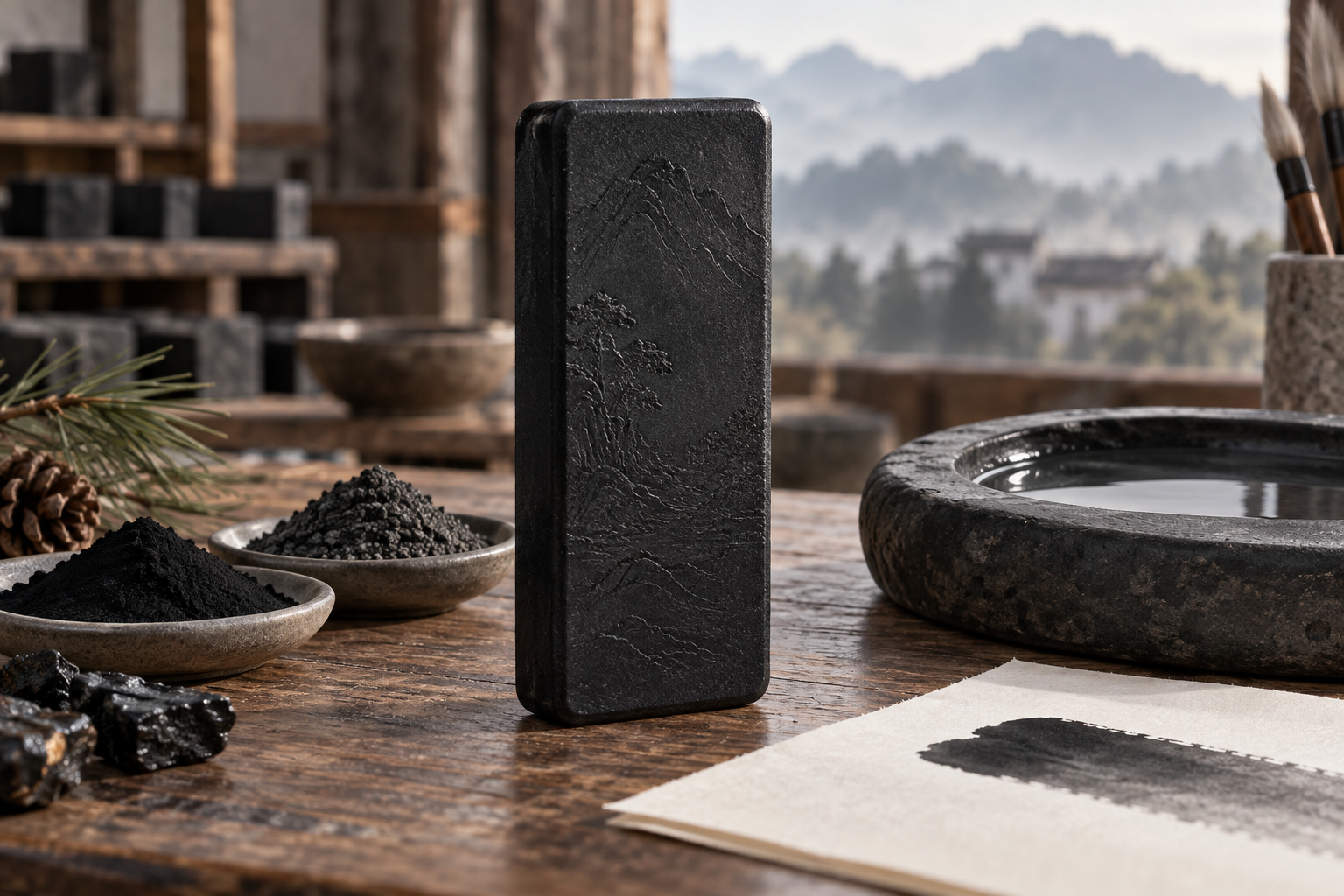
Huimo is a solid inkstick that releases black carbon ink when ground with water.
徽墨是一种固体墨锭,加水研磨后会释放出黑色碳质墨液。
-
How do soot and glue become an inkstick, then a clear mark on paper?
烟料和胶怎样变成墨锭,又怎样在纸上留下清晰墨迹?
-
Huimo belongs to the ink-making tradition of historic Huizhou, including Shexian, Jixi, and Tunxi.
徽墨属于历史徽州地区的制墨传统,包括歙县、绩溪和屯溪等地。
-
It is a regional craft, not one fixed recipe for every black inkstick.
它是一组地域工艺,并不是适用于所有黑色墨锭的一张固定配方。
-
Makers use fine smoke particles, commonly pine soot, oil lampblack, or prepared carbon black in some modern products.
制墨者使用细小烟料,常见有松烟、油烟,一些现代产品也会使用加工炭黑。
-
Pine and oil need different burning systems, so workshops control fire and collect soot differently.
松材和油料需要不同的燃烧系统,因此作坊控火与收烟的方法也不同。
-
Selected soot is mixed with warm animal glue, whose protein can coat carbon particles and help them spread through water.
筛选后的烟料与温热的动物胶混合,胶中的蛋白质可包覆碳颗粒,并帮助它们分散在水中。
-
Glue balance varies with soot, season, and intended use, so no single recipe fits every workshop.
胶与烟料的配合会随烟料、季节和用途而变化,因此各作坊并没有一张通用配方。
-
Workers repeatedly mix, pound, and knead the paste to spread soot through the glue and reduce uneven lumps.
工匠反复混合、杵捣和揉搓墨团,使烟料在胶中铺开,并减少不均匀的团块。
-
They weigh it, press it into carved wooden molds, then dry and trim the shaped sticks.
他们把墨料称量后压入雕花木模,再将成形墨锭晾干并锉边整理。
-
Large sticks may dry for months, so solid ink is made slowly.
较大的墨锭可能要晾上数月,因此固体墨锭并不是快速制成的。
-
To prepare ink, a writer adds water to an inkstone and moves the stick over its slightly rough surface.
用墨时,书写者在砚台中加水,让墨锭在细密而略粗糙的砚面上移动。
-
Grinding carries carbon particles into the water; less water gives deeper black, while more water creates lighter gray.
研磨使碳颗粒进入水中;水少时墨色更黑,水多时会出现较浅的灰色。
-
You can observe this by making several strokes and adding more water before each new stroke.
你可以连续画几笔,并在每一笔前多加一点水,观察这种变化。
-
The black-to-gray change shows that tone depends partly on the concentration of suspended carbon.
从黑到灰的变化说明,墨色深浅部分取决于悬浮碳颗粒的浓度。
-
Microscope studies find different particle sizes and clumps in inks made from different soot sources.
显微研究发现,不同烟料制成的墨具有不同的颗粒大小和团聚状态。
-
They also find glue on particle surfaces, showing that glue helps form the working ink, not only the stick.
研究还在颗粒表面发现胶,说明胶不仅帮助成锭,也参与形成可用墨液。
-
After a stroke dries, carbon forms the dark mark, while paper and ink still need careful protection.
笔画干燥后,碳质颜料形成深色墨迹,而纸张和墨层仍需要妥善保护。
-
Carbon ink is usually stable in light, but poor paper, moisture, mold, rubbing, or colored additives can still cause damage.
碳质墨通常较耐光,但纸张不佳、潮湿、霉菌、摩擦或彩色添加物仍会造成损害。
-
Huizhou production is documented from the late Tang period; over time, makers also used oil soot and, in some modern products, industrial carbon black.
史料所见的徽州制墨可追溯到唐末;此后制墨者也使用油烟,一些现代产品还使用工业炭黑。
-
Because schools and materials differ, Huimo is best understood as a family of methods, not one national formula.
由于流派和材料不同,更准确的理解是把徽墨看作一组相关方法,而不是全国统一配方。
-
In 2006, Huimo traditions from Shexian, Jixi, and Tunxi entered China’s first national intangible heritage list.
2006年,歙县、绩溪和屯溪的徽墨制作传统进入中国第一批国家级非遗名录。
-
Its visible mark begins in fire, is organized by glue and pounding, and appears through water, grinding, brush, and paper.
徽墨的可见痕迹始于火与烟,经胶和杵捣组织,最后通过水、研磨、毛笔与纸面呈现。