FOOD NOTES · E0090
苏州焖肉面:焖肉、汤和面怎样彼此配合
Suzhou Braised Pork Noodles: How Pork, Broth, and Noodles Work Together
WORD BY WORD
进入逐词听读模式
顶部配图随进度轮播,未读文字为白色,读到后逐词变黄。
每天听一篇用英语介绍苏州焖肉面:理解猪肉慢焖时胶原、肌肉蛋白、脂肪与盐怎样变化,母卤、高汤和细面又如何组合,并从肉、汤、面观察口感与店家差异。
THREE THINGS TO KNOW
- 01
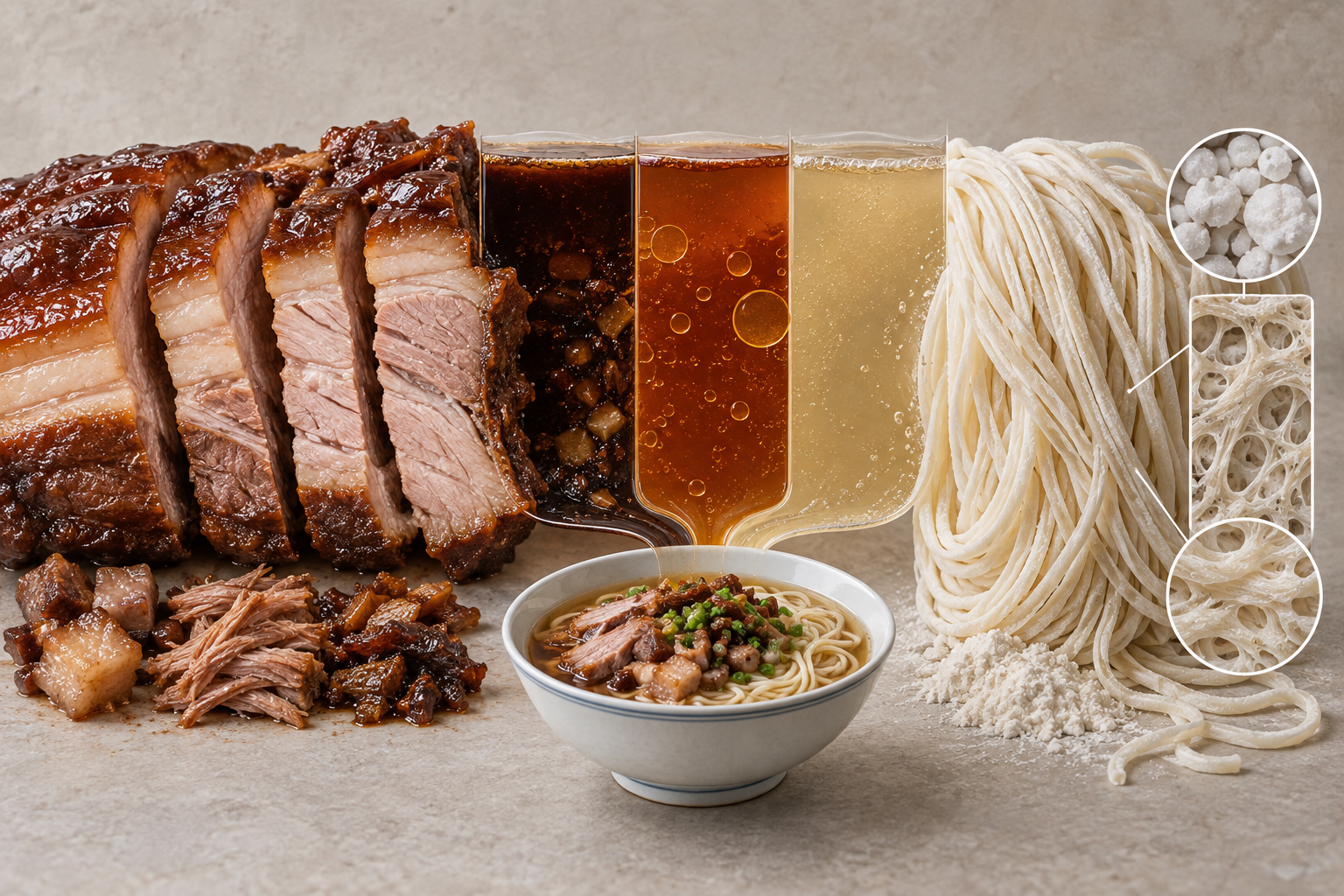
苏式汤面的代表性制作系统包括生湿面、母卤或助汁、高汤、浇头、摆碗捞面和成品出品;焖肉面应理解为这些部分的组合,而不只是面上放一块肉。
- 02
苏式汤面可见白汤、红汤等不同汤色,焖肉是经典浇头之一;同一浇头可按店家和食客选择做成盖浇或过桥,因此‘苏州焖肉面’不是单一固定外观。
- 03
苏州官方征求意见稿记录的一种代表性焖肉做法选用带骨肋条猪肉,先煮沸处理,再加入葱、姜、盐、料酒等,转小火焖炖约四小时;这不是所有面馆必须照搬的唯一方法。
BILINGUAL TRANSCRIPT
双语全文
-
What makes Suzhou braised pork noodles tender, fragrant, and balanced rather than simply meat placed on noodles?
苏州焖肉面为什么能呈现软嫩、香气与平衡,而不只是把一块肉放在面上?
-
The answer comes from three linked systems: slowly cooked pork, seasoned broth, and quickly cooked wheat noodles.
答案来自三个相互连接的系统:缓慢焖制的猪肉、调好味的汤,以及快速煮熟的小麦面。
-
In a Suzhou-style soup noodle bowl, wet noodles, stock, a concentrated base sauce, greens, and a topping are assembled separately.
一碗苏式汤面会把生湿面、高汤、浓缩的母卤、青叶和浇头分别准备,再组合起来。
-
Braised pork may meet red or pale broth, and it may sit on the noodles or arrive on a separate plate.
焖肉可以配红汤或较浅色的汤,也可以盖在面上,或用小碟另上。
-
This variety matters because no single color, sweetness, or serving style defines every Suzhou shop.
这种多样性很重要,因为没有一种汤色、甜度或上桌方式能够定义所有苏州面馆。
-
One official draft guide describes a representative method using bone-in pork ribs, water, ginger, scallion, salt, and cooking wine.
苏州一份官方征求意见稿记录了一种代表性做法:使用带骨肋条猪肉、水、姜、葱、盐和料酒。
-
After an initial boil, the meat is kept at a gentler heat for several hours instead of being cooked only by fierce fire.
肉先煮开,再用较温和的火力焖上数小时,而不是只靠猛火快速煮熟。
-
Time and heat then change both connective tissue and muscle proteins.
时间与热量会同时改变结缔组织和肌肉蛋白。
-
Some collagen loosens and becomes soluble gelatin, weakening the tissue that holds muscle bundles tightly together.
部分胶原会松散并转为可溶性明胶,从而减弱紧紧束住肌肉束的组织。
-
However, muscle proteins also shrink and lose water, so longer cooking does not always mean juicier meat.
不过,肌肉蛋白也会收缩并失水,因此焖得更久并不一定意味着肉更多汁。
-
What matters is the balance among the cut of pork, cooking time, temperature, and liquid.
真正关键的是猪肉部位、加热时间、温度和液体之间的平衡。
-
Fat adds lubrication and changes how aroma compounds are held and released, but more fat is not automatically better.
脂肪会增加润滑感,并改变香气成分的保留与释放,但脂肪更多并不自动等于更好。
-
Meanwhile, salt moves through water-rich meat by diffusion, driven partly by differences in concentration.
与此同时,盐会在含水的肉组织中扩散,其中一个推动因素是浓度差。
-
Fat, connective tissue, and muscle do not transport salt in exactly the same way, so seasoning is never instant or perfectly even.
脂肪、结缔组织和肌肉传递盐的方式并不完全相同,所以调味不会瞬间完成,也不会绝对均匀。
-
The cooking liquid becomes a concentrated base sauce, while stock supplies another layer of body and aroma.
焖肉的液体成为浓缩的母卤,而高汤又提供另一层汤体与香气。
-
A bowl can combine this base, hot stock, greens, a little pork fat, noodles, and the sliced topping.
一只碗可以把母卤、滚烫高汤、青叶、少量焖肉油、面条和切片浇头组合起来。
-
The noodles are cooked quickly in boiling water, yet customers may still choose firmer or softer textures.
面条会在沸水中快速煮熟,但食客仍可选择偏硬或偏软的口感。
-
Heat and water make starch swell and gelatinize, while the gluten network helps the noodle keep its structure.
热与水使淀粉吸水膨胀并糊化,而面筋网络帮助面条保持结构。
-
Cooking time therefore changes firmness, smoothness, water uptake, and how clearly the strands remain separated.
因此,煮制时间会改变硬度、光滑度、吸水量,以及面条能否保持根根分明。
-
To judge the result, compare tender sliced pork, clear but flavorful broth, and noodles matching the ordered texture.
判断成品时,可以比较软嫩的肉片、清而有味的汤,以及符合所点熟度的面。
-
These clues explain a working combination, not a test for one authentic recipe.
这些线索解释的是各部分如何配合,并不是检验唯一正宗配方的标准。
-
Suzhou braised pork noodles are thus a regional food system in which slow cooking and last-minute assembly shape each other.
因此,苏州焖肉面是一套地域性的食物系统:缓慢焖制与临出锅组合彼此塑造。
资料来源
- 苏州市地方标准征求意见稿:苏式传统文化 苏式面制作技艺传承指南
- Suzhou Noodles;苏式面制作技艺传承指南(征求意见稿)
- Low-temperature long-time cooking of meat: Eating quality and underlying mechanisms
- Molecular Gastronomy: A New Emerging Scientific Discipline;Low-temperature long-time cooking of meat
- Consumer Perception of Beef Quality and How to Control, Improve and Predict It? Focus on Eating Quality;Dynamic Instrumental and Sensory Methods Used to Link Aroma Release and Aroma Perception
- Diffusion of NaCl in meat studied by H-1 and Na-23 magnetic resonance imaging;Dual mode diffusion and sorption of sodium chloride in pork meats under cooking conditions
- A Review of the Impact of Starch on the Quality of Wheat-Based Noodles and Pasta
- 苏州市人民政府:关于公布苏州市第七批非物质文化遗产代表性项目名录等事项的通知
- 苏州市人民政府:寻味苏州活动;苏式面制作技艺传承指南(征求意见稿)