FIELD NOTE · E0088
宣纸制作:材料与捞纸怎样留下可见痕迹
Xuan Paper: How Materials and Scooping Leave Visible Marks
WORD BY WORD
进入逐词听读模式
顶部配图随进度轮播,未读文字为白色,读到后逐词变黄。
每天听一篇用英语解释宣纸制作:从青檀皮、沙田稻草与术语边界,到两次捞纸、纤维取向、竹帘纹和遇湿方向性,读懂纸面可观察痕迹背后的材料与工序机制。
THREE THINGS TO KNOW
- 01
按GB/T 18739—2008及宣城市市场监管部门的公开解释,地理标志产品宣纸以泾县及周边的青檀皮、沙田稻草和泾县山泉水为原料,在泾县境内按传统工艺生产;因此不能把所有手工书画纸泛称为宣纸。
- 02
青檀皮和沙田稻草要分别经过浸泡、蒸煮、洗涤、日晒等多轮加工;国家非遗中心资料称原料加工常历时一年以上,是整个流程中最长的阶段。
- 03
青檀皮纤维表面有皱褶、吸附性较强,沙田稻草纤维均匀、木质化程度较低且易成浆;两种纤维互相支撑,配比会随宣纸品种变化。
BILINGUAL TRANSCRIPT
双语全文
-
What can a blank sheet of Xuan paper tell us before a brush touches it?
一张空白宣纸在毛笔落下之前,能告诉我们什么?
-
Its fibers, faint laid lines, and response to moisture record choices made during production.
它的纤维、隐约帘纹和遇湿反应,都记录着制作过程中的选择。
-
Strictly, Xuan paper is not a general name for every handmade Chinese painting paper.
严格来说,宣纸不是所有中国画手工用纸的通称。
-
The protected product is made in Jing County with qingtan bark, Shatian rice straw, local spring water, and traditional methods.
受保护的宣纸在泾县生产,使用青檀皮、沙田稻草、当地山泉水和传统工艺。
-
So bamboo paper or another handmade art paper is not automatically Xuan paper.
因此,竹纸或其他手工书画纸不能自动被称为宣纸。
-
Bark and straw are separately soaked, cooked, washed, and weathered outdoors, often for more than a year.
树皮和稻草要分开浸泡、蒸煮、清洗并露天处理,原料加工常持续一年以上。
-
This removes unwanted material while keeping useful fibers for the paper network.
这样既去除不需要的物质,也为纸页网络保留可用纤维。
-
Bark fibers help form a framework, while finer straw pulp fills spaces and supports the sheet.
青檀皮纤维有助于形成骨架,较细的稻草浆填充空隙并支撑纸页。
-
Their changing ratio helps create different paper types, affecting strength, water absorption, and how ink spreads.
两种原料的配比变化有助于形成不同纸类,并影响强度、吸水和墨的扩散。
-
Workers mix pulp with water and lift it from a vat on a flexible bamboo screen.
工人把纸浆与水混合,再用柔软的竹帘从纸槽中捞起纸浆。
-
For many normal sheets, two workers scoop twice: the first pass forms the sheet, and the second adds pulp and levels it.
制作许多常规尺寸的纸时,两名工人协同捞两次:第一次成页,第二次补浆并找平。
-
As watery pulp moves across the screen, many long fibers turn with the flow instead of lying randomly.
含水纸浆流过竹帘时,许多长纤维会顺着浆流转向,而不是随机排列。
-
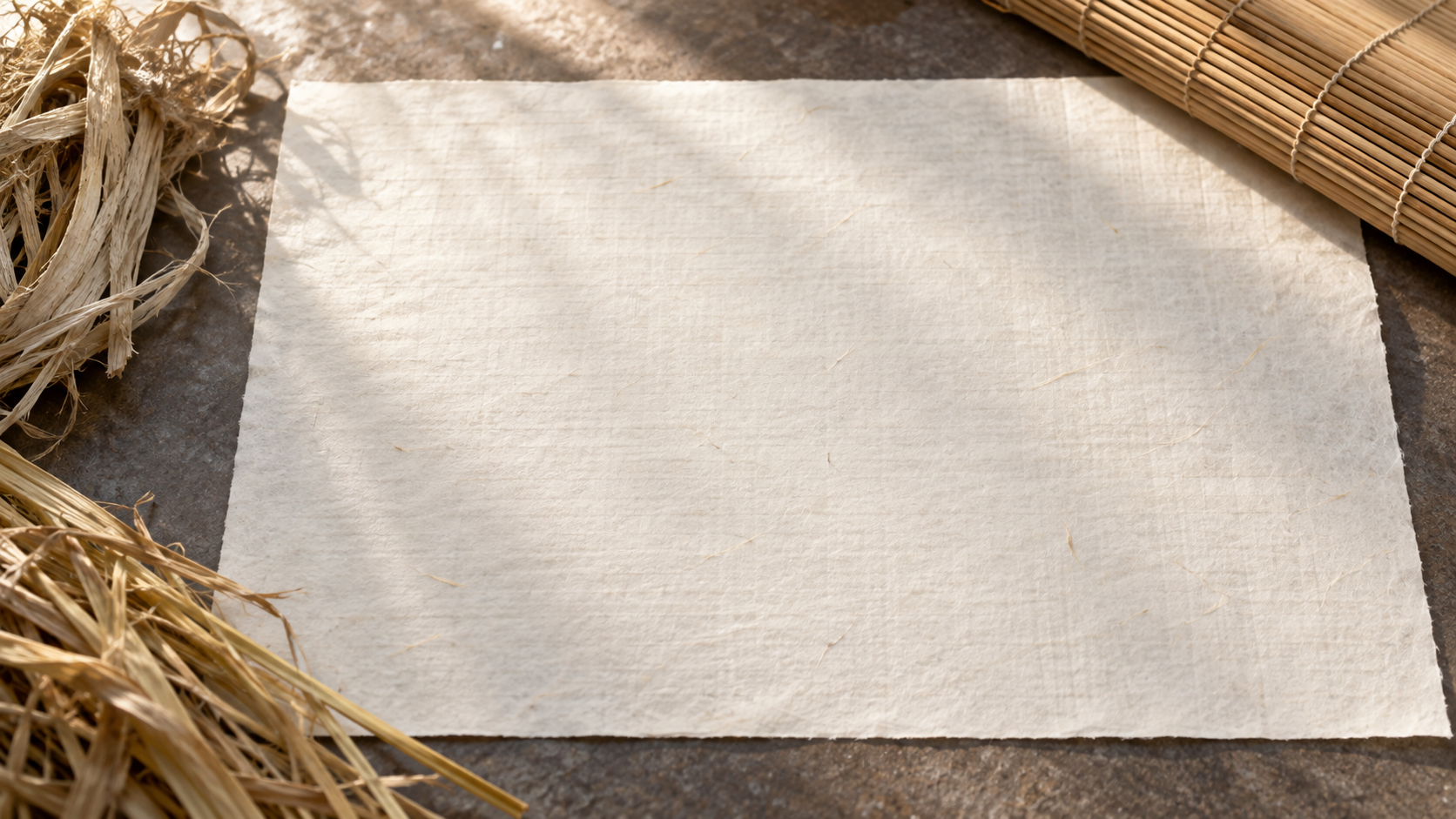
Bamboo strips and gaps receive slightly different amounts of fiber, creating alternating light and dark laid lines, called lianwen in Chinese.
竹帘条和条间空隙承接的纤维量略有不同,形成明暗相间的帘纹,英文可称 laid lines。
-
In soft backlight, you may see these faint lines on an unused sample.
把未使用的纸样对着柔和背光,可能看到这些隐约纹路。
-
They show screen forming, but cannot alone prove genuine Xuan paper, because other handmade papers may have similar marks.
它们显示纸页经过竹帘成形,却不能单独证明是真宣纸,因为其他手工纸也可能有相似痕迹。
-
Fiber direction also makes the sheet behave differently along and across the laid lines.
纤维方向还使纸张沿帘纹和跨帘纹方向的表现有所不同。
-
Tests find differences in strength and wet expansion between these directions, which matters in mounting and conservation.
测试发现这两个方向的强度与湿胀不同,这对装裱和文物保护很重要。
-
After forming, wet sheets are pressed, separated, brushed onto a heated wall, and dried flat.
成形后,湿纸经过压榨、逐张揭开、刷上焙墙并平整烘干。
-
The name Xuan paper appears in a Tang text, but that early name is not today's technical definition.
“宣纸”一名见于唐代文献,但早期名称并不等于今天的技术定义。
-
Jing County's documented craft line reaches the Song period; the living craft entered China's national heritage list in 2006 and UNESCO's list in 2009.
泾县有史料依据的技艺传承可追溯到宋代;这项活态技艺于2006年进入国家级非遗名录,2009年进入联合国教科文组织名录。
-
Today, understanding the fiber network helps people choose paper and manage moisture during mounting and conservation.
今天,理解纤维网络有助于人们选纸,并在装裱和保护中管理水分。
-
Materials build the network, scooping sets fiber direction, and the bamboo screen leaves visible evidence of the process.
原料建立网络,捞纸影响纤维方向,竹帘则留下可见的工艺证据。