FESTIVAL · E0087
中秋月饼:饼皮、馅料与模具怎样做成节令食品
Mid-Autumn Mooncakes: How Skin, Filling, and Molds Make a Festival Food
WORD BY WORD
进入逐词听读模式
顶部配图随进度轮播,未读文字为白色,读到后逐词变黄。
从饼皮包馅、模具成形和熟制方法出发,分清宋明历史证据与起源传说,再认识广式、苏式、京式、滇式的工艺边界及现代生产变化。
THREE THINGS TO KNOW
- 01
中秋节在农历八月十五;月饼是中秋节食用为主的传统节日食品,但不同家庭的具体食用与赠送方式并不完全一致。
- 02
月饼通常以小麦粉等谷物粉或植物粉、油、糖或不加糖等制成饼皮,包裹各种馅料后加工而成。
- 03
常见生产顺序包括配料、成团或制皮、分料、包馅、成形、熟制、冷却和包装;不同派式会改变饼皮与熟制方法。
BILINGUAL TRANSCRIPT
双语全文
-
On the fifteenth day of the eighth lunar month, mooncakes are a major Mid-Autumn Festival food.
农历八月十五,月饼是中秋节的重要节令食品。
-
How is this festival pastry built, shaped, and changed—not which legend invented it?
核心问题是这种节令糕点怎样构成、成形并不断变化,而不是哪一个传说发明了它。
-
Basically, a mooncake has a skin of grain or plant flour, oil, and often sugar.
最基本的月饼有一层饼皮,由谷物粉或植物粉、油以及通常使用的糖制成。
-
This skin wraps a sweet or savory filling that varies greatly by recipe.
饼皮包裹着甜馅或咸馅,不同配方之间差别很大。
-
Makers prepare dough and filling, divide them, wrap each center, and close the skin carefully.
制作者备好面团和馅料并分份,再包入每份馅心,仔细收好饼皮。
-
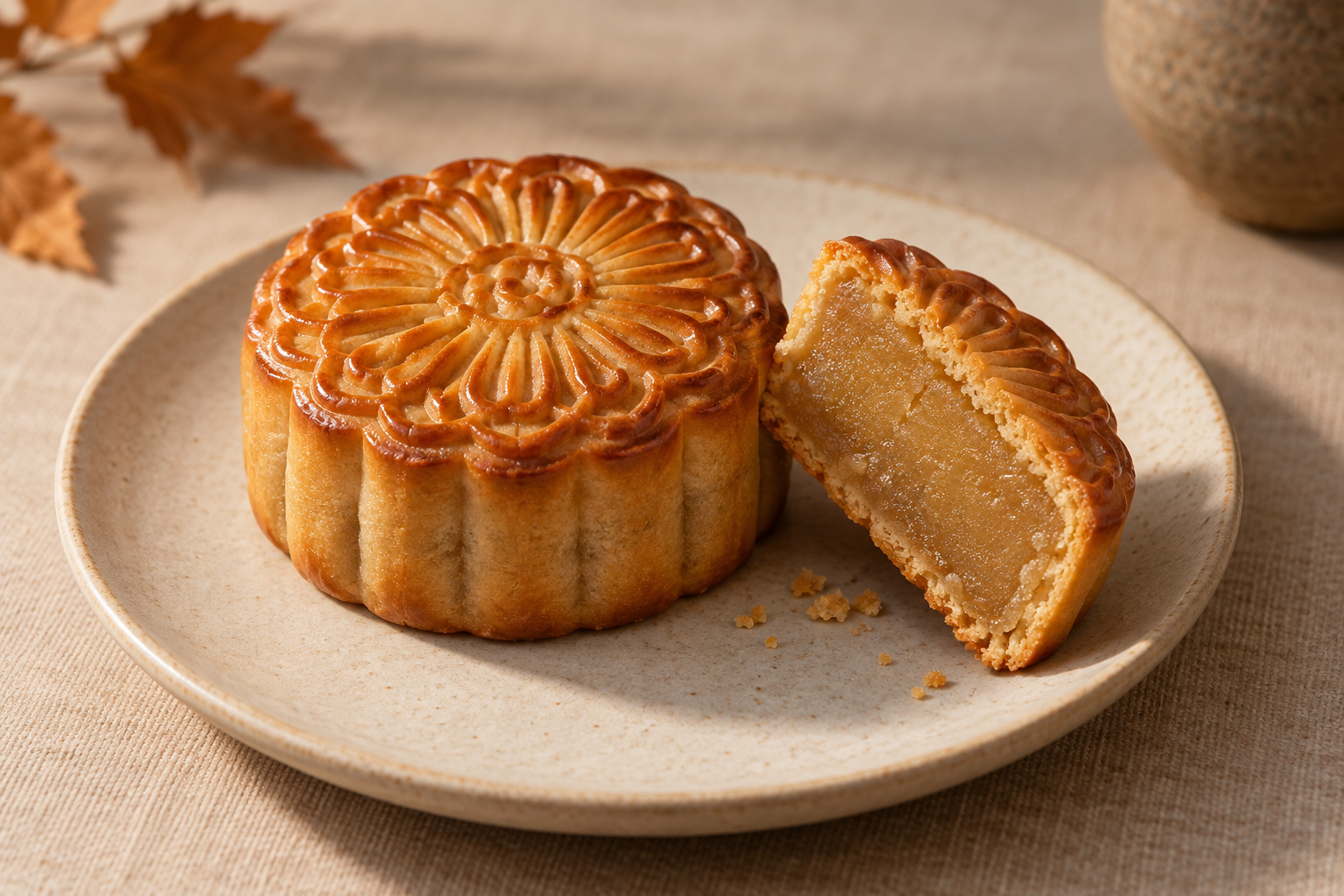
They press the filled dough in a mold, giving it a steady outline and clear surface pattern.
他们把包好馅的面团压入模具,使其获得稳定的外形和清楚的表面纹样。
-
Wooden molds carry words, flowers, rabbits, or other pictures, forming decoration together with the cake.
木模刻有文字、花卉、兔子或其他图案,让装饰与饼体同时成形。
-
Round cakes can suggest the full Moon and family reunion, yet old molds also made peach, bat, and lotus shapes.
圆饼可以让人联想到圆月与团圆,但旧时模具也能做出寿桃、蝙蝠和莲蓬等形状。
-
Many mooncakes are baked, while current standards also recognize fried, steamed, and cooked-flour types.
许多月饼经过烘烤,不过现行标准也承认油炸、蒸煮和熟粉等加工类型。
-
History is layered too: no single origin story fully explains the evidence.
月饼的历史也层层展开:没有一个单一起源故事能充分解释现有证据。
-
Song-period books list a food called mooncake, but those entries do not clearly make it a Mid-Autumn food.
宋代书籍列出了名为“月饼”的食品,但这些条目并未清楚说明它专属于中秋。
-
By the Ming period, records more clearly connect round cakes with the eighth lunar month, gifts, and reunion.
到了明代,记录更清楚地把圆饼与农历八月、馈赠和团圆联系起来。
-
This suggests a long change from earlier pastries to a named seasonal custom, rather than one sudden invention.
这说明,月饼经历了从早期饼食到固定节令习俗的漫长变化,而不是突然被某个人发明。
-
Stories of a Tang emperor renaming a foreign-style cake or secret messages starting a revolt are legends, not proven history.
唐代皇帝为胡饼改名、月饼藏密信发动起义等故事属于传说,并非得到证实的历史。
-
Regional names describe representative methods and flavors, not strict borders or one recipe followed by all Chinese families.
地域派式描述的是有代表性的工艺和风味,并非严格的地理边界,更不是所有中国家庭共同遵守的一份配方。
-
Cantonese-style cakes often use flour, invert syrup, oil, and alkaline water for a soft skin before molding and baking.
广式月饼常用面粉、转化糖浆、油和碱水制作柔软饼皮,再经模印与烘烤。
-
Suzhou-style cakes build flaky layers with pastry dough, while Beijing-style cakes may use syrup skin or short pastry.
苏式月饼用酥皮形成松酥层次,而京式月饼则可以使用提浆皮或松酥皮。
-
Yunnan-style fillings may feature ham, nuts, edible flowers, or mushrooms, showing how local foods enter the festival cake.
滇式馅料可以使用火腿、果仁、食用花卉或食用菌,体现地方食材怎样进入节令糕点。
-
These examples are guides, not a complete map; today's national quality standard lists nine regional styles.
这些例子只是理解线索,并非完整地图;现行国家质量标准列出九种地方派式。
-
Today, a factory may keep a handcraft line while machines mix, shape, brush, bake, cool, inspect, and pack.
今天,一家工厂可以保留手工生产线,同时让机器完成搅拌、成形、刷液、烘烤、冷却、检测和包装。
-
For packaged cakes, what matters is reading ingredients, allergens, production dates, storage directions, and shelf life before sharing.
面对预包装月饼,重要的是在分享前看清配料、过敏原、生产日期、贮存方法和保质期。
-
A mooncake carries reunion meaning only after flour, filling, craft, local taste, and careful choices have made it real.
月饼的团圆意义,正是由面粉、馅料、手艺、地方味道和谨慎选择一步步变成现实。