FOOD NOTES · E0086
昆山奥灶面:水乡原料如何形成风味层次
Kunshan Aozao Noodles: How Water-Town Ingredients Build Layers of Flavor
WORD BY WORD
进入逐词听读模式
顶部配图随进度轮播,未读文字为白色,读到后逐词变黄。
THREE THINGS TO KNOW
- 01
2009年公布的江苏省第二批省级非物质文化遗产名录把“汤面制作技艺(昆山奥灶面制作技艺、镇江锅盖面制作技艺)”列为传统技艺项目,昆山市是申报地区之一。
- 02
昆山是河网密集的江南水乡;昆山市政府资料称境内有大小河道2815条、总长超过2800千米。
- 03
昆山市政府在介绍当地乡食时,把青鱼、大麻鸭、虾、蟹和小麦列为奥灶面所使用的本地农产品例子。
BILINGUAL TRANSCRIPT
双语全文
-
Kunshan Aozao noodles are a local tradition whose flavor comes from the whole bowl, not one secret ingredient.
昆山奥灶面是一种地方汤面传统,它的风味来自整碗各部分,而非某一种神秘原料。
-
How do water-town foods, broth, fried fish, and fine noodles build its savory and aromatic layers?
水乡食材、汤底、爆鱼和细面,怎样共同形成它鲜香分明的层次?
-
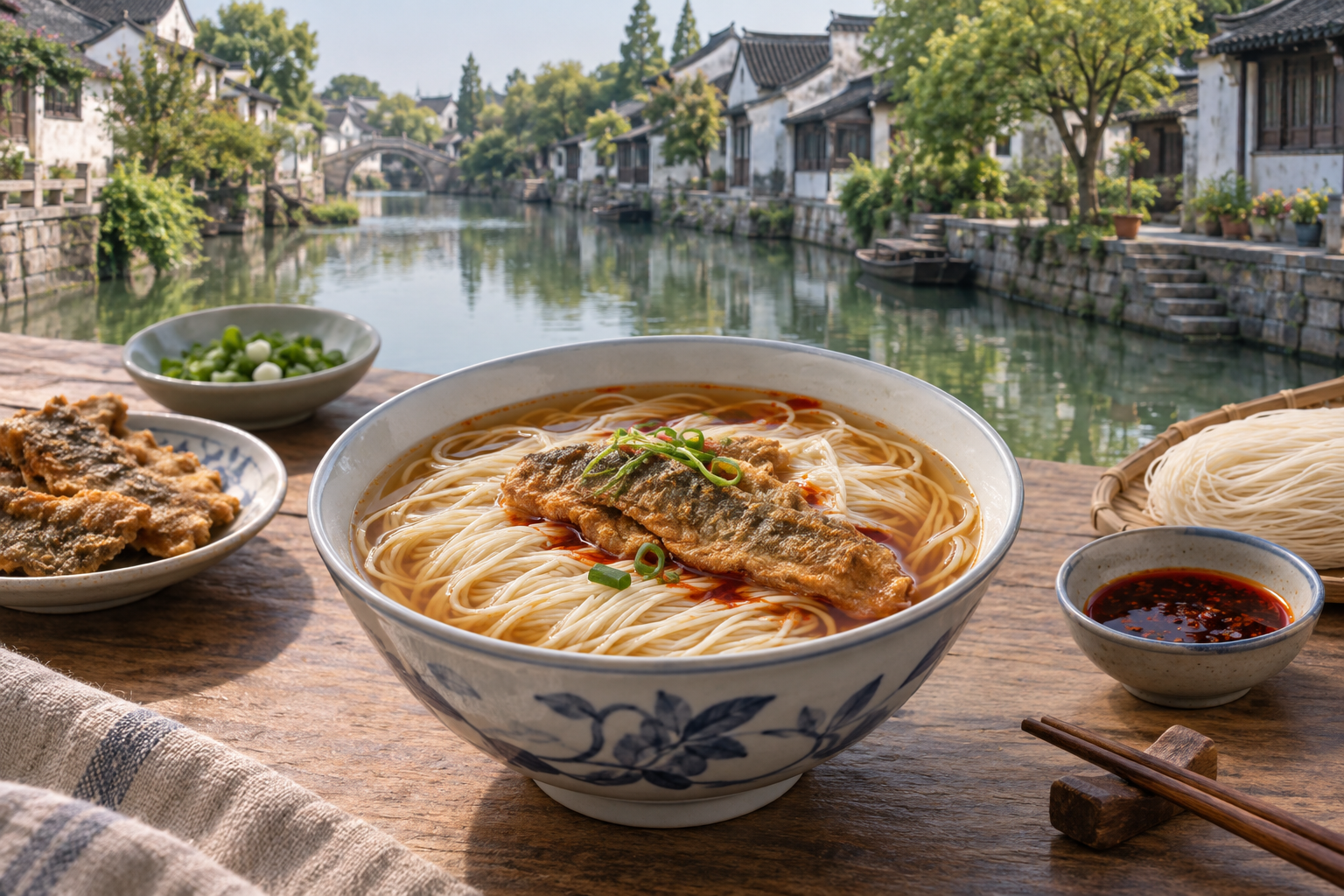
Kunshan's 2,815 waterways stretch over 2,800 kilometers, forming a dense river network.
昆山有2815条河道,总长超过2800千米,由此形成密集河网。
-
Yet rivers alone do not prove the recipe's origin or every shop's supply chain.
但河网本身并不能证明配方的起源,也不能证明每家店的原料供应链。
-
A government report on one competition entry lists local black carp, duck, shrimp, crab, and wheat as ingredients.
一则关于某项参评产品的政府报道将本地青鱼、鸭、虾、蟹和小麦列为食材。
-
It describes that entry, not every bowl sold across Kunshan.
它说明的是该参评产品,而不是昆山售出的每一碗面。
-
Representative bowls include red-oil fried-fish noodles and white-broth braised-duck noodles, although other versions exist.
红油爆鱼面和白汤卤鸭面是两种代表性组合,但还存在其他版本。
-
One official account links red broth with freshwater fish, river ingredients, bones, and poultry; white broth mainly uses chicken, duck, and pork bones.
一则官方资料把红汤与淡水鱼、河鲜、骨类和禽类原料联系起来;白汤则主要使用鸡、鸭和猪骨。
-
A heritage account says red oil is vegetable oil used to fry fish, alongside broth, topping, and fine noodles.
一则非遗资料把红油描述为炸过爆鱼的菜油,并让它与汤、浇头和细面共同构成整碗。
-
Together, these parts bring several savory sources into one bowl.
这些部分共同把多种鲜味来源汇入一碗面。
-
General fish-soup research suggests that amino acids such as glutamate can join nucleotides such as IMP to strengthen umami.
一般鱼汤研究提示,谷氨酸等氨基酸能与IMP等核苷酸协同,增强鲜味。
-
This may explain fish broth, but it is not a chemical test of Aozao noodles.
这有助于理解鱼汤,但并不是对奥灶面进行的化学检测。
-
General fried-fish research shows that browning reactions and fat oxidation can create new aroma compounds.
一般炸鱼研究显示,褐变反应和脂肪氧化能够产生新的香气化合物。
-
Because it studied tilapia, not Kunshan black carp, it offers an analogy, not direct proof about this dish.
因为那项研究使用的是罗非鱼,而不是昆山青鱼,所以它只提供类比,而不是这道面的直接证据。
-
Fine white noodles do more than fill the bowl: with hot broth and toppings, their flexible bite creates another texture.
细白面条不只是填满碗:与热汤和热浇头组合时,它的柔韧口感形成了另一种质地。
-
To recognize a representative bowl, first compare its soup color and topping.
要辨认一碗代表性奥灶面,可以先比较汤色和浇头种类。
-
The fried-fish bowl often has clear, sauce-red broth, while the duck bowl has lighter soup.
爆鱼面通常配酱红清亮的汤,而卤鸭面则配较浅色的汤。
-
Next check for fine white noodles and hot broth and toppings; these clues do not prove authenticity.
接着看面条是否细白、汤和浇头是否热;这些线索并不能证明所谓“正宗”。
-
Heritage sources trace the tradition to the Qing dynasty's Xianfeng period, without settling an exact starting year or name story.
非遗资料把这项传统的历史线索追溯到清代咸丰年间,但不能确定确切的起始年份或名称故事。
-
In 2009, its making skill was added to Jiangsu's second provincial list of intangible cultural heritage.
2009年,这项制作技艺被列入江苏省第二批省级非物质文化遗产名录。
-
Today, Aozao noodles appear in shops, heritage demonstrations, livestreams, and preserved products, although preserved and fresh noodles differ.
如今,奥灶面出现在门店、非遗展示、直播和保鲜产品中,不过保鲜面与现制面有所不同。
-
By observing ingredients, aroma, texture, and evidence limits, we can understand its layers without calling one recipe uniquely authentic.
把原料、香气、口感和证据边界放在一起观察,我们就能理解它的风味层次,而不必把某个配方称为唯一正宗版本。
资料来源
- 江苏省人民政府关于公布第二批省级非物质文化遗产名录和第一批省级非物质文化遗产扩展项目名录的通知
- 昆山拥有苏州市级幸福河湖43条
- 奥灶面获苏州市首届“苏韵乡情 百味乡食”一等奖
- 昆山百年老店奥灶馆奥灶面入选“2025江苏十大地标面条”名录
- 汤面制作技艺(昆山奥灶面制作技艺)
- 《苏式传统文化 苏式面制作技艺传承指南》征求意见稿
- Comparative multi-omics analyses uncover the distinct quality characteristics of different fish soup varieties
- Characterization of the Key Aroma Constituents in Fried Tilapia through the Sensorics Concept
- 奥灶馆开到陆家啦,马上开嗦!
- 昆山奥灶面制作技艺
- 奥灶保鲜面亮相第五届中国大运河城市非遗展
- 苏州启动苏式面标准化建设