FIELD NOTE · E0085
毛笔制作:笔毫怎样蓄墨并回弹
Making a Chinese Brush: How Hairs Hold Ink and Spring Back
WORD BY WORD
进入逐词听读模式
顶部配图随进度轮播,未读文字为白色,读到后逐词变黄。
每天听一篇用英语介绍毛笔制作:从选毫、齐锋、配锋、扎结到装杆,理解笔毫怎样借毛细作用、表面张力与结构弹性蓄墨、聚锋并回弹,也认识不同毫料和地域制法的边界。
THREE THINGS TO KNOW
- 01
传统毛笔通常由动物毫制成的笔头与竹、木等材料的笔杆组合;不同材料与内部排列共同影响使用性能,不能只看笔杆或单一种毫料。
- 02
中国国家博物馆所藏战国毛笔以竹作杆、兔箭毛作笔头,笔杆前端劈开后夹住笔头,并用丝线缠绕和髹漆固定;这是可观察的早期实物证据,不支持把毛笔归给单一发明者。
- 03
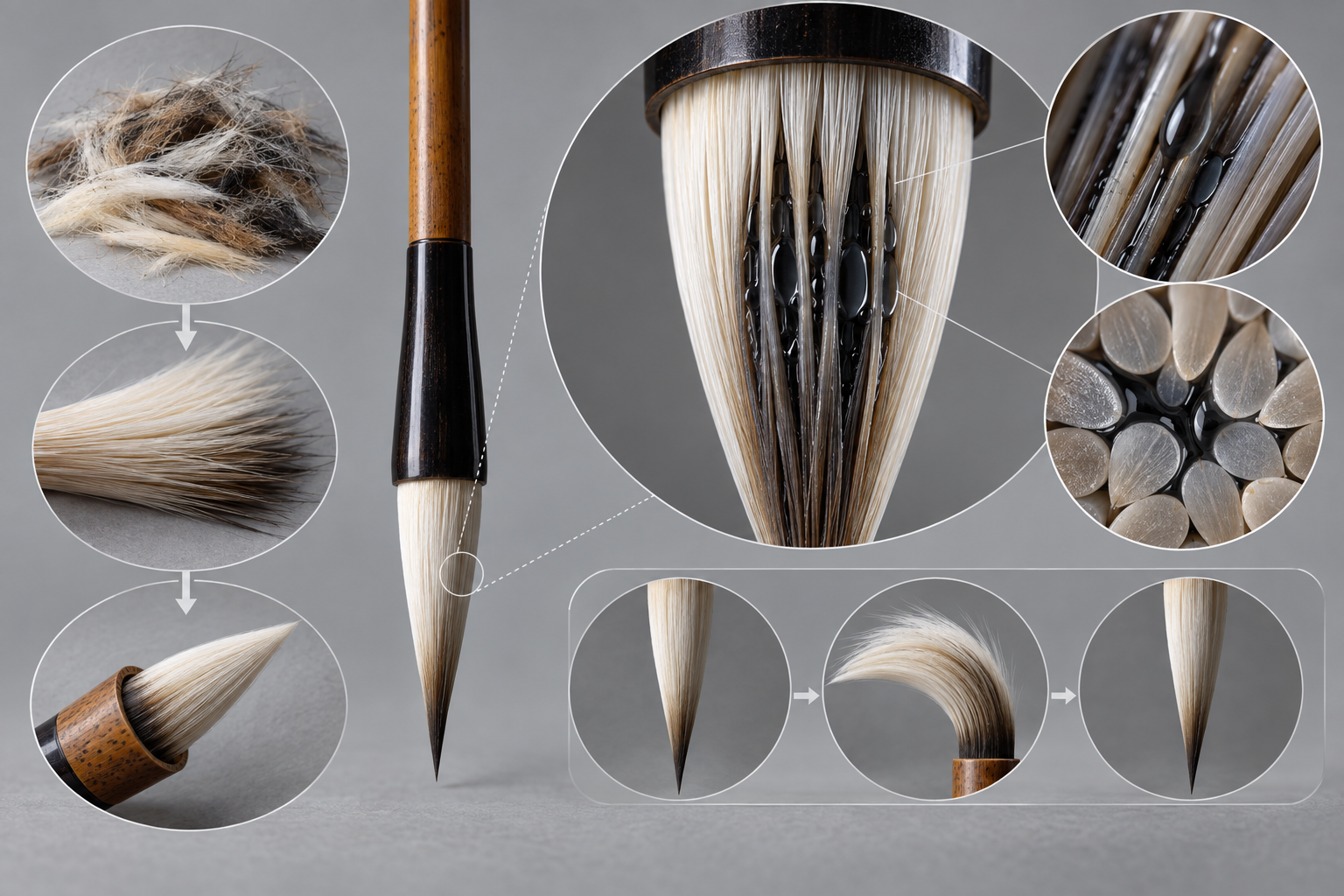
制笔会按毫毛的长短、粗细、色泽和锋颖状态挑选,去除绒毛、弯曲、折损或无锋的毛;选毫是后续齐整和稳定笔锋的基础。
BILINGUAL TRANSCRIPT
双语全文
-
How can a loose group of hairs become a brush that holds ink, forms a point, and springs back?
一束松散的毫毛,怎样变成一支能蓄墨、聚锋并回弹的毛笔?
-
The answer lies not in one precious material, but in selection, arrangement, binding, and mounting.
答案不在某一种名贵材料,而在选毫、排列、扎结与装杆怎样配合。
-
A Warring States brush used rabbit hair, bamboo, thread, and lacquer to join its parts.
一支战国毛笔用兔毛、竹杆、丝线和漆把各部分连接起来。
-
This object is evidence of an early structure, not proof that one famous person invented every brush.
这件实物证明了早期结构,却不能证明所有毛笔都由某位名人一次发明。
-
Makers may choose goat, rabbit, weasel, badger, horse, pig bristle, or synthetic fibers.
制笔者可能选用羊毛、兔毛、黄鼠狼尾毛、獾毛、马毛、猪鬃或合成纤维。
-
Goat hair is often softer and some other hairs stiffer, but length, thickness, and mixture also matter.
羊毫通常较柔,另一些毫料较硬,但长度、粗细与混配同样重要。
-
Makers first sort hairs by length, thickness, color, and natural-tip condition.
制笔者先按毫毛的长度、粗细、色泽和天然锋颖状态进行挑选。
-
Fluffy, bent, broken, or blunt hairs are removed because they can split the point or disturb the bundle.
绒毛、弯曲、折损或无锋的毛会被剔除,因为它们可能使笔锋分叉或扰乱毛束。
-
Workers comb hairs in water, align their natural tips, and trim the roots without cutting the fine ends.
随后,制笔者在水中梳理毫毛,对齐天然锋端,并修齐根部而不剪掉细尖。
-
When a wet tip is spread and pressed, an even edge suggests good alignment.
把湿润笔锋散开并压平时,较整齐的锋端边缘说明毫毛对齐较好。
-
Next comes matching: makers may combine two or three kinds of hair, or place supporting hairs inside softer outer layers.
接下来是配锋:制笔者可能混合两三种毫料,或把提供支撑的毫毛放在较柔的外层里面。
-
Even combing and wrapping help the brush head stay balanced instead of leaning to one side.
均匀梳理与包裹能帮助笔头保持平衡,减少偏向一侧的情况。
-
This layered bundle balances flexibility with support, but there is no universal recipe for every style or brush size.
这种分层毛束在柔顺与支撑之间取得平衡,但不同书写方式和笔的尺寸并没有通用配方。
-
Ink enters the narrow spaces between neighboring hairs, where capillary action helps the bundle carry liquid.
墨液进入相邻毫毛之间的狭小空隙,毛细作用帮助毛束携带液体。
-
The amount carried also changes with hair spacing, liquid thickness, and how the brush is dipped or lifted.
毛束带走多少液体,还会随毫毛间距、液体黏度以及蘸取或提起方式而变化。
-
In a wet brush, surface tension pulls nearby hairs together, while their bending stiffness resists complete collapse.
在湿笔中,表面张力把邻近毫毛拉拢,而毫毛的抗弯刚度又抵抗彻底塌合。
-
That balance helps the tip gather after pressure, while the chosen lengths, diameters, and layers tune its rebound.
这种平衡帮助笔锋受压后重新聚拢,而选定的长度、直径与层次又会调节回弹。
-
After shaping and drying, the root is tied firmly, treated with binding material, and fitted or glued into the shaft.
笔头成形并干燥后,根部会被扎牢、配合固定材料处理,再装入或粘入笔杆。
-
Final picking removes stray or damaged hairs that could cause shedding, scratching, or an uneven point.
最后的修笔会剔除游离或受损的毫毛,以减少掉毛、刮纸或锋端不齐。
-
You can observe four traditional qualities: a pointed closed tip, even spread hairs, a rounded body, and useful rebound.
你可以观察四项传统特征:合拢时尖、散开时齐、笔肚圆满,以及具有可用的回弹。
-
These are clues, not one fixed test, and Huzhou, Xuan, Yangzhou, and Huizhou traditions use different materials and methods.
这些只是观察线索,不是固定测试;湖笔、宣笔、扬州毛笔和徽笔的材料与制法也各有不同。
-
A good brush is therefore an engineered bundle: many small choices work together to store ink, keep a point, and respond to movement.
因此,一支好毛笔是经过精细组织的毛束:许多细小选择共同让它蓄墨、聚锋并响应运动。