FOOD NOTES · E0083
延吉冷面:冷、韧与酸甜如何共同形成
Yanji Cold Noodles: How Cold, Chewy, Sweet, and Sour Work Together
WORD BY WORD
进入逐词听读模式
顶部配图随进度轮播,未读文字为白色,读到后逐词变黄。
THREE THINGS TO KNOW
- 01
延吉位于吉林省延边朝鲜族自治州,冷面是当地朝鲜族饮食文化中具有代表性的食物;延吉冷面是具体地方版本,不能替代朝鲜半岛及中国其他朝鲜族聚居地的全部冷面传统。
- 02
文化和旅游部列有延边朝鲜族冷面制作技艺,延吉市国土空间规划把它列为省级非物质文化遗产;身份对应特定地域和技艺项目,不自动覆盖所有冷面产品或店铺。
- 03
商务部老字号数字博物馆转述《东国岁时记》十一月条,记录荞麦面配萝卜或白菜泡菜及猪肉的冷面;这只能说明较早传统线索,不能证明现代延吉配方自古不变。
BILINGUAL TRANSCRIPT
双语全文
-
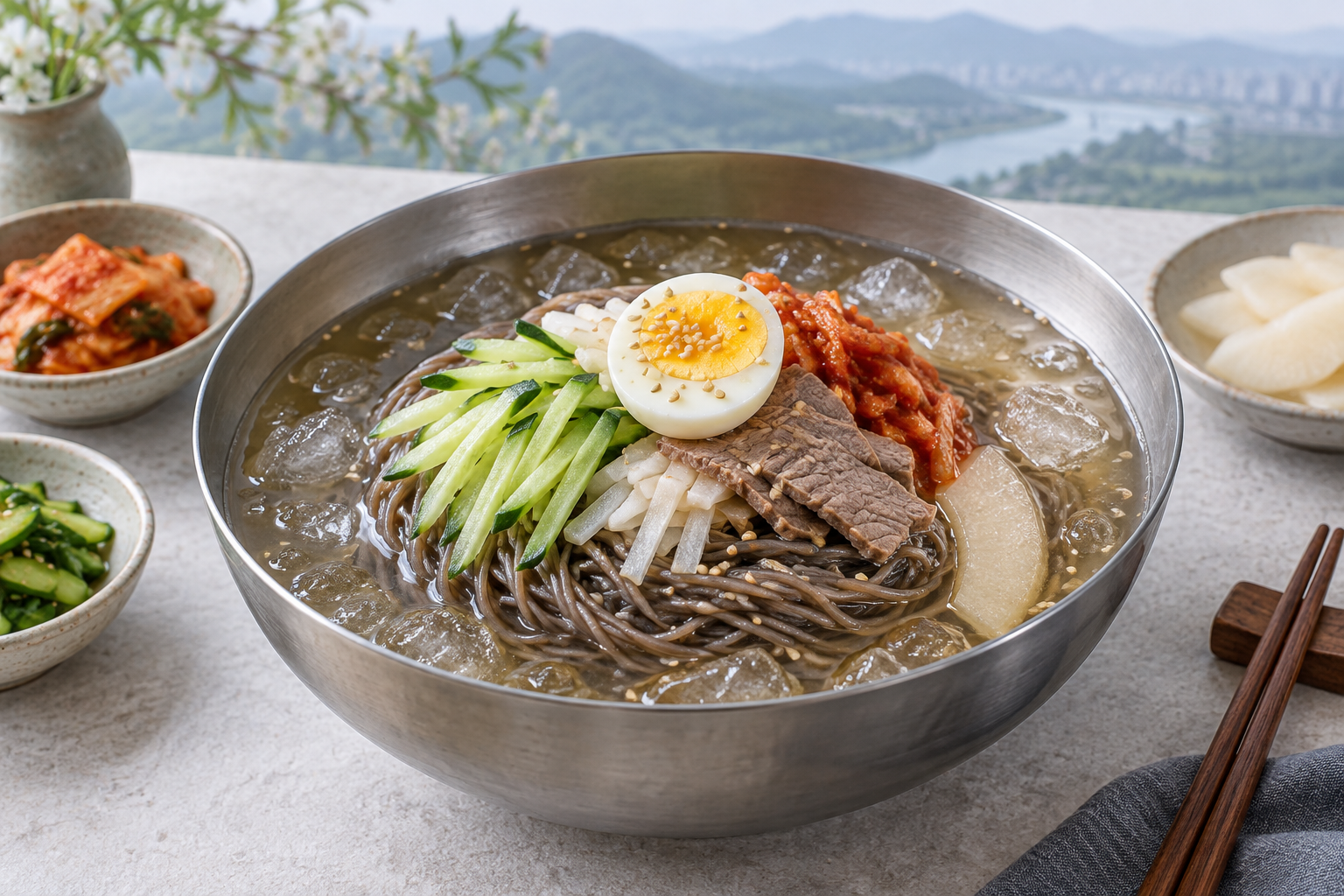
Yanji cold noodles combine cool soup, chewy strands, and sweet-sour flavor in one food system.
延吉冷面把冷汤、韧面和酸甜味组合成一个食物系统。
-
They belong to the Korean Chinese food culture of Yanji in China's Yanbian Korean Autonomous Prefecture.
它属于中国延边朝鲜族自治州延吉市的朝鲜族饮食文化。
-
This local version is not a rule for every cold-noodle tradition in China or on the Korean Peninsula.
这一地方版本并不是中国各地或朝鲜半岛所有冷面传统的统一标准。
-
One documented method uses mainly buckwheat, with possible additions such as wheat flour or potato starch.
一种有记录的做法主要使用荞麦,也可加入小麦粉或土豆淀粉等原料。
-
It is one method, not a fixed formula for every family or restaurant.
这只是一种做法,并非所有家庭或餐馆都采用的固定配方。
-
Experiments with buckwheat-wheat mixtures show that flour ratios change dough behavior and the cooked noodles' hardness, elasticity, and chewiness.
荞麦与小麦混合粉实验表明,粉料比例会改变面团表现,以及熟面条的硬度、弹性和咀嚼感。
-
Texture comes from ingredients, protein and starch structures, water, shaping, and cooking together, not from buckwheat alone.
面条质地由原料、蛋白质与淀粉结构、水分、成形和煮制共同形成,并非只取决于荞麦。
-
The basic process mixes and shapes dough, cooks the strands, cools them in water, then adds soup and toppings.
基本工艺包括和面成形、煮面、过水冷却,再加入汤汁和配料。
-
Cooling changes both serving temperature and bite.
冷却会同时改变食用温度和咬感。
-
A general wheat-noodle study found that moderate water cooling could tighten protein structures and increase springiness and chewiness.
一项普通小麦面条研究发现,适度水冷可能使蛋白质结构更紧密,并提高弹性和咀嚼性。
-
Longer cooling may add too much water and weaken texture, so colder does not always mean chewier.
冷却过久可能吸入过多水分并削弱质地,因此并非越冷就越韧。
-
The soup commonly has sweet and sour notes, sometimes with salty, spicy, or savory tastes, but recipes vary.
汤汁常带酸甜味,也可能有咸、辣或鲜味,但配方并不固定。
-
Temperature affects how people detect tastes, but it does not make sweetness or sourness rise in one simple direction.
温度会影响人们感知味道,却不会让甜味或酸味按单一方向变化。
-
Aroma must also leave the soup and toppings and reach the nose, depending on the food and conditions in the mouth and nose.
香气还要从汤汁和配料中释放并到达鼻腔,这取决于食物和口鼻状态。
-
Flavor therefore comes from taste, smell, texture, and temperature together, rather than sugar and vinegar alone.
因此,风味来自味觉、嗅觉、质地和温度的共同作用,而不只是糖和醋。
-
For visual clues, one public demonstration used beef, egg, and spicy cabbage; other records mention wider groups of toppings.
作为可见线索,一场公开展示使用了牛肉、鸡蛋和辣白菜;其他资料还提到更广的配料类别。
-
These are examples, not an authenticity checklist.
这些是实例,而不是判断正宗与否的清单。
-
A brand museum retells an older text about cold buckwheat noodles with pickled vegetables and pork, but this does not prove an unchanged modern recipe.
一座品牌馆转述较早文献,其中提到荞麦冷面配泡菜和猪肉,但这不能证明现代配方从未改变。
-
Today, cultural routes link the craft with markets, folk parks, and exhibitions, while local material presents it as food for all seasons.
如今,文化线路把这项技艺与市场、民俗园和展览联系起来,地方资料也把它呈现为四季可食的餐饮。
-
Cold serving does not remove microbes: noodles still need thorough cooking, clean cooling, and separation from raw ingredients.
冷食并不能消除微生物:面条仍需彻底煮熟、干净冷却,并与生食材分开。
-
Prepared food should generally stay at room temperature for no more than two hours; otherwise, refrigerate or freeze it properly.
做好的食物在常温下一般不应超过两小时;否则应妥善冷藏或冷冻。
-
Yanji cold noodles thus show how regional culture, changing ingredients, processing, and human senses shape one distinctive bowl.
因此,延吉冷面展示了地域文化、可变原料、加工方法和人的感官如何共同塑造一碗有辨识度的食物。
资料来源
- 延吉概况;延边州文旅产业发展迸发新活力
- 吉林省丨延边风情寻味——穿梭市井烟火的非遗美食之旅
- 金达莱 - 老字号数字博物馆
- 荞麦-小麦混合粉流变学特性及其对冷面质构的影响
- Asian noodles: History, classification, raw materials, and processing
- 金达莱 - 老字号数字博物馆;“东北超”鸡西市集刮起“延边冷面风”
- Regulating the interaction between protein and starch in noodles through heat loss
- The Role of Intrinsic and Extrinsic Sensory Factors in Sweetness Perception of Food and Beverages
- Release and Transport of Flavors In Vivo: Physicochemical, Physiological, and Perceptual Considerations
- 延边州文旅产业发展迸发新活力;延边风情寻味
- 餐饮服务食品安全操作规范
- 春节食品安全消费提示