FIELD NOTE · E0082
文房四宝如何共同塑造墨迹
How the Four Treasures Shape an Ink Mark
WORD BY WORD
进入逐词听读模式
顶部配图随进度轮播,未读文字为白色,读到后逐词变黄。
THREE THINGS TO KNOW
- 01
文房四宝通常指笔、墨、纸、砚,是传统书写和绘画中相互配合的一组工具;理解重点应是它们共同完成制墨、载墨、落墨和承载,而不是四件孤立收藏品。
- 02
东亚传统黑墨多以松烟或油烟等碳黑配合胶制成固体墨条或墨锭;使用时加水研磨,使固体色料成为可由毛笔携带的墨液。
- 03
砚既提供细而有适度磨蚀性的研磨面,也可用凹部暂存墨液;表面过粗会伤笔毫,过于光滑则不利于快速研墨。
BILINGUAL TRANSCRIPT
双语全文
-
The Four Treasures of the Study are brush, ink, paper, and inkstone, yet they are more than separate objects.
文房四宝指笔、墨、纸、砚,但它们并不只是四件彼此分开的物品。
-
Together, they form a system that shapes each visible ink mark.
它们共同构成一个协作系统,决定可见墨迹会呈现出怎样的样子。
-
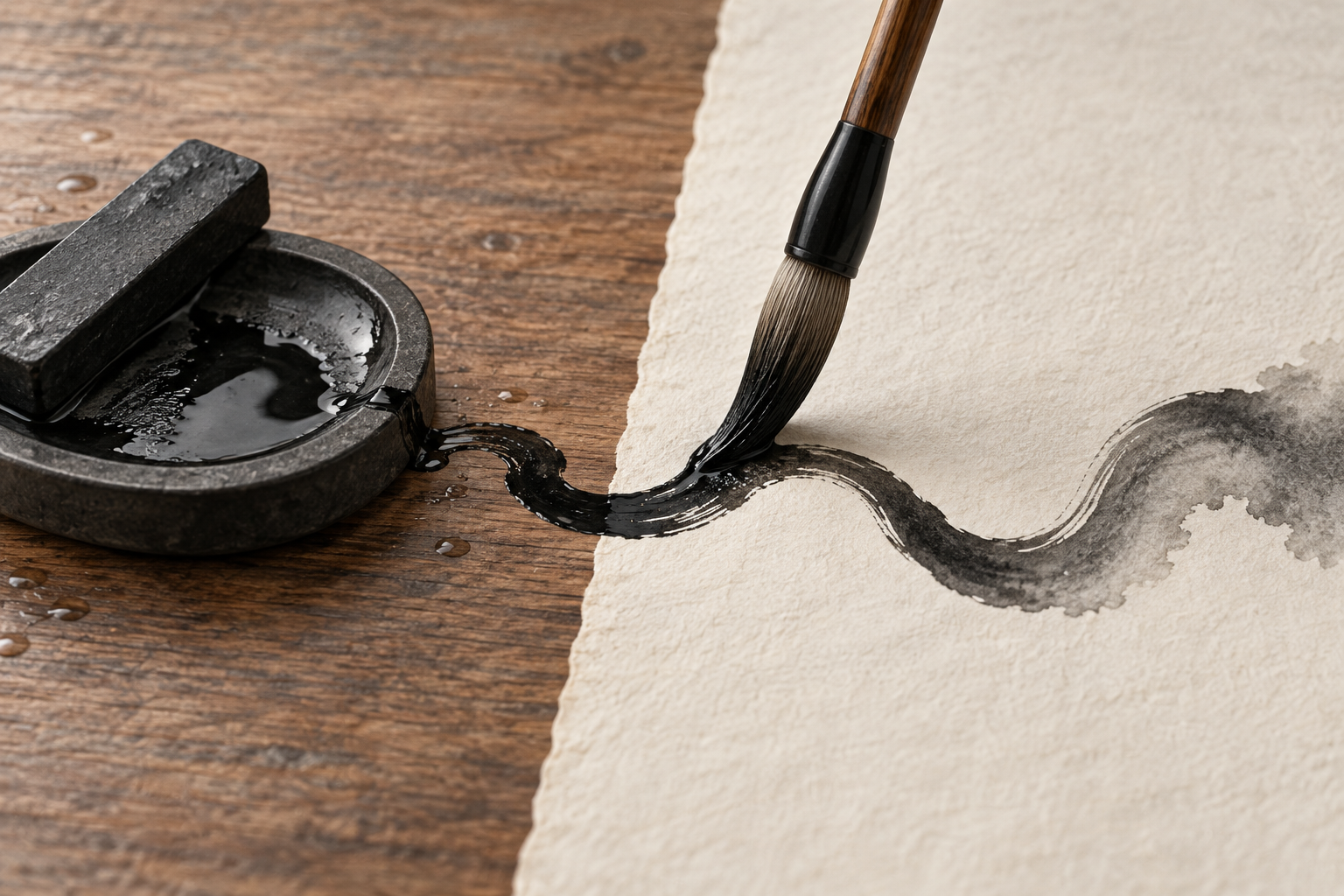
Traditional black ink often combines carbon black and glue in a solid stick, which is ground with water on an inkstone before use.
传统黑墨常把炭黑与胶结合成固体墨条,使用时再在砚上与水相遇。
-
The inkstone offers a fine grinding surface and a lower area that collects liquid ink.
砚台既提供细致的研磨面,也有较低的部位用来汇集墨液。
-
What matters first is the balance between water and ground solid ink, which changes the liquid's darkness.
首先关键的是水与研入其中的固体墨量之间的比例,因为它会改变墨液的深浅。
-
The brush carries this liquid to paper and releases it while moving.
随后,毛笔把墨液从砚台带到纸上,并在移动中将墨释放出来。
-
A full brush may start with a dark, moist stroke, then become lighter or drier as its ink decreases.
蘸墨较足的毛笔可能先留下深而润的笔画,随着墨量减少,同一笔又会变淡或变枯。
-
Because the tip is flexible, its point or side can produce different line widths.
由于毛笔笔锋柔软,使用笔尖或笔侧可以写出不同宽度的线条。
-
Pressure and speed also affect width, edges, and movement, although they never act alone.
压力和速度的变化也会影响线宽、边缘和运动感,但它们从来不是单独起作用的。
-
Paper completes the chain by receiving the ink and either allowing or limiting its spread.
纸张承接墨液,并允许或限制墨液扩散,由此完成这条协作链。
-
In untreated sheng xuan, fiber channels help water and ink move outward, so edges may soften and spread.
在未经加工的生宣中,纤维间的细小通道会帮助水墨向外移动,因此边缘可能变柔并洇开。
-
Polished or sized xuan resists liquid, making edges easier to control.
对宣纸进行砑光或施胶会增加液体渗透的阻力,使边缘更容易控制。
-
This is why one mark records several linked choices: ink concentration, brush load, pressure, speed, and paper treatment.
正因如此,一道墨迹记录的是一组相互关联的选择:墨液浓度、毛笔载墨、压力、速度和纸张加工。
-
You can use these features as clues when you look closely at a line.
仔细观察一条墨线时,你可以把这些特征当作线索。
-
Width may suggest the brush point, side, or pressure; dark-to-light changes may reflect concentration or a decreasing ink load.
线宽变化可能与笔尖、笔侧或压力有关,而由深到浅的变化可能反映墨液浓度或载墨量正在减少。
-
Clear or spreading edges may offer clues about paper absorption and treatment.
清楚或向外洇开的边缘,则可能透露纸张吸收性和加工方式的信息。
-
Yet these clues are not a fixed formula, because several factors shape every mark.
不过,这些只是线索,并非固定公式,因为最终墨迹总是由多种因素共同塑造。
-
Calligraphy and painting can share brush and ink, yet lines, layers, solid areas, and blank space create different results.
书法和绘画可以共用笔墨,却能通过线条、墨层、墨块和留白形成不同结果。
-
No single person invented the four tools together; they developed over centuries, from ancient objects to traditions enriched across later dynasties.
这四类工具并非由一人在同一时刻发明;它们经历了长期发展,早期实物见于古代遗存,后来的传统又在不同朝代中逐步丰富。
-
Huzhou brushes, Huizhou ink, Xuan paper, and Duan inkstones are famous regional examples, not the only correct forms.
湖笔、徽墨、宣纸和端砚是著名的地域代表,却不是文房四宝唯一正确的形式。
-
Strictly speaking, Xuan paper is a handmade paper linked to Jing County in Anhui, local materials, and traditional methods; not every brushwork paper is Xuan paper.
严格来说,宣纸是与安徽泾县、当地原料和传统方法相联系的一类特定手工纸,因此并非所有毛笔书画用纸都是宣纸。
-
These processes continue in Jing County and are taught in local schools, showing a living tradition rather than only a museum display.
这些传统工序今天仍在泾县延续,并在当地学校传授,说明这是一项活态传统,而不只是博物馆里的陈列。