FOOD NOTES · E0079
河南烩面:面、汤与菜怎样合成一餐
Henan Huimian: How Noodles, Soup, and Vegetables Become One Meal
WORD BY WORD
进入逐词听读模式
顶部配图随进度轮播,未读文字为白色,读到后逐词变黄。
THREE THINGS TO KNOW
- 01
在汝州市政府转载的地方史志材料中,‘烩’被解释为一种以较旺火力和相对较长时间使原料入味、汤汁变浓的煮制方法;这一解释可帮助说明烩面把面片放入汤中煮制的特点,但不能当作全国统一的烹饪术语标准。
- 02
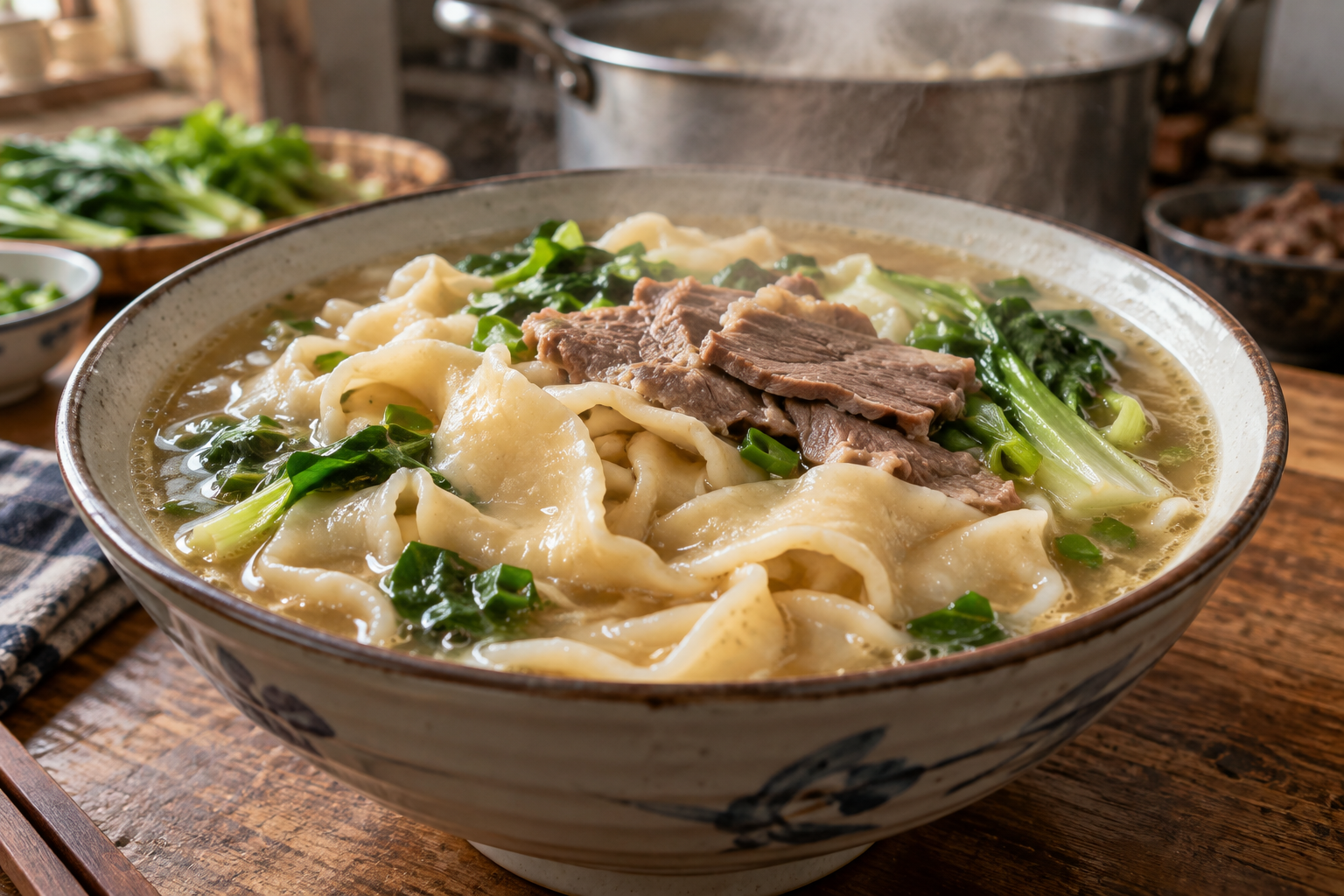
郑州市文旅资料呈现的一种代表性郑州做法,是用鲜羊肉和羊骨煮汤,把反复揉制的软面手工拉成不同宽窄的面条下锅,再配羊肉、黄花菜、木耳和粉条;香菜、辣椒油、糖蒜等可作为佐食。
- 03
汝州地方资料把当地烩面概括为熬羊肉或牛肉汤、制作面坯、拉面煮面三道工序,因此羊肉不是所有河南烩面的唯一肉类选择。
BILINGUAL TRANSCRIPT
双语全文
-
Henan huimian is more than wide noodles; it combines a wheat staple, hot soup, meat, and vegetables in one meal.
河南烩面不只是一碗宽面,它把小麦主食、热汤、肉和蔬菜组合成完整一餐。
-
Its name includes hui, locally explained as cooking ingredients in liquid until they absorb flavor and the soup grows richer.
它的名字里有一个“烩”字,地方资料把它通俗解释为让食材在汤汁中煮至入味、汤汁渐浓。
-
This describes an action, rather than one national rule for every Chinese dish.
这只是对烹饪动作的一种实用说明,并不是适用于所有中国菜的全国统一定义。
-
Flour, salt, and water are kneaded into dough, which rests briefly before being kneaded smooth.
面粉、盐和水先揉成面团,短暂醒置后再揉至光滑。
-
The dough is divided, shaped into long pieces, brushed with oil, and covered.
面团随后被分剂、做成长面坯、抹油并覆盖起来。
-
Before cooking, a cook pulls each piece from both ends and tears it into broad strips.
下锅前,厨师从两端拉长面坯,再把它撕成宽面片。
-
A stronger, more even gluten network generally helps dough stretch without breaking.
较强、较均匀的面筋网络通常更利于面团拉伸而不断裂。
-
What matters is the visible result: the noodle can be pulled and torn, without any fixed resting time for every shop.
真正重要的是可观察的结果:面坯能够拉开并撕成面片,而不是给所有店规定同一个醒面时长。
-
In one Fangcheng method, stretched noodles enter boiling mutton soup, and greens are added during cooking.
在一种方城做法中,拉好的面直接下入沸腾的羊肉汤,青菜也在煮制阶段加入。
-
By cooking noodles in broth, huimian does more than place noodles beside soup; they share one cooking system.
通过让面在汤中煮熟,烩面不只是把面和汤摆在一起,而是让二者进入同一个煮制体系。
-
The bowl contains staple food, soup, meat, and vegetables, making it practical for daily life.
一碗兼有主食、汤、肉和蔬菜,因此很适合日常生活。
-
Henan is a major wheat-producing and processing province, linking noodles with its food economy and everyday table.
河南是重要的小麦生产和加工省份,因此面食与当地食品产业和日常餐桌有现实联系。
-
However, this background does not prove when or why huimian began.
不过,这一背景并不能证明烩面最早在何时、因何出现。
-
Several origin stories exist, but local sources call them legends, and their accounts conflict.
关于烩面的起源存在多种说法,但地方资料称它们为传说,而且各说法彼此冲突。
-
A Zhengzhou example uses mutton and bones for soup, with daylily, wood ear, and glass noodles.
一种郑州做法用羊肉和羊骨熬汤,并加入黄花菜、木耳和粉条。
-
Fangcheng features pulled noodles, local goat topping, and mutton-fat chili oil, while Ruzhou records mutton and beef versions.
方城做法突出扯面、本地山羊肉臊子和羊油辣椒,而汝州资料记录了羊肉与牛肉版本。
-
In Ye County, one method fries sliced mutton with aromatics, adds stock, then cooks noodles and greens.
在叶县,一种做法先把羊肉丝和葱姜蒜等炝炒,再加高汤,之后下入面和青菜。
-
Names like mutton, beef, or sanxian huimian show variety, but our sources do not define one fixed list for sanxian.
羊肉、牛肉或三鲜烩面等名称体现了变化,但本期资料没有给“三鲜”规定固定食材清单。
-
Seaweed, tofu strips, glass noodles, wood ear, quail eggs, or spinach may appear, yet none is required everywhere.
海带、千张丝、粉条、木耳、鹌鹑蛋或菠菜都可能出现,但没有哪一样是各地必放。
-
Some broths look milky because boiling creates tiny fat droplets; these droplets, proteins, and other materials form a mixture that scatters light.
有些汤呈乳白色,是因为沸煮形成细小油滴;这些油滴与蛋白质等物质共同形成分散体系并散射光线。
-
White soup is not simply visible collagen, nor does whiter color automatically mean better nutrition.
白汤并不只是“看得见的胶原蛋白”,颜色更白也不自动等于营养更好。
-
The time-honored title belongs specifically to the Heji brand, not every shop or the whole category.
“老字号”身份明确属于合记品牌,而不是每家店或整个烩面品类。
-
Thus, wide noodles cooked in soup give huimian its identity, while local meats, broths, and vegetables keep it open to change.
因此,宽面入汤煮制赋予烩面辨识度,而各地不同的肉类、汤底和配菜又让它保有变化。
资料来源
- 烩面
- 烩面 - 郑州美食
- 方城烩面历史文化发展研究
- 方城:千里‘面’缘‘疫’线牵
- 叶县瘸子烩面
- 一筷子挑起河南味丨大河风物
- 河南省‘十三五’农业现代化发展回顾
- Migration of Nutrient Substances and Characteristic Changes of Chicken White Soup Emulsion from Chicken Skeleton during Cooking
- Evaluation of the processing quality of noodle dough containing a high Tartary buckwheat flour content through texture analysis
- 合记 - 老字号数字博物馆