FOOD NOTES · E0077
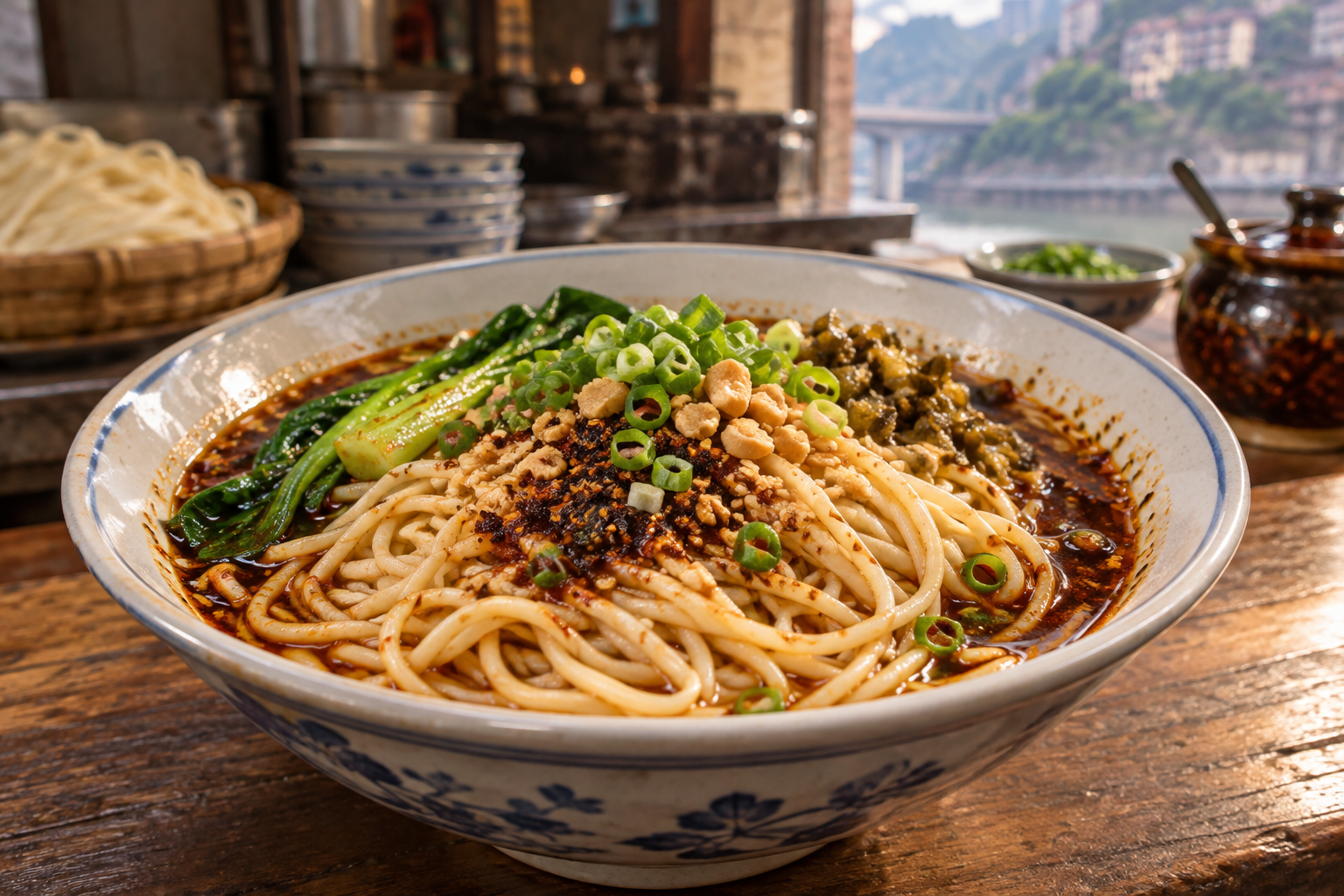
重庆小面:一碗面的麻辣鲜香怎样形成
Chongqing Xiaomian: How One Bowl Builds Layers of Flavor
WORD BY WORD
进入逐词听读模式
顶部配图随进度轮播,未读文字为白色,读到后逐词变黄。
THREE THINGS TO KNOW
- 01
地方经营服务规范的广义定义允许重庆小面配或不配浇头;重庆早餐地图所记录的日常语境中,单说“小面”常指面条加佐料的素面。两种用法并存,口语习惯不构成排他定义。
- 02
门店规范解读所描述的重庆小面以面粉、食用碱和水制成的新鲜面条为主料;预包装食品安全标准另在自身适用范围内定义以小麦粉为主要原料、添加碳酸钠制成的碱面。两者都不证明历史上所有摊店使用统一碱量和制法。
- 03
一般鲜面实验显示,适量碱在特定实验条件下会改变蛋白结构与水分状态,并提高面筋强度和面条硬度;这只能帮助解释鲜碱面的咬劲,不是对重庆门店成品的直接检测。
BILINGUAL TRANSCRIPT
双语全文
-
Chongqing xiaomian builds layered flavor not from one secret ingredient, but from noodles, bowl seasonings, toppings and serving choices.
重庆小面的风味之所以有层次,不是靠某一种秘密原料,而是面条、碗底调味、浇头和点单方式共同作用的结果。
-
In everyday speech, plain xiaomian often means noodles with seasonings but no meat topping.
在日常口语中,一碗素小面通常指有佐料、没有肉浇头的面。
-
However, a local service guide uses the term more broadly, allowing a bowl with or without toppings.
不过,地方经营服务规范对这个词的使用更宽泛,允许小面有浇头或没有浇头。
-
At the center are usually fresh noodles made from flour, water and an alkaline ingredient.
这碗面的核心通常是用面粉、水和碱性配料制成的鲜面条。
-
Fresh-noodle studies suggest that suitable alkali can change protein and water conditions, helping explain a firmer bite.
鲜面研究表明,适量的碱可以改变蛋白质结构和水分状态,这有助于解释面条更有咬劲的原因。
-
These clues are not direct tests of every Chongqing shop and do not prove one fixed recipe.
这些线索不是对重庆每家面馆的直接检测,也不能证明存在一种固定配方。
-
Before noodles arrive, the bowl may hold soy sauce, ginger-garlic water, preserved vegetables, peanuts, oil and flavoring powder.
面条入碗前,碗底可能已经放入酱油、姜蒜水、腌菜、花生、油脂和调味粉。
-
Chili oil and ground Sichuan pepper are common too, yet the guide says they may be left out.
红油辣子和花椒粉也很常见,但规范说明它们可以不加。
-
General sensory research separates their signals: chili can create burning heat, while Sichuan pepper can bring tingling or vibration-like feelings.
一般感官研究可以区分两种信号:辣椒会带来灼热感,而花椒会产生麻刺或类似振动的感觉。
-
Rather than being one taste, mala joins these two mouth sensations within a larger bowl of seasonings.
所以,“麻辣”并不是一种单独的感觉,而是把这两类口腔感受放进一整碗复合调味之中。
-
After cooking, the noodles enter the bowl and are mixed, helping them contact liquid seasonings and small pieces.
面条煮熟后被捞入碗中再拌匀,这有助于面条与液态调味和细小配料接触。
-
What matters is helping the seasonings spread more evenly through the bowl.
这里重要的是让调味在碗中分布得更均匀。
-
Official examples include pea-and-minced-meat noodles, braised-intestine toppings and beef noodles.
官方材料的例子包括豌杂面、红烧肥肠浇头和牛肉面。
-
They add choices, but none of these examples is required for every bowl called Chongqing xiaomian.
它们丰富了选择,但这些例子都不是每一碗重庆小面的必需组成。
-
Orders may be described as ganliu or kuantang, and diners may also choose red or clear soup.
点单时可以说“干溜”或“宽汤”,也可以选择红汤或清汤。
-
Yet the official report gives these terms no single technical definition or fixed amount of liquid.
不过,官方报道并没有为这些术语给出统一技术定义或固定液体用量。
-
Xiaomian is also one of Chongqing's most common breakfast choices.
小面也是重庆最常见的早餐选择之一。
-
At street-side shops, a morning bowl does more than feed people; it also frames everyday conversation.
在街边小面馆里,清晨的一碗面不只是填饱肚子,也为日常交谈提供了场景。
-
That familiar scene does not mean every resident eats it daily or that it was invented for commuters.
这一熟悉场景并不意味着每个重庆人每天都吃小面,也不能说明小面是为通勤者发明的。
-
Shop services, prepackaged food safety and prepackaged production licenses govern different objects.
门店经营服务、预包装食品安全和预包装生产许可分别约束不同对象。
-
Several specific local xiaomian techniques appear on a municipal intangible cultural heritage list, not as one national recipe or brand certificate.
多项具体地方小面制作技艺进入市级非遗名录,而不是一份国家级统一配方或品牌证书。
-
By keeping flavors flexible while setting service and safety boundaries, many Chongqing bowls can share one name without tasting exactly alike.
重庆小面既保留灵活的风味选择,又建立服务与安全边界,因此许多碗面可以共享一个名字,却不必拥有完全相同的味道。
资料来源
- 重庆市人民政府:啥叫重庆小面 制作流程有哪些 重庆小面新标准来了!;重庆特色早餐地图
- 重庆市人民政府标准解读;DBS50/030—2023 食品安全地方标准 重庆小面
- Comparative study of fresh noodles with regular salt and alkali
- Capsaicin oral sensations; Szechuan pepper sensory mechanism
- 重庆市人民政府标准解读;重庆特色早餐地图
- 重庆市人民政府标准解读;重庆一碗小面煮出百亿产业
- DB50/T 1286—2022解读;DBS50/030—2023;重庆小面生产许可审查细则
- 重庆市人民政府关于公布第六批市级非遗代表性项目名录的通知