FOOD NOTES · E0074
四川担担面:一碗面的复合味道如何形成
Sichuan Dandan Noodles: How Layers of Flavor Meet in One Bowl
WORD BY WORD
进入逐词听读模式
顶部配图随进度轮播,未读文字为白色,读到后逐词变黄。
THREE THINGS TO KNOW
- 01
成都世运会官网转载的地方文化文章解释“担担儿”即担子,并称清末至20世纪中叶成都街头存在挑担流动售卖面食和小吃的形式;正文只能据此说明地方叙述把名称与挑担叫卖联系起来,不能证明唯一始创地、精确年代或发明人。
- 02
商务部老字号数字博物馆中的企业条目自述担担面始于民国初年,并记载“提督担担面”品牌创立于1958年;前者缺少同时代材料和独立交叉来源,本期不批准用于正文起源叙述,后者仅可识别该品牌时间。
- 03
商务部老字号数字博物馆所载“提督担担面”做法以面粉制细面,并配猪肉臊、芽菜和辅料;这只能作为一个成都老字号版本的食材结构实例,不能代表四川担担面的统一或唯一配方。
BILINGUAL TRANSCRIPT
双语全文
-
How do Sichuan dandan noodles build fragrant, savory, spicy, and numbing layers in one bowl?
四川担担面如何在一碗之中形成香、咸鲜、辣与麻的复合层次?
-
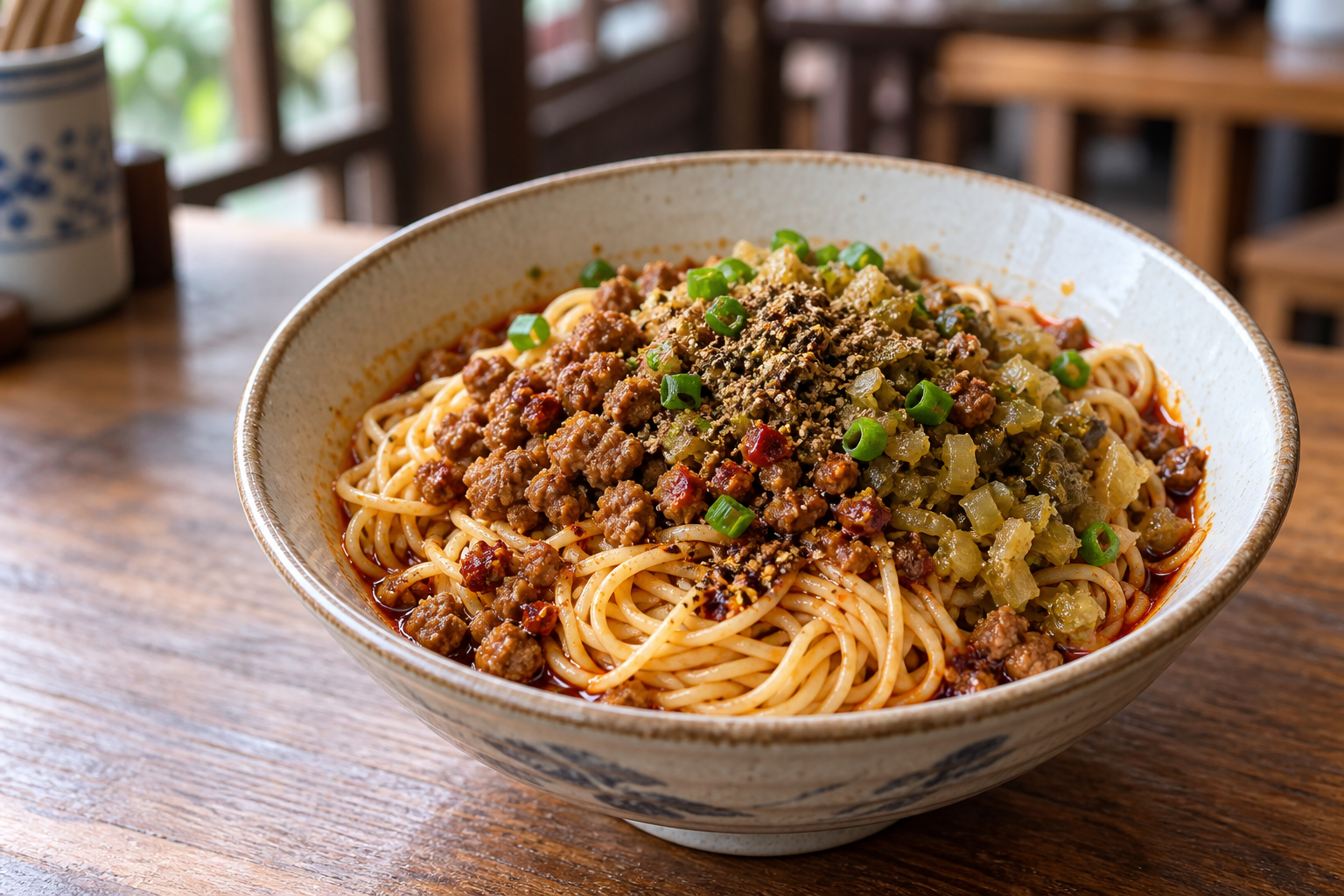
One documented Chengdu restaurant version uses thin wheat noodles, minced pork, and preserved vegetables called yacai.
一个有资料记录的成都老字号版本使用细面、猪肉臊和一种叫芽菜的腌制蔬菜。
-
These ingredients describe one version rather than a fixed recipe for every bowl in Sichuan.
这些食材描述的是一个具体版本,而不是四川每一碗担担面的固定配方。
-
What matters is cooperation: noodles carry seasoning, while pork and yacai add flavorful pieces.
关键在于彼此配合:面条承载调味,肉臊与芽菜则带来有滋味的颗粒。
-
In this Chengdu example, red chili oil and ground Sichuan pepper meet soy sauce, vinegar, garlic, and spring onion.
在这个成都实例中,红油辣椒和花椒面与酱油、香醋、蒜泥、葱花相遇。
-
The result is not only heat but also salty, fresh, sour, and fragrant layers.
结果不只有辣,还有咸、鲜、酸与香的层次。
-
Rather than using much soup, the cook puts seasonings in a small bowl before adding noodles.
做法不是使用大量汤汁,而是先把调味放入小碗,再加入面条。
-
The same documented method may include a little stock, so dry-mixed does not mean that the bowl contains no liquid.
同一份做法还可能加入少量高汤,因此“干拌”并不等于碗里完全没有液体。
-
By mixing from the bottom, diners help the liquid seasonings coat the noodle surfaces.
从碗底拌起,有助于液态调味覆盖面条表面。
-
At the same time, tiny pieces of pork and yacai are more likely to travel with each mouthful.
与此同时,细小的肉臊和芽菜也更容易随着每一口面一起入口。
-
This action helps combine the ingredients, although it does not promise perfect coating.
这个动作有助于混合食材,但它并不保证调味能够完美附着。
-
Chili and Sichuan pepper also create two different kinds of feeling in the mouth.
辣椒与花椒还会在口腔中带来两种不同的感觉。
-
Capsaicin in chili produces a burning feeling, while active substances in Sichuan pepper can feel numbing, prickly, or slightly vibrating.
辣椒中的辣椒素会带来灼热感,而花椒中的活性成分可能让人感到麻、刺或轻微振动。
-
These studies explain why spicy and numbing are not the same signal, but they do not explain the dish's whole flavor.
这些研究解释了辣和麻为何不是同一种感觉信号,但它们并不能解释整碗面的全部风味。
-
The name also carries a piece of local life, because dandan refers to a shoulder pole used for carrying goods.
这个名字也保留了一段地方生活记忆,因为“担担”指的是挑东西用的担子。
-
A Chengdu article remembers sellers carrying noodles and other snacks through the streets.
一篇成都地方文章记录了商贩挑着面食和其他小吃走街串巷的记忆。
-
This street-snack setting links the noodles with quick mixing and everyday Sichuan life.
这种街头小吃语境,把担担面与四川日常生活中的现拌现吃联系起来。
-
However, the sources do not set one official bowl weight or say that everyone eats it as the same kind of meal.
不过,现有资料并未规定统一的每碗克重,也没有说所有人都把它当作同一种餐次。
-
Modern standards also have clear limits, because each covers a particular product or purpose.
现代标准也有明确边界,因为每项标准都只覆盖特定产品或用途。
-
For example, the Yibin yacai standard applies to protected prepackaged yacai products, not to every restaurant bowl of dandan noodles.
例如,宜宾芽菜标准适用于受保护的预包装芽菜产品,并不适用于餐馆里的每一碗担担面。
-
A Sichuan tourism-food standard lists Chengdu dandan noodles, yet it does not create one national recipe.
一项四川旅游美食标准列有成都担担面,但它并没有制定一份全国唯一配方。
-
Dandan noodles do more than deliver heat: ingredients, mixing, sensation, and local life share one bowl.
担担面带来的不只是辣味:食材、拌制、感官与地方生活共同汇入一碗面。
资料来源
- 担担儿面,老成都人心心念念
- 提督担担面—老字号数字博物馆
- Autonomic mechanisms underlying capsaicin induced oral sensations and salivation in man; Pungent agents from Szechuan peppers excite sensory neurons by inhibiting two-pore potassium channels
- DB5115/T 49—2022《地理标志产品 宜宾芽菜质量要求》
- 四川省第六批省级非物质文化遗产代表性项目推荐名单公示
- DB51/T 3126—2023《天府旅游美食制作工艺规范 菜肴》