FOOD NOTES · E0071
武汉热干面:口感、香气与早餐节奏怎样相遇
Wuhan Hot-Dry Noodles: How Texture and Aroma Meet Morning Speed
WORD BY WORD
进入逐词听读模式
顶部配图随进度轮播,未读文字为白色,读到后逐词变黄。
THREE THINGS TO KNOW
- 01
DB 4201/T 699—2024 将武汉热干面定义为以小麦粉为主要原料、适量加入盐和碳酸钠等辅料并按产品类型加工的地方特色面食,传统型面条呈自身形成的碱黄色;该规范适用于生产企业,小作坊参照使用。
- 02
一般鲜面研究显示,适量碱处理会改变面筋结构、水分状态和质构,这可帮助解释碱水面偏硬、较有咬劲的口感,但不是对武汉门店配方的直接测量。
- 03
武汉标准把掸面定义为将半熟或七八分熟面条淋油后,以人工或机械方式拌匀至不粘连,过程中常伴随冷风等降温措施。
BILINGUAL TRANSCRIPT
双语全文
-
What makes Wuhan hot-dry noodles firm, dry and fragrant, yet quick enough for a busy breakfast?
武汉热干面为什么既筋道、干香,又能快速端上忙碌清晨的餐桌?
-
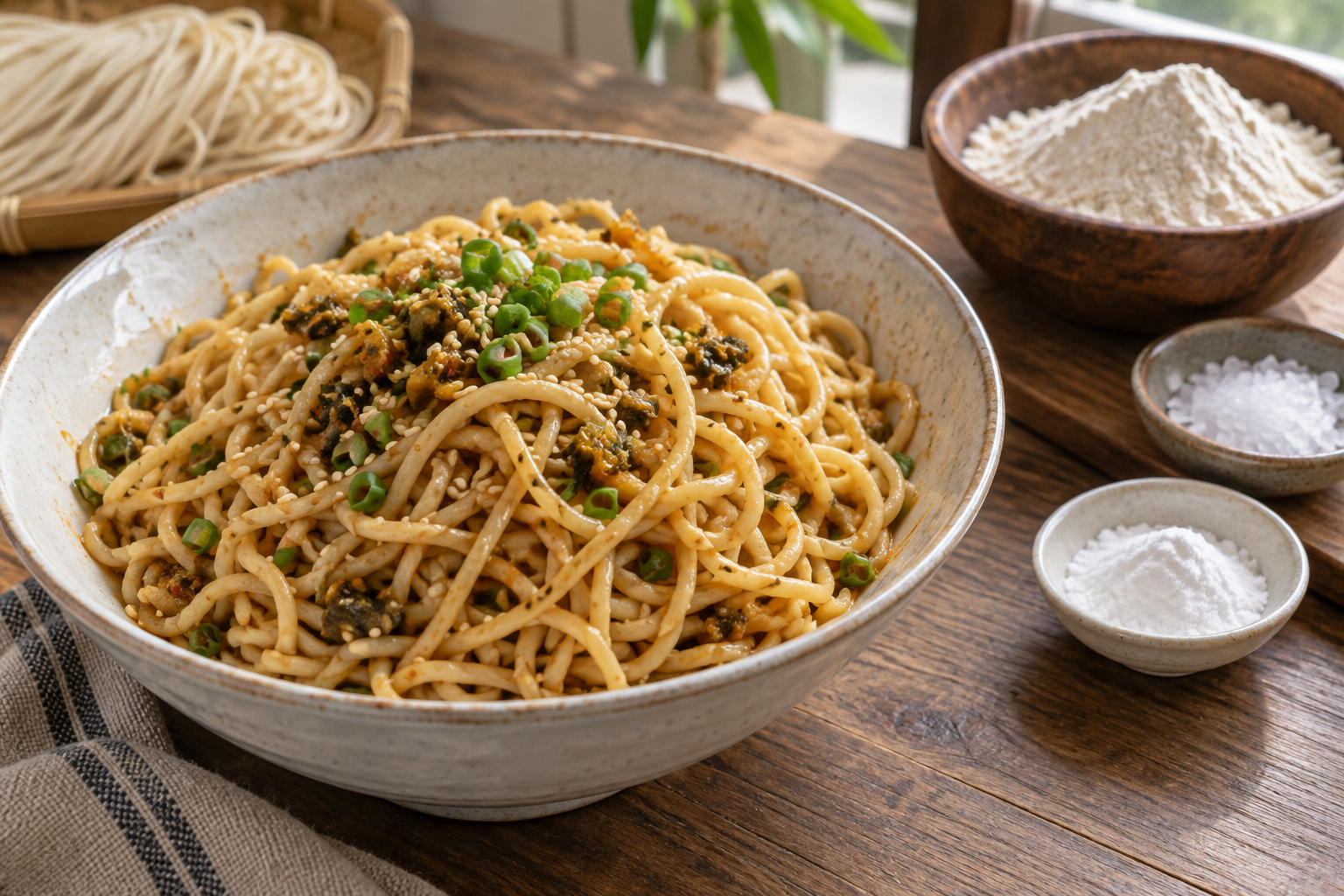
At its center is not soup, but wheat noodles made with salt and an alkaline ingredient such as sodium carbonate.
它的核心不是汤,而是以小麦粉为主、加入盐和碳酸钠等碱性辅料制成的面条。
-
Alkali does more than change color: studies of fresh noodles show that it can change gluten, water and texture.
碱的作用不只是改变颜色:鲜面研究显示,它还会改变面筋结构、水分状态和质构。
-
These findings help explain a firmer bite, although they are not direct measurements of recipes used in Wuhan shops.
这些发现有助于解释面条为何更硬、更有咬劲,但它们并不是对武汉门店配方的直接测量。
-
The next key is dan mian, a local term for oiling, mixing and cooling partly cooked noodles until they do not stick.
下一步关键工艺叫“掸面”,也就是把半熟面条淋油、拌匀并降温,直到面条不再粘连。
-
By spreading the strands and often cooling them with air, makers prepare the noodles for a second heating.
通过把面条拌散,并常用冷风等方式降温,制作者让它们为第二次加热做好准备。
-
The oil helps separate the strands, while cooling may limit further softening from the heat left inside.
油脂有助于把面条分开,而降温也可能减少余热造成的继续软化。
-
When a customer orders, the noodles are reheated and mixed with sauce rather than cooked from the beginning.
顾客点单后,面条会被复热并拌入酱料,而不必从头开始煮制。
-
This two-stage process not only supports faster service but also keeps the final dish in a dry-mixed form.
这种两段式工艺不仅支持更快出餐,也让成品保持干拌形态。
-
Sesame paste then brings body and roasted aroma, joining the springy noodles into a richer whole.
随后,芝麻酱带来浓稠感和焙炒香气,把有咬劲的面条连接成更丰富的整体。
-
Experiments show that roasting temperature changes sesame paste aroma, but they do not set one temperature for Wuhan shops.
实验表明,焙炒温度会改变芝麻酱的香气,但这并不为武汉门店规定某一个温度。
-
What matters is the layering: sauce coats the warm noodles, while common extras may add crispness or sour notes.
重要的是风味层次:酱料裹住热面,常见小料则可能增加脆感或酸味。
-
Diced radish and pickled cowpeas are common examples, yet they are not required in every bowl nationwide.
萝卜丁和酸豆角是常见例子,但并不是全国每一碗热干面的必备配料。
-
Indeed, a study of Wuhan samples found differences in alkali levels, protein and several measures of texture.
事实上,一项对武汉市场样品的研究发现,它们在碱含量、蛋白质和多项质构指标上存在差异。
-
In Wuhan, eating breakfast is often called guozao, which means having the morning meal, not simply eating hot-dry noodles.
在武汉,吃早餐常被称为“过早”;它指的是享用早餐,并不只是吃热干面。
-
Hot-dry noodles are a well-known choice, but they remain only one member of the city's varied breakfast system.
热干面虽然很有代表性,却只是武汉多样早餐体系中的一员。
-
It is the coordination of preparation, reheating and mixing that fits the fast rhythm of many morning food stalls.
正是预处理、复热和拌料的协同,使它适合许多早餐摊点的清晨节奏。
-
Modern rules have limits: Wuhan's management standard covers several production types for businesses, small workshops use it as a reference, and a separate safety standard covers only prepackaged convenience products.
现代标准也有明确边界:武汉的生产管理规范面向生产企业并覆盖多种工艺类型,小作坊参照使用;另一项食品安全地方标准则只适用于方便型预包装产品。
-
Other regions have their own standards, so this explanation describes Wuhan's system, not a single rule for all hot-dry noodles.
其他地区也有各自的相关标准,因此本期解释的是武汉体系,而不是适用于所有热干面的唯一规则。
-
Together, alkaline noodles, dan mian, reheating, sesame paste and flexible seasonings turn technical steps into a practical Wuhan breakfast.
碱水面、掸面、复热、芝麻酱和灵活调味共同作用,把一连串工艺变成了适应武汉生活的早餐。
资料来源
- DB 4201/T 699—2024《武汉热干面生产管理规范》
- Comparative study of the quality characteristics of fresh noodles with regular salt and alkali and the underlying mechanisms
- 武汉发布首个热干面生产规范,细分为6种类型
- 童手寻香承古艺 老号焕新有“童”方
- Characterization of the Volatile Compounds and Taste Attributes of Sesame Pastes Processed at Different Temperatures
- 洪山区热干面及其原辅材料食品安全专项整治工作方案
- 武汉热干面品质分析
- 跟着何祚欢“过早”,武汉“名家论坛”探寻武汉老字号的活态传承
- DBS42/005—2026《武汉热干面(方便型)》
- 全国标准信息公共服务平台:武汉热干面生产管理规范