FIELD NOTE · E0070
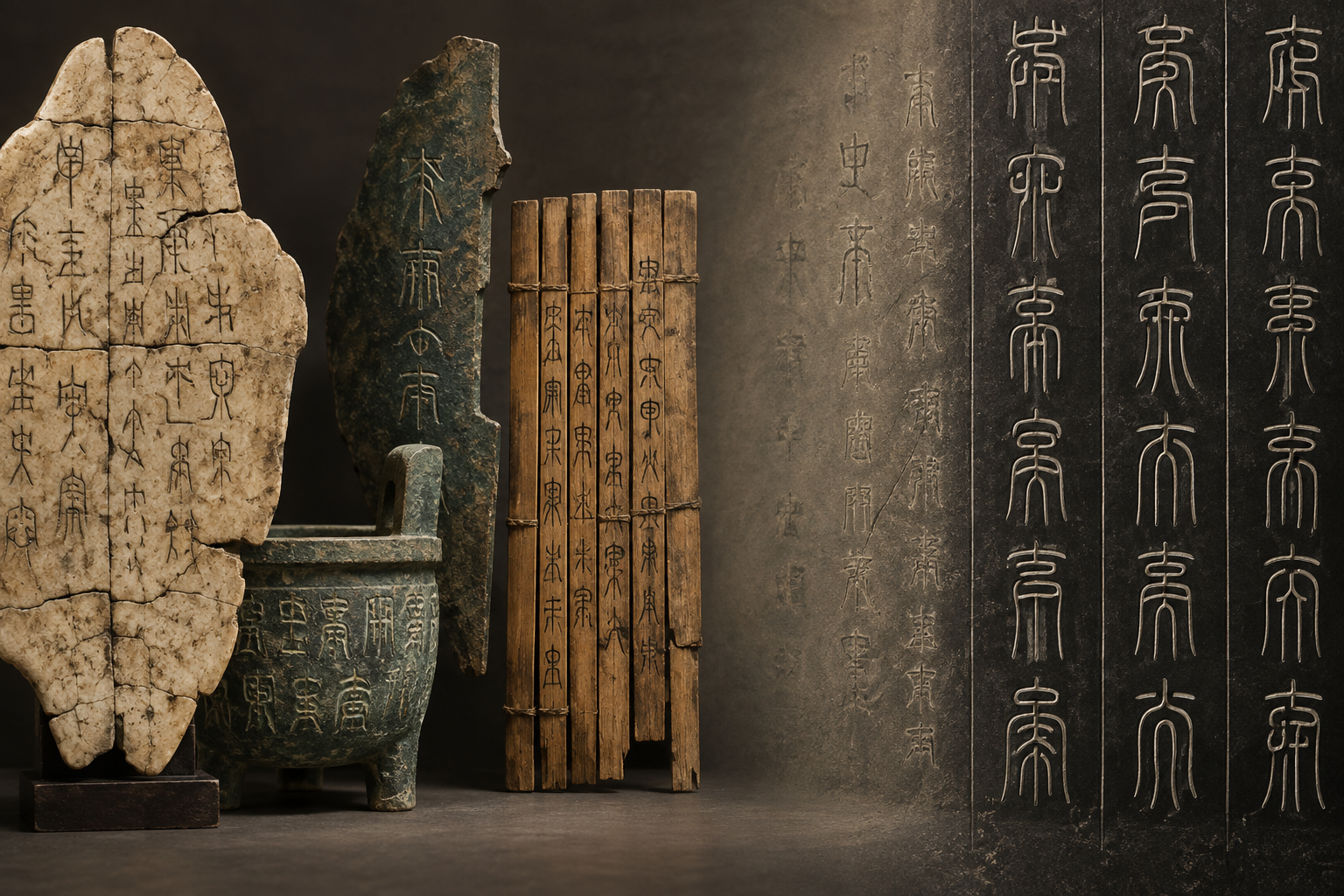
篆书:从早期字形到持久体系
Seal Script: From Early Forms to a Lasting System
WORD BY WORD
进入逐词听读模式
顶部配图随进度轮播,未读文字为白色,读到后逐词变黄。
用B1英语理解篆书如何从早期字形发展为秦代规范体系,并在印章与篆刻中延续。
THREE THINGS TO KNOW
- 01
现代通俗分类常把篆书分为大篆和小篆,但“大篆”不是边界完全固定的单一字体名称;籀文与大篆的关系也有不同认识,因此宜把大篆理解为对小篆以前若干古文字形态的宽泛称呼。
- 02
小篆是秦系文字长期发展的结果:秦系文字上承西周文字,经过春秋战国演变,到秦代形成小篆这一古文字阶段的终结形态,并非统一时凭空出现。
- 03
战国时期各诸侯国文字沿不同路径发展并形成地域差异;秦统一前的楚、齐、三晋、秦等区域文字同源但已分化,不能全部套成后来的标准小篆。
BILINGUAL TRANSCRIPT
双语全文
-
To understand seal script, we should follow how early forms became a system, rather than treat it as an unchanging style.
要理解篆书,我们应追踪早期字形如何变成共同体系,而不能把它看成一种从未变化的书体。
-
Introductions often divide seal script into Greater Seal and Small Seal, but the first term has no fixed border.
现代通俗介绍常把篆书分为大篆和小篆,但前一个术语并没有完全固定的边界。
-
Greater Seal is a broad name for several ancient forms before Small Seal.
更稳妥的做法,是把“大篆”作为小篆以前若干古文字形态的宽泛名称。
-
Small Seal, by contrast, grew from the Qin writing tradition from Western Zhou times onward.
相比之下,小篆是在秦系文字传统中长期发展而来的,其演变可以上溯到西周时期。
-
While the Warring States shared roots, writing in Chu, Qi, and Qin developed along different paths.
战国各地的文字虽然有更早的共同源头,但楚、齐、秦等区域仍沿着不同路径发展。
-
Therefore, we should not place every regional form under the label of the later Qin standard.
因此,我们不应把各地字形都整齐地归入后来秦代标准之下。
-
After unification, the Qin government not only promoted Small Seal but also rejected forms outside its writing rules.
统一以后,秦政府不仅推行小篆,也排除不符合秦文字规范的字形。
-
By making writing more consistent, this policy helped orders travel across regions and supported government.
这项政策通过提高官方文字的一致性,帮助政令跨地区传达,并支持统一治理。
-
Although Li Si helped select and organize forms, he did not invent Small Seal alone.
李斯虽然在字形取舍和整理中发挥了重要作用,但小篆并不是由他一人发明的。
-
What matters is that he and others standardized an existing Qin tradition that had already taken shape before unification.
关键在于,他和其他人规范的是统一前已经基本成形的秦系文字传统。
-
Some regular seal forms on cast inscriptions show tall shapes, balanced curves, level structures, and a strong decorative order.
一些铸铭中的规整篆书呈现修长字形、匀称曲线、平正结构和鲜明的装饰秩序。
-
Yet these features describe particular examples, so they must not be turned into a rule for every seal-script object.
然而,这些特征来自特定例子,不能被当成所有篆书载体都遵守的规则。
-
Because casting, cutting, and brush writing require different movements, a writing tradition could produce different lines and structures.
由于铸造、刻画和毛笔书写需要不同动作,同一文字传统也会产生不同的线条与结构。
-
Comparisons among cast inscriptions, carved marks, and ink writing on bamboo slips also reveal different degrees of simplification.
对铸铭、刻铭与竹简墨书的比较,还能看到不同程度的省减。
-
Official order was important, but real writers also needed forms that could be written quickly in work.
官方秩序固然重要,但真实的书写者在日常事务中也需要能够快速书写的字形。
-
Using straighter strokes, shorter forms, and freer structures, handwritten texts gradually helped move writing toward clerical script.
手写文字采用更直的笔画、更简省的字形和更自由的结构,逐步推动了文字向隶书方向发展。
-
Qin Small Seal was a standard form, not the only or most common script in everyday use.
因此,秦小篆是一种规范字体,却不是日常使用中唯一或最常见的书体。
-
In the Han period, seal, clerical, and cursive forms existed side by side rather than replacing one another at once.
到了汉代,篆、隶、草等书体并存,并没有在一瞬间彼此取代。
-
Seal forms remained visible on particular objects, including seals, tablet headings, bricks, and bronze mirrors.
篆书仍见于一些特定载体,包括印章、碑额、砖铭和铜镜。
-
In Qin, Han, Wei, and Jin seals, characters developed special round-and-square arrangements for small square spaces.
为适应方寸空间,秦汉魏晋印章中的篆字发展出特殊的方圆结构。
-
Today, seal engravers plan characters on paper, reverse them, and cut them into stone by combining calligraphy with knife skills.
今天,篆刻延续着这种联系:创作者先在纸上设计文字,再将其反向刻入石材,并结合书法与刀法。
-
Recognized by UNESCO in 2009, this living art shows how an ancient writing system can keep gaining new meaning.
这门活态艺术于2009年列入联合国教科文组织人类非物质文化遗产代表作名录,也让我们看到古老文字体系如何不断获得新的意义。