FOOD NOTES · E0069
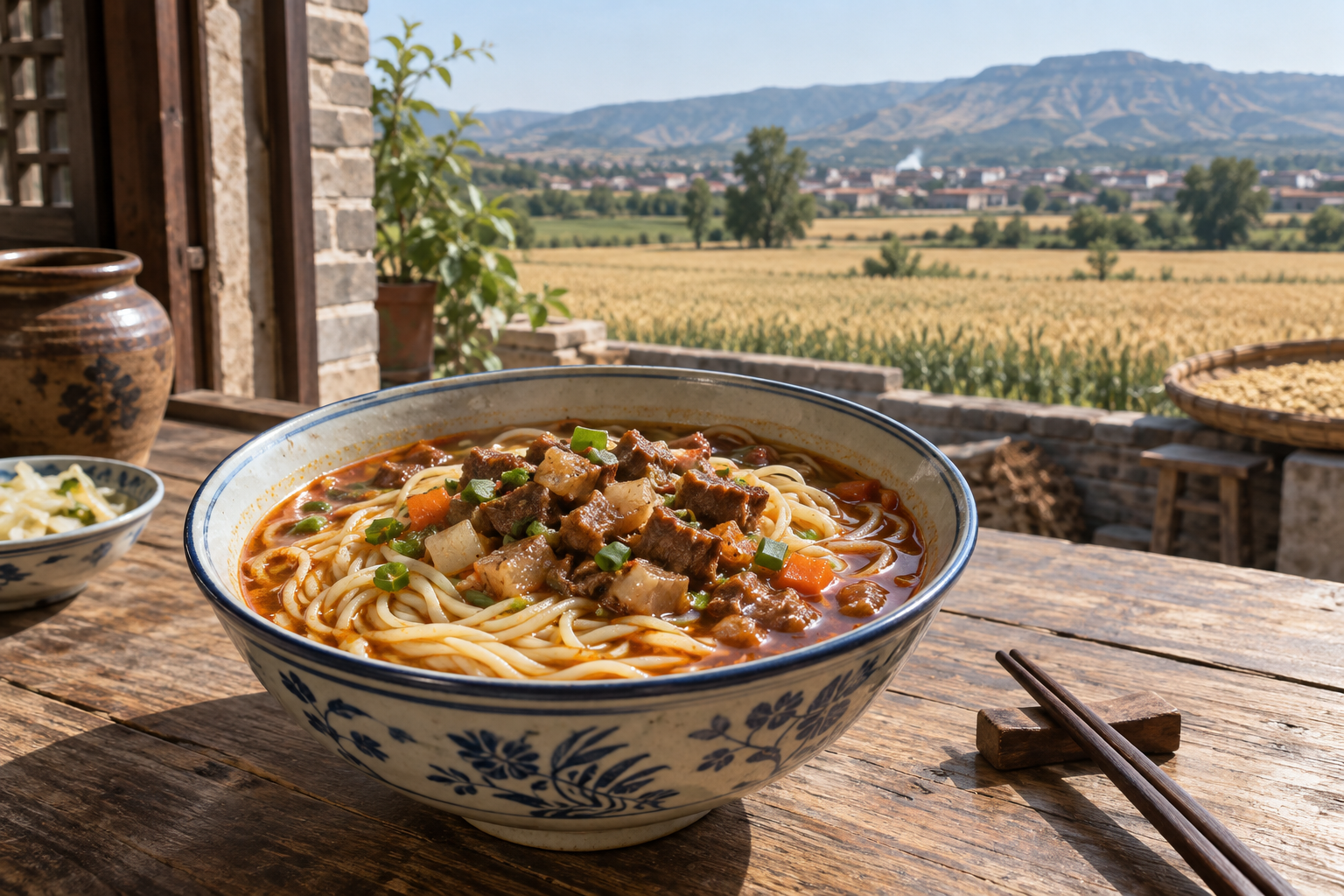
岐山臊子面:一碗酸辣香怎样形成
Qishan Saozi Noodles: How One Bowl Builds Its Flavor
WORD BY WORD
进入逐词听读模式
顶部配图随进度轮播,未读文字为白色,读到后逐词变黄。
每天听一篇带你用英语认识岐山臊子面。从薄筋光的面条、熟制肉臊子到煎稀汪的热汤,理解酸辣香怎样形成,以及家庭宴席、推荐性标准和当代产品为何保留差异。
THREE THINGS TO KNOW
- 01
岐山县隶属宝鸡市;宝鸡位于关中平原西部,渭河穿行,属暖温带半湿润气候,四季分明,这构成岐山面食所在的关中西府地理背景。
- 02
当代岐山的“一碗面”产业链连接小麦、辣椒、蔬菜、养殖以及面、臊子、汤等环节,本地原料基地为地方风味提供供应背景。
- 03
陕西食品安全地方标准所称臊子是熟制肉丁,常用于臊子面汤料;其中岐山臊子肉以猪肉为主,配菜籽油、醋、辣椒面、生姜和香辛料等,经文火慢炒熟制。
BILINGUAL TRANSCRIPT
双语全文
-
Qishan saozi noodles raise one rich question: how do noodles, diced meat, and soup build their sour, spicy, fragrant taste?
岐山臊子面引出一个看似简单、答案却很丰富的问题:面条、肉臊子和汤怎样共同构成一碗酸、辣、香的面?
-
Qishan County belongs to Baoji in western Guanzhong, whose river plain and four seasons form this food's farming background.
岐山县隶属关中西部的宝鸡,渭河平原与分明的四季构成了这种面食所在的农业大背景。
-
Today's local supply chains connect wheat, chilies, vegetables, and livestock, but not every bowl's ingredients come from Qishan.
如今,当地产业链连接着小麦、辣椒、蔬菜和养殖业,但这并不表示每一碗面的所有原料都来自岐山。
-
Inside the bowl, noodles provide the staple, saozi holds strong flavor, and soup joins everything together.
关键在于碗中三部分的分工:面条承担主食,臊子集中浓郁风味,汤则把所有部分连接起来。
-
Bao, jin, and guang describe noodles that are thin, firm after cooking, and smooth on the surface.
当地所说的“薄、筋、光”,是指面条薄,煮后有令人愉快的韧性,而且表面顺滑。
-
These are local sensory words, not national measurements; jin does not mean harder is always better.
这些是日常的感官描述,不是精确的国家指标;“筋”也不等于面越硬越好。
-
Here, saozi means cooked diced meat used in soup, not just any noodle topping.
这里的“臊子”指用于汤料的熟制肉丁,并不是任何放在面上的浇头。
-
One standard for packaged Qishan saozi describes pork slowly cooked with rapeseed oil, vinegar, chili, ginger, and spices.
陕西一项针对预包装岐山臊子肉的地方标准,描述了猪肉与菜籽油、醋、辣椒面、生姜和香辛料一起文火慢炒的做法。
-
It explains one process, but not every family's or restaurant's only recipe.
这项标准有助于解释制作过程,却不是每个家庭和门店都必须遵循的唯一配方。
-
Soup carries meat, oil, vinegar, chilies, and vegetables across noodles, controlling flavor and eating rhythm.
汤把肉、油、醋、辣椒和配菜的味道带到面条上,因此既控制整体风味,也影响进食节奏。
-
In jian, xi, wang, jian means piping hot soup, not fried or burnt.
在“煎、稀、汪”中,“煎”是说汤要热腾腾地上桌,并不是煎炸或烧焦。
-
Xi means few noodles in plenty of soup, not weak or tasteless soup.
“稀”是指面相对少、汤比较多,并不是说汤寡淡无味。
-
Wang points to red broth with rich, shining oil drops, not a rule that more oil is always better.
“汪”指汤面红亮、油花丰润,而不是规定油越多越好。
-
Sour, spicy, and fragrant also come from several parts, not one secret ingredient.
另一组“酸、辣、香”同样来自多个部分协同作用,而不是某一种神秘配料。
-
Vinegar brings sourness, while chilies and hot oil bring heat and bright red color.
醋带来鲜明的酸味,辣椒及其与热油的烹调则形成辣感和红亮色泽。
-
Pork, rapeseed oil, ginger, spices, vinegar, and chilies build aroma, with different balances across homes.
熟制猪肉、菜籽油、生姜、香辛料、醋和辣椒共同形成香气,不过不同家庭的比例可以不同。
-
Carrots, beans, tofu, garlic shoots, daylily, wood ear, or egg strips can vary by season and maker.
配菜又增加了一层风味,不过胡萝卜、豆角、豆腐、蒜薹、黄花菜、木耳或蛋皮会随季节和制作者而变化。
-
In some Qishan families, these noodles appear at Spring Festival and meals for weddings, births, and school success.
在岐山一些家庭中,春节以及婚嫁、生子、升学等重要事情的地方席面上会出现臊子面。
-
A large soup pot and small bowls help hosts serve many guests repeatedly at one table.
一大锅热汤配上许多小碗,方便在多人同桌时一碗接一碗地招待客人。
-
Stories of a Zhou king killing a river creature or a clever sister-in-law inventing the dish are legends, not proven history.
关于周王斩蛟或聪明嫂子创制这种面食的故事属于传说,并不是已经证实的历史。
-
A recommended 2024 Baoji standard gives restaurants a common guide while leaving room for household, seasonal, and shop differences.
2024年的一项推荐性宝鸡地方标准为餐饮制作提供了较统一的参考,同时仍为家庭、季节和门店差异留下空间。
-
Home cooking, village meals, shops, chains, and packaged products now coexist instead of fully replacing one another.
与此同时,家庭烹饪、乡村餐食、地方门店、连锁经营和预包装产品如今并存,并没有彼此完全取代。
-
Understanding each part and limit reveals both a carefully built flavor system and a living local practice.
理解每个部分的作用与边界后,我们就能把岐山臊子面既看作一套精心构成的风味系统,也看作仍在变化的地方生活实践。