FIELD NOTE · E0067
金文:铸在青铜上的历史记录
Bronze Inscriptions: History Cast in Metal
WORD BY WORD
进入逐词听读模式
顶部配图随进度轮播,未读文字为白色,读到后逐词变黄。
每天听一篇带你用英语认识金文。从陶范铸字到西周长铭,理解青铜礼器怎样记录册命、战争与土地事务,以及学者如何结合器物、语境和文字证据谨慎释读。
THREE THINGS TO KNOW
- 01
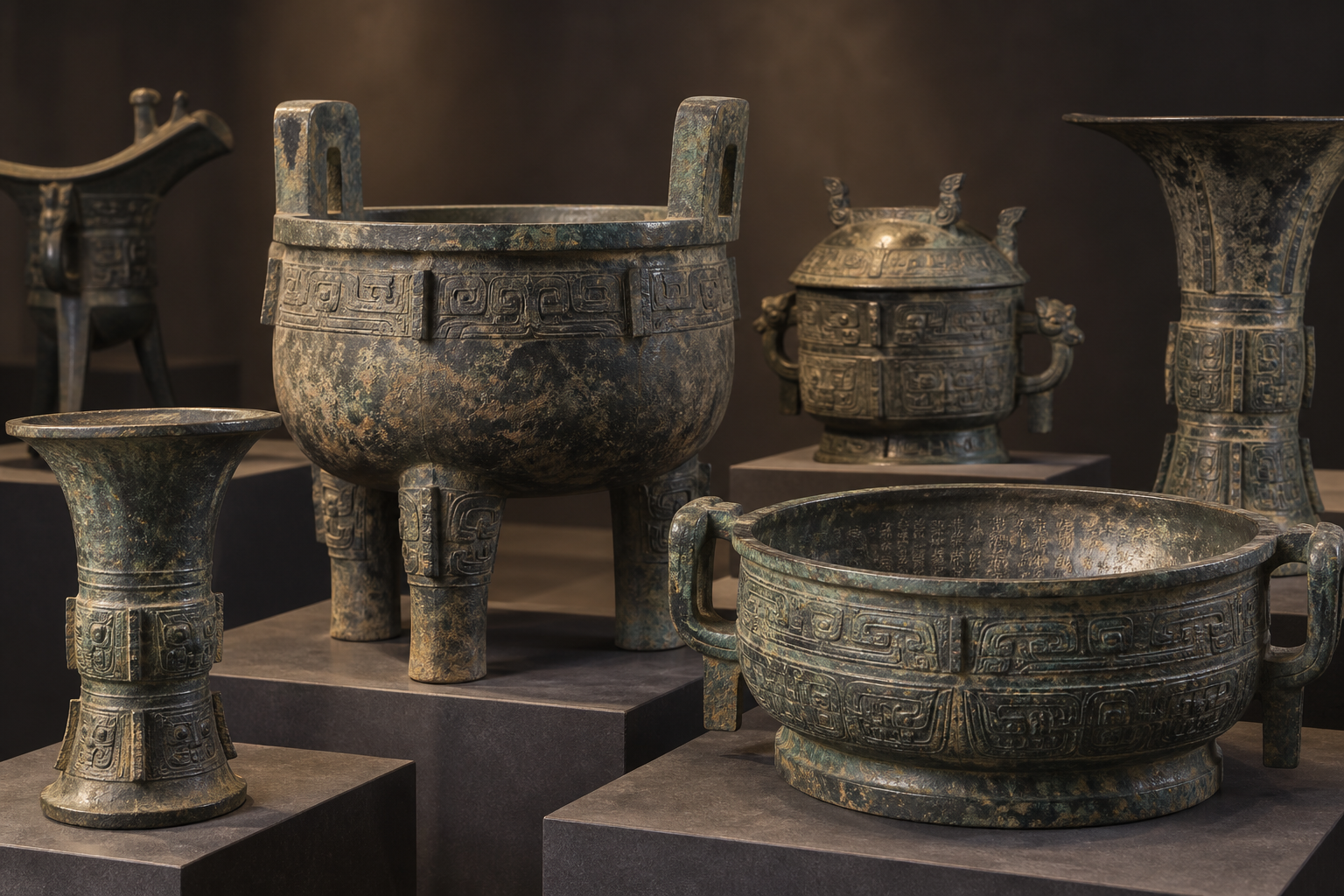
金文是铸或刻在青铜器表面的文字,也称吉金文字;它是汉字发展中的重要一环,也是古代历史事件的重要物证。
- 02
商周青铜礼器常用组合陶范铸造:外范与内芯之间形成器壁空间,铜液冷却后成为器物;铭文可通过嵌入内芯的铭文块随器铸成。
- 03
商代金文多见较短铭记;西周青铜礼器数量增加,铭文内容、单篇长度和总量显著增长;春秋战国时期又出现明显的地域书风,部分铭文从器内转向器表并更具装饰性。
BILINGUAL TRANSCRIPT
双语全文
-
Chinese bronze inscriptions, called jinwen, are words cast or engraved on ancient bronze objects, especially ritual vessels.
金文是铸造或刻写在古代青铜器上的文字,尤其常见于青铜礼器。
-
They do more than name objects: many turn vessels into lasting records of ritual, power, and memory.
金文不只是标明器物名称;许多铭文还让礼器成为礼制、权力与记忆的长久记录。
-
To see how, we first look briefly inside a bronze workshop.
要理解这一点,我们先简要走进古代青铜作坊。
-
For many Shang and Zhou vessels, craftspeople fitted clay mold pieces around a core, leaving space for molten bronze.
许多商周青铜器使用陶范铸造:工匠把分块陶范合在内芯周围,为铜液留出空间。
-
An inscription block could be set into the core, so words formed with the vessel as the bronze cooled.
铭文块可以嵌入内芯,因此铜液冷却时,文字会与器物一同成形。
-
Other words were engraved, so jinwen names a bronze carrier, not one single technique.
另有一些文字是刻写而成,所以“金文”指的是青铜载体,并不只代表一种制作技术。
-
Shang inscriptions were often short, while Western Zhou texts became more numerous, longer, and richer.
商代金文往往较短,而西周铭文在数量、篇幅和内容上都更加丰富。
-
A long Zhou inscription might give a date, record a royal command or gift, then name the maker and an ancestor.
一篇西周长铭可能交代日期,记录王命或赏赐,最后写明作器者与祖先。
-
What matters is not only the event but also who held authority, received honor, and made the vessel.
重要的不只是事件本身,还有谁拥有权威、谁接受荣誉,以及谁制作了这件礼器。
-
The Da Yu ding records King Kang's appointment of Yu and royal gifts; Yu responded by making the vessel for his ancestor.
大盂鼎记录了周康王对盂的册命与赏赐,以及盂通过为祖先作器作出的回应。
-
Inside a ritual vessel, such words connected court ceremony, family worship, and future generations.
这些文字置于礼器内部,把朝廷仪式、家族祭祀与后世子孙连接起来。
-
Other bronzes preserved public actions beyond the structure of a royal appointment.
其他青铜器还保存了并不采用王室册命结构的公共事务。
-
The Guoji Zibai pan records a campaign, captives, a royal feast, and rewards, revealing warfare and military ritual.
虢季子白盘记录了征战、俘获、王室宴飨与赏赐,呈现出战争和军礼。
-
A smaller group records land transfers or boundaries, offering rare evidence about property and social relations.
数量较少的一类铭文记录土地转让或疆界,为认识财产与社会关系提供了难得证据。
-
Yet these texts are not modern newspapers, because elite families chose what achievements and claims should last.
不过,金文不是现代报纸;贵族家族会选择哪些功绩与主张值得长久保存。
-
During the Eastern Zhou, regional styles grew more varied, and some inscriptions moved from vessel interiors to outer surfaces.
进入东周后,各地书写风格更加多样,一些铭文也从器内走向器表。
-
Comparing dated bronzes from different places helps researchers trace later seal-script forms without imagining a perfectly straight path.
比较不同时地的有年代青铜器,有助于研究者追踪后世篆书形态,同时避免把演变想象成完全笔直的道路。
-
Reading jinwen starts with clear images or rubbings, the vessel, its date, and any known archaeological setting.
释读金文要从清晰图像或拓片、器物本身、年代,以及已知的考古背景开始。
-
Scholars compare repeated shapes and uses, then test possible readings against grammar, context, other excavated texts, and old books.
学者会比较重复出现的字形与用法,再用语法、上下文、其他出土文字和古书检验可能的释读。
-
Because surfaces are damaged and ancient forms vary, readings may remain debated or change with new evidence.
由于器表可能残损、古文字写法也会变化,一些释读仍有争议,并可能随新证据出现而修正。
-
Together, the vessels provide first-hand evidence for the history of politics, warfare, economies, societies, language, and writing.
这些器物共同为政治、战争、经济、社会、语言和文字的历史提供一手证据。
-
Jinwen is therefore not just old writing on metal, but a conversation between objects, historical claims, and evidence.
因此,金文不只是金属上的古老文字,更是器物、历史主张与证据之间的一场对话。