FESTIVAL · E0066
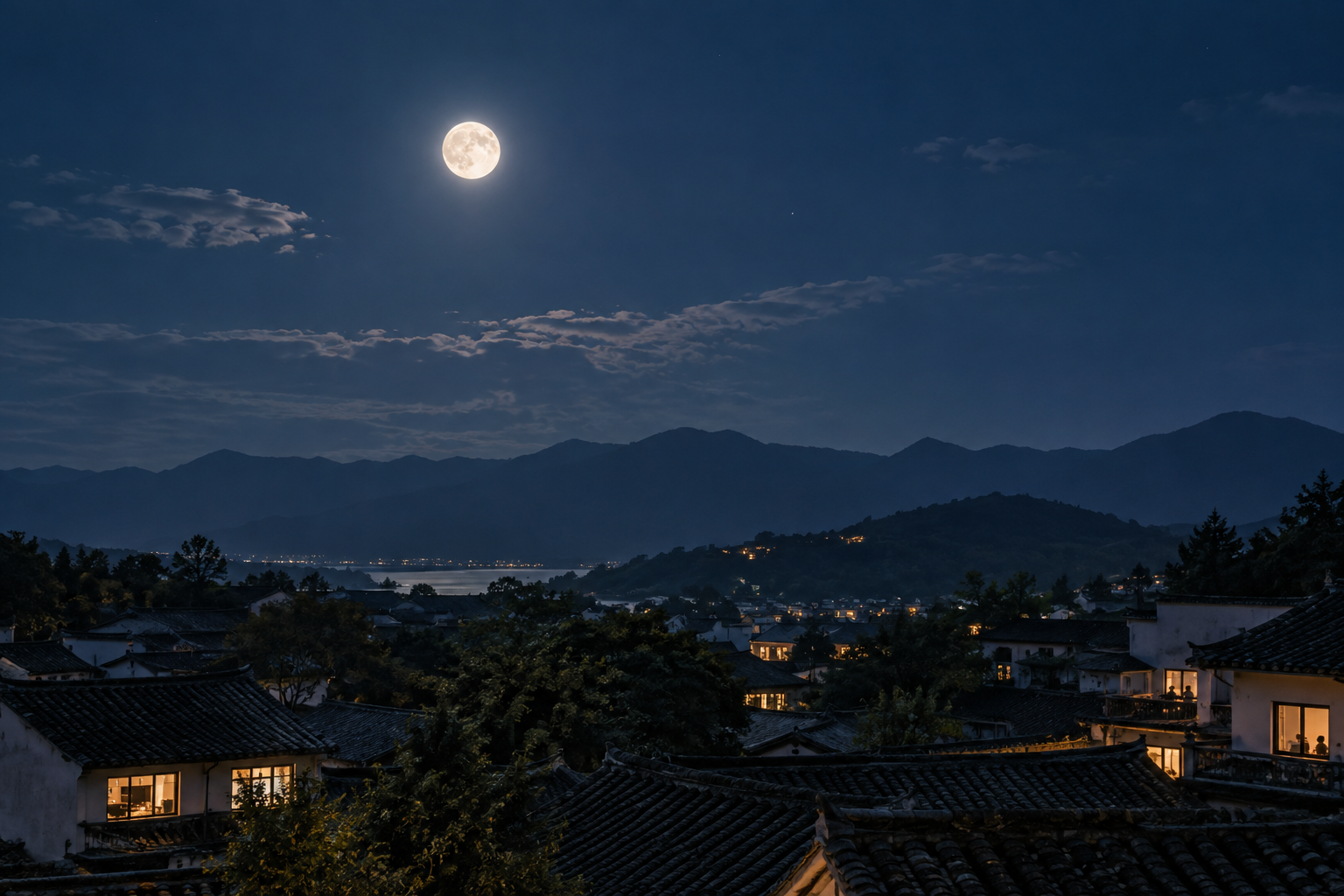
中秋赏月:一轮明月,照见不同的远方
Mid-Autumn Moon Viewing: One Moon Across Many Miles
WORD BY WORD
进入逐词听读模式
顶部配图随进度轮播,未读文字为白色,读到后逐词变黄。
从农历日期、月相与历史赏月传统出发,用英语理解为什么一轮明月能把身处不同地方的人带进共同的节令、记忆与团圆愿望。
THREE THINGS TO KNOW
- 01
中秋节在农历八月十五,是流行于全国众多民族中的传统节日;国家级非遗项目资料把赏月、丰收愿望与亲情团圆列为其重要文化内容。
- 02
国家级非遗项目资料概述:晋代已有中秋赏月,唐代赏月之风大兴,北宋定八月十五为中秋节;这些习俗并非在单一时点一次形成。
- 03
农历是结合月相与太阳季节位置的阴阳历;每月以朔为开端,一个朔望月平均为29.5306日。
BILINGUAL TRANSCRIPT
双语全文
-
Mid-Autumn moon viewing does more than place a bright moon above a festival; it places distant people under one seasonal sky.
中秋赏月不只是让一轮明月照亮节日,也让相隔远方的人同在一片有着共同节令的天空下。
-
Why has this simple act carried so much feeling across Chinese history?
为什么这样一个简单的举动,能在中国历史中承载如此深厚的情感?
-
The festival falls on the fifteenth day of the eighth lunar month, near the middle of autumn.
中秋节在农历八月十五,正处在秋季中段附近。
-
Its date comes from a calendar that follows both the Moon's phases and the Sun's seasonal movement.
这个日期来自农历;它既参考月相,也兼顾太阳带来的季节变化。
-
The Hong Kong Observatory explains that each lunar month begins at new moon.
香港天文台解释说,每个农历月都从朔,也就是新月开始。
-
The cycle from one new moon to the next lasts about 29.53 days.
从一次新月到下一次新月,一个周期大约是29.53天。
-
Day fifteen is therefore close to full moon, but a festival date is not the same as an exact astronomical moment.
因此,十五通常接近满月,不过节日日期并不等于精确的天文满月时刻。
-
In official almanacs, the exact full phase can sometimes fall on another lunar date.
在官方年历中,精确的望有时会落在另一个农历日期。
-
NASA explains that a full moon appears opposite the Sun in Earth's sky and rises around sunset.
美国国家航空航天局解释说,满月在地球天空中与太阳方向相对,并大约在日落时升起。
-
This long evening of moonlight gives people time to pause, look, and share the view.
这段有月光相伴的长夜,让人们有时间停下来,共同望向天空。
-
The custom, however, did not appear in one finished form.
不过,这项习俗并不是以一种完整形态突然出现的。
-
Heritage records mention moon viewing in the Jin period, growing popularity in the Tang, and a fixed festival date in the Northern Song.
非遗资料提到,晋代已有赏月活动,唐代赏月之风渐盛,北宋则把八月十五定为中秋节。
-
Over time, respect for nature, autumn celebration, poetry, and family gatherings came together.
随着时间推移,敬重自然、庆祝秋收、吟咏诗歌与家人团聚逐渐汇聚在一起。
-
Stories of Chang'e, the Jade Rabbit, and Wu Gang added imagination, but they are legends rather than astronomical explanations.
嫦娥、玉兔和吴刚的故事增添了想象,却属于传说,而不是天文解释。
-
By keeping record and legend separate, we can value both more clearly.
把历史记录与传说区分开来,我们反而能更清楚地理解两者的价值。
-
What matters is how the round moon came to express wishes for reunion, harvest, and peace.
真正重要的是,一轮圆月如何逐渐承载团圆、丰收与平安的愿望。
-
Even when relatives were apart, they could turn their attention toward the same object in the sky.
即使亲人相隔两地,他们仍可以把目光投向天空中的同一个对象。
-
The shared moon did not remove distance; instead, it gave people a way to speak about longing.
共同仰望的月亮并没有消除距离,却让人们有了一种表达思念的方式。
-
This does not mean everyone sees exactly the same scene at the same time.
这并不意味着每个人会在完全相同的时刻看到完全相同的景象。
-
Moonrise, weather, landscape, and local customs all differ, while regional traditions add their own forms to the festival.
月升时间、天气、地貌和地方习俗各不相同,各地传统也为节日增添了自己的样貌。
-
Whether people watch from a courtyard, a city window, or a school dormitory, the act can still create a moment of connection.
无论人们从庭院、城市窗前还是学校宿舍望月,这个举动仍能创造一个彼此连接的时刻。
-
That is why Mid-Autumn moon viewing remains meaningful: one moon becomes a meeting place for season, memory, and hope.
这正是中秋赏月至今仍有意义的原因:一轮明月成为节令、记忆与希望相遇的地方。