FOOD NOTES · E0065
山西刀削面:柳叶面片里的筋滑口感
Shanxi Knife-Cut Noodles: Texture in Every Slice
WORD BY WORD
进入逐词听读模式
顶部配图随进度轮播,未读文字为白色,读到后逐词变黄。
从小麦面团到柳叶形面片,理解山西刀削面外滑内筋的口感,以及它与多样面卤、地方农业语境和非遗技艺的联系。
THREE THINGS TO KNOW
- 01
中国非物质文化遗产网将刀削面制作技艺列为传统技艺类国家级非物质文化遗产代表性项目,项目编号943(VIII-160),公布于2008年第二批名录。
- 02
国家级非遗项目页介绍,刀削面制作时将面团做成圆柱形,并把面片直接削入开水锅中。
- 03
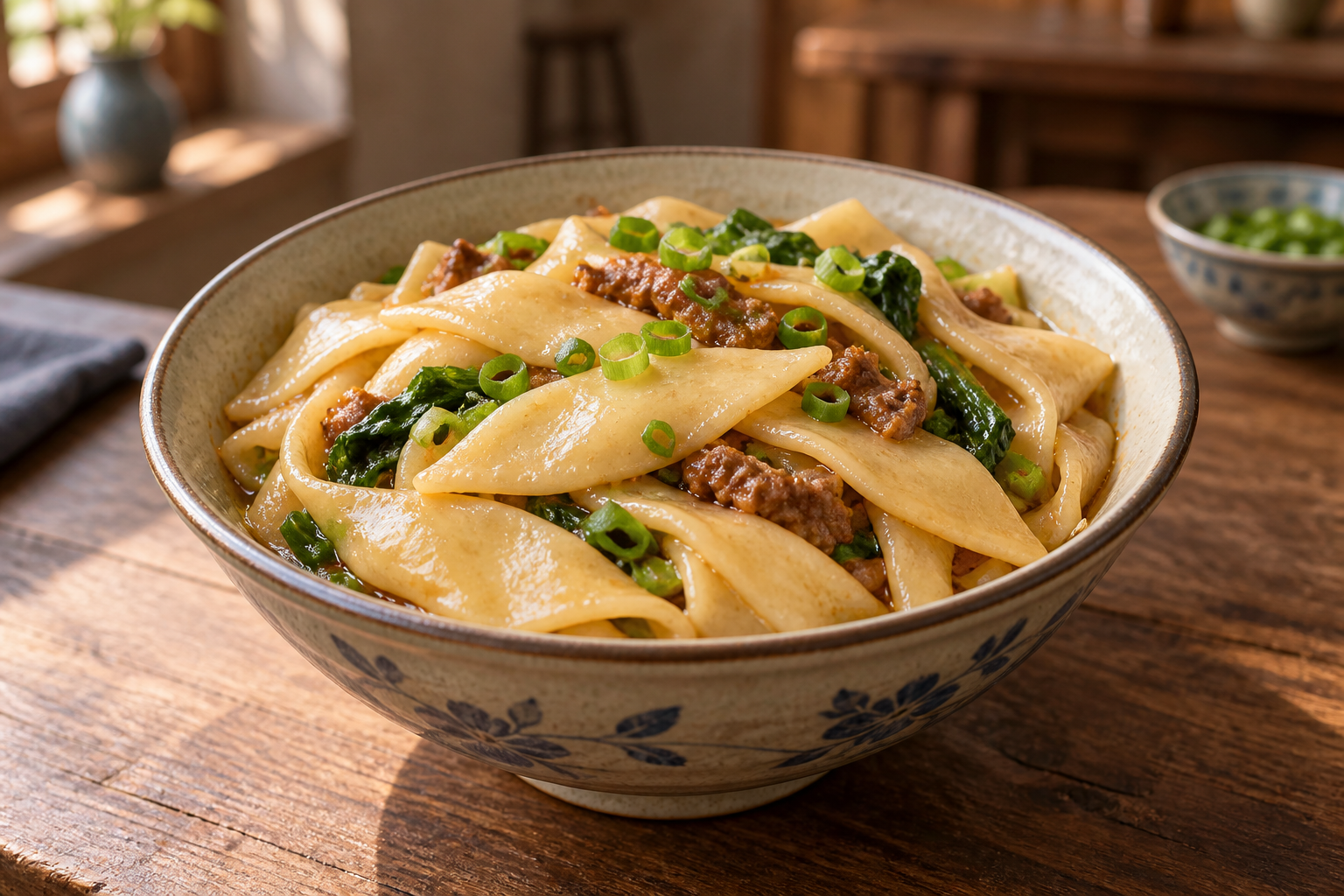
国家级非遗项目页称削出的面片呈三棱形、宽厚长短一致,形似柳叶,并概括其有筋骨、柔软光滑等口感特征。
BILINGUAL TRANSCRIPT
双语全文
-
Shanxi knife-cut noodles are easy to recognize: the bowl is filled with broad, leaf-like slices instead of long, even strands.
山西刀削面很好辨认:碗里不是细长整齐的面条,而是一片片宽阔、似叶的面片。
-
The real question is how a simple wheat dough becomes noodles that feel smooth outside and pleasantly chewy inside.
真正值得追问的是,一团朴素的小麦面,如何变成外滑内筋的面片。
-
Official descriptions identify wheat flour dough as the base of this traditional Shanxi food.
官方资料把小麦粉面团列为这道山西传统面食的基础。
-
What matters is not a rare ingredient, but the way the dough is shaped, cooked, and served.
关键不在稀有原料,而在面团如何成形、煮熟并端上餐桌。
-
The dough is formed into a cylindrical roll, and pieces are cut directly into boiling water.
面团先做成圆柱形,再把面片直接削进沸水中。
-
According to China's national intangible cultural heritage archive, well-made pieces are triangular and resemble willow leaves.
据中国国家级非遗资料,成形良好的面片呈三棱状,形似柳叶。
-
This recognizable shape gives each bite a flat surface, a clear edge, and a character unlike ordinary round noodles.
这种鲜明的形态让每一口都有平展的表面和清晰的边缘,与普通圆面条很不一样。
-
Official accounts from Datong describe the cooked noodles as smooth on the outside, chewy within, soft, and not sticky.
大同官方资料形容煮熟的刀削面外滑内筋、软而不粘。
-
Rather than celebrating speed alone, the tradition depends on steady control that produces slices of similar size.
这项技艺的价值并不只在速度,更在稳定控制,让面片宽厚长短较为一致。
-
The knife and the cook's hand therefore support the story, but the finished noodles remain the subject.
因此,刀具和厨师的手只是解释过程的配角,成品刀削面才是主角。
-
Shanxi even has a recommended local standard for making knife-cut noodles, issued in 2016.
山西还在2016年发布了推荐性地方标准《山西刀削面制作规范》。
-
After boiling, the noodles can meet different sauces and toppings instead of one fixed soup formula.
面片煮熟后可以搭配不同面卤和浇头,并不存在唯一固定的汤式。
-
Common examples listed in the standard include minced-meat sauce, tomato and egg, stir-fried meat, and mixed toppings.
标准列举的常见例子包括炸酱、西红柿鸡蛋、炒肉和混合面卤。
-
Because the slices are broad, sauce can sit on their surfaces and between their folds.
因为面片宽阔,面卤可以附在表面,也能落在面片的折叠之间。
-
The wheat dough also connects the dish to Shanxi's wider dryland farming landscape.
小麦面团也把这道食物与山西更广阔的旱作农业景观联系起来。
-
Recent agricultural reporting shows that dryland wheat remains an active field of local research and cultivation.
近年的农业报道显示,旱地小麦仍是当地持续研究和种植的对象。
-
Yet this context does not mean that every restaurant uses the same local wheat or the same recipe.
但这种地方语境并不意味着每家餐馆都使用同一种本地小麦或同一套配方。
-
In some Datong servings, aged vinegar is added as an optional local accent, not as a universal rule.
在大同的一些吃法中,陈醋可以作为可选的地方味道,而不是普遍规则。
-
This choice shows how a local taste can join the bowl without defining every version.
这个选择说明,一种地方味道可以加入碗中,却不必定义所有版本。
-
Knife-cut noodle making entered China's national intangible cultural heritage list in 2008 as part of Shanxi's traditional noodle craft.
2008年,刀削面制作技艺作为山西传统面食技艺的一部分,进入国家级非物质文化遗产名录。
-
It is the repeatable knowledge behind dough, shape, and texture that the heritage record helps keep alive.
非遗记录所帮助延续的,正是面团、形态与口感背后可以代代传承的技艺知识。
-
So when you see a finished bowl, look first for those willow-leaf slices: they carry the identity of Shanxi knife-cut noodles.
所以下次看到一碗成品刀削面,请先留意那些柳叶形面片——它们承载着山西刀削面的鲜明身份。