FIELD NOTE · E0064
甲骨文:商代占问留下的记录
Oracle-Bone Inscriptions: Records of Shang Divination
WORD BY WORD
进入逐词听读模式
顶部配图随进度轮播,未读文字为白色,读到后逐词变黄。
每天听一篇带你用英语认识甲骨文。沿着叙辞、命辞、占辞与验辞,理解一条商代占问怎样留下时间、问题、判断与后续事件,并成为研究商代社会的珍贵记录。
THREE THINGS TO KNOW
- 01
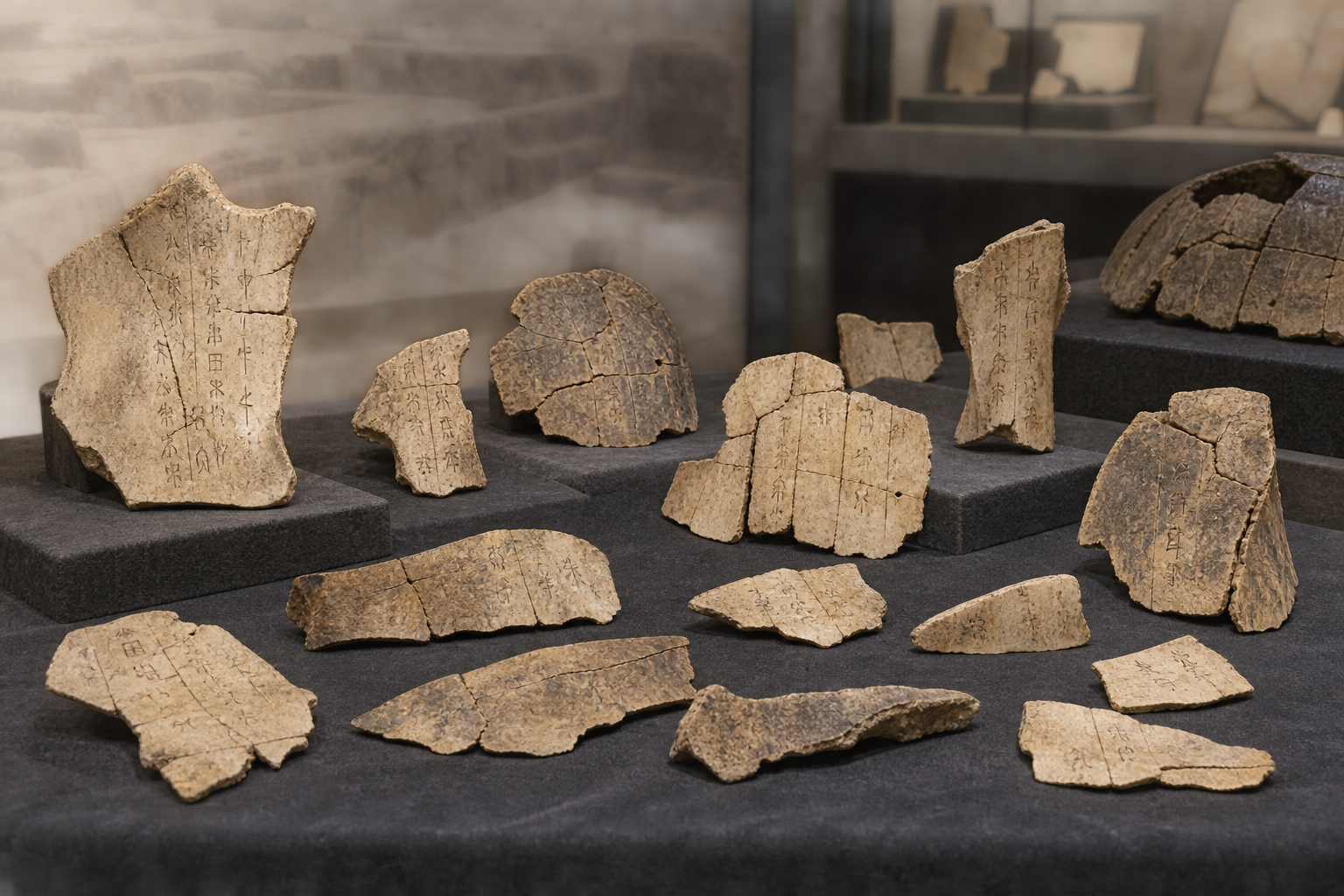
殷墟甲骨文出土于河南安阳殷墟,主要是晚商人在牛肩胛骨、龟甲及其他兽骨上留下的占卜与祈祷记录。
- 02
商代占卜会先整治甲骨,经过钻、凿、灼烤形成兆纹,再依据兆纹判断吉凶;UNESCO 同样说明兆意由灼烧产生的裂纹来判读。
- 03
完整形式的甲骨卜辞可分为叙辞、命辞、占辞、验辞:分别记录时间/贞人/地点、占问事项、兆纹判断和后续应验;多数卜辞只有叙辞和命辞。
BILINGUAL TRANSCRIPT
双语全文
-
Oracle-bone inscriptions are more than ancient signs; they are records of questions asked in the late Shang Dynasty.
甲骨文不只是古老的符号,也是商代晚期人们提出问题时留下的记录。
-
Found at the Yin Ruins in Anyang, many were connected with divination and prayer.
许多甲骨文出土于安阳殷墟,与占卜和祈祷有关。
-
The writing appears mainly on cattle shoulder bones and tortoise shells.
这些文字主要见于牛肩胛骨和龟甲。
-
To make a divination record, a shell or bone was prepared, drilled or cut, and then heated until cracks appeared.
为了形成一次占卜记录,人们会先整治甲骨,经过钻凿,再灼烤出裂纹。
-
People read these cracks as signs and sometimes added words about the process and its result.
人们把这些裂纹视为兆象,有时还会写下占卜过程及其结果。
-
What matters is that the cracks and the words could preserve a sequence of events together.
重要的是,裂纹与文字能够共同保存一连串事件。
-
A complete divination record may have four parts, although many surviving texts contain only the first two.
一条完整的卜辞可以包含四部分,不过许多留存下来的卜辞只有前两部分。
-
The opening part gives the time, the diviner, and sometimes the place.
开头的叙辞记录时间、贞人,有时也记录地点。
-
Next comes the charge, which states the matter at the heart of the question.
接着是命辞,也就是占问的核心事项。
-
After that, the prediction records the judgment made from the cracks.
随后,占辞记录根据兆纹作出的吉凶判断。
-
Finally, a verification may state what actually happened later.
最后,验辞可能会写下后来实际发生的事情。
-
By putting these parts together, scholars can follow a question from the moment it was asked to its later outcome.
把这些部分连起来,研究者就能追踪一个问题从提出到后来结果的过程。
-
One bone in the National Museum of China offers a rare example with all four parts.
中国国家博物馆的一件卜骨提供了一个四部分俱全的罕见例子。
-
It asks whether trouble would come within ten days, records the king's judgment, and then notes attacks several days later.
它先占问十日内是否有灾祸,再记录商王的判断,最后记下数日后发生的来犯事件。
-
This record does more than tell a dramatic story; it offers evidence about Shang geography, neighboring groups, and military affairs.
这条记录不只是讲述一个紧张的故事,还为研究商代地理、方国与军事事务提供证据。
-
Other inscriptions ask about sacrifices, weather, harvests, journeys, illness, births, and royal affairs.
其他卜辞还涉及祭祀、天气、收成、出行、疾病、生育和王室事务。
-
Because these questions concern both state affairs and daily concerns, they open a window onto the Shang ruling world.
这些问题既涉及国家事务,也涉及日常关切,因此为我们打开了一扇观察商代统治世界的窗口。
-
Researchers can also compare names and records to reconstruct the Shang royal genealogy and study important events.
研究者还可以比较人名与记录,重建商王世系并研究重要事件。
-
Even small numbers beside some inscriptions can match drill marks and show that the same matter was tested more than once.
甚至有些卜辞旁的小数字也能与钻凿痕迹对应,说明同一件事曾被多次占问。
-
Yet reading these records is not simple, because many texts are incomplete and even known signs can be hard to understand in context.
不过,读懂这些记录并不简单,因为许多文本并不完整,即使字形可识,也可能难以结合语境理解。
-
Rather than treating an oracle bone as a mysterious object, we should ask what question, judgment, and event it preserves.
与其只把甲骨看成神秘文物,不如追问它保存了什么问题、判断和事件。
-
Seen this way, each readable inscription becomes not only a trace from the past but also a surviving record of Shang history.
这样看来,每一条可读的卜辞不只是来自过去的痕迹,也是一份留存至今的商代历史记录。