FIELD NOTE · E0061
汉字的形与义:从骨刻到笔墨
Chinese Characters: Where Shape Meets Meaning
WORD BY WORD
进入逐词听读模式
顶部配图随进度轮播,未读文字为白色,读到后逐词变黄。
每天听一篇带你用英语认识汉字的形与义。从甲骨和青铜上的刻痕,到毛笔与墨形成的线条,再到形声字如何同时提示意义和读音,理解汉字为什么不只是图画,也是手与材料共同塑造的语言。
THREE THINGS TO KNOW
- 01
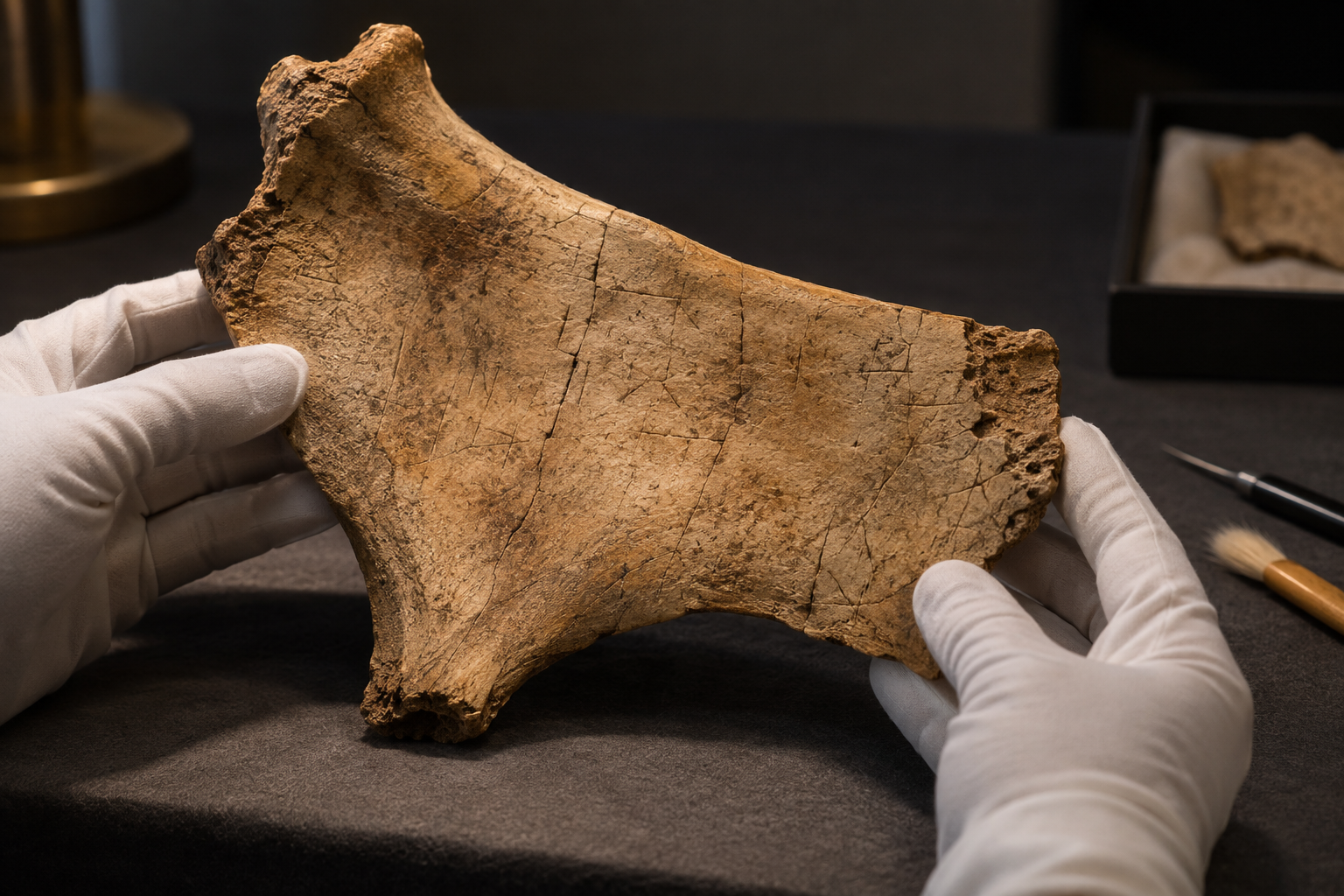
殷墟甲骨文主要刻写在牛肩胛骨、龟甲及其他兽骨上,内容涉及占卜、天气、收成、战争和王室事务等。
- 02
联合国教科文组织将殷墟甲骨文描述为中国已知最早的成熟文字。
- 03
早期汉字曾刻在玉器和甲骨表面,也曾铸在青铜礼器表面。
BILINGUAL TRANSCRIPT
双语全文
-
When you look at a Chinese character, you are seeing both language and a visible trace of human action.
当你看一个汉字时,你看到的不只是语言,也是人类动作留下的可见痕迹。
-
Chinese characters do more than carry meaning; their shapes also record the tools and materials used to make them.
汉字不只是承载意义;它们的形状也记录了人们使用的工具和材料。
-
Yet it is misleading to say that every character is simply a picture.
不过,如果说每个汉字都只是一幅图画,就会产生误解。
-
To understand why, begin with the oracle-bone inscriptions of the late Shang Dynasty.
要理解其中的原因,可以先从商代晚期的甲骨文说起。
-
People wrote records of divination on cattle shoulder bones and turtle shells, often about weather, harvests, warfare, and royal affairs.
人们把占卜记录写在牛肩胛骨和龟甲上,内容常涉及天气、收成、战争和王室事务。
-
The United Nations cultural agency describes these inscriptions as the earliest known mature writing in China.
联合国教科文组织把殷墟甲骨文称为中国已知最早的成熟文字。
-
On these hard surfaces, lines were cut with sharp tools, so many strokes appear firm, narrow, and angular.
在这些坚硬表面上,线条由锐利工具刻出,因此许多笔画显得坚实、细窄而有棱角。
-
Early writing was also cast into the surfaces of bronze ritual vessels, giving words a new material form.
早期文字也被铸在青铜礼器表面,让文字获得了另一种材料形态。
-
Material was not just a background; it helped decide what a written line could look like.
材料不只是背景,它也会影响书写线条呈现出的样子。
-
Brush writing created a different kind of movement.
毛笔书写带来了另一种线条运动。
-
A flexible hair brush can make a line thin or thick, dry or full, depending on its tip, angle, speed, pressure, and ink.
柔软的毛笔能通过笔尖、角度、速度、压力和墨量,让线条呈现粗细、枯润变化。
-
What matters is not only the finished shape but also the order in which the writer moves.
重要的不只是最后的字形,还有书写者运笔的先后顺序。
-
Established stroke order helps keep a character balanced and allows the hand to write with rhythm.
约定的笔顺帮助汉字保持平衡,也让手能够有节奏地连续书写。
-
The inner structure of characters also connects form with meaning and sound.
汉字的内部结构还把字形与意义、声音连接起来。
-
A few familiar characters began from simplified images, but most characters are not small drawings of objects.
少数常见汉字源于简化的图形,但大多数汉字并不是物体的小图画。
-
Many are sound-and-meaning compounds, joining one component that suggests a field of meaning with another that offers a clue to sound.
许多汉字是形声字:一个构件提示大致的意义范围,另一个构件提供读音线索。
-
Take qing, the character meaning clear or clean.
以表示清澈或干净的“清”字为例。
-
Its water component points toward meaning, while the other component gives a clue to its sound.
它的三点水提示意义,而另一个构件提供读音线索。
-
The clue is useful rather than perfect, because it does not always match modern Mandarin exactly.
这种线索有帮助,却不一定完全准确,因为它并不总与现代普通话读音完全一致。
-
By reading components, learners can see a character as an organized structure rather than a wall of strokes.
通过辨认构件,学习者能把汉字看成有组织的结构,而不是一堵笔画之墙。
-
From cuts in bone to marks in bronze and flowing ink, each material changed the visible life of writing.
从骨头上的刻痕到青铜上的铭文,再到流动的墨线,每种材料都改变了文字的可见生命。
-
That is why a Chinese character is not only something to read: it is also a small record of how people shaped language by hand.
所以,汉字不只是用来阅读的符号,也是人们如何用双手塑造语言的一份小小记录。