CITY NOTES · E0030
南昌:一座懂得出发的城市
Nanchang: A City That Knows How to Begin
WORD BY WORD
进入逐词听读模式
顶部配图随进度轮播,未读文字为白色,读到后逐词变黄。
用约三分钟英语认识南昌:沿赣江走过滕王阁、八一起义纪念地与航空制造现场,看这座城市如何一次次把具体地点变成新的起点。
THREE THINGS TO KNOW
- 01
Nanchang is the capital of Jiangxi Province; the Gan River runs through the city, which has an extensive network of rivers and lakes.
- 02
Tengwang Pavilion was first built in 653 by Li Yuanying and stands near the meeting place of the Gan River and an old channel of the Fu River.
- 03
Wang Bo's Preface to the Pavilion of Prince Teng made the pavilion famous by joining the building with images of sunset clouds, a bird, autumn water and the sky.
BILINGUAL TRANSCRIPT
双语全文
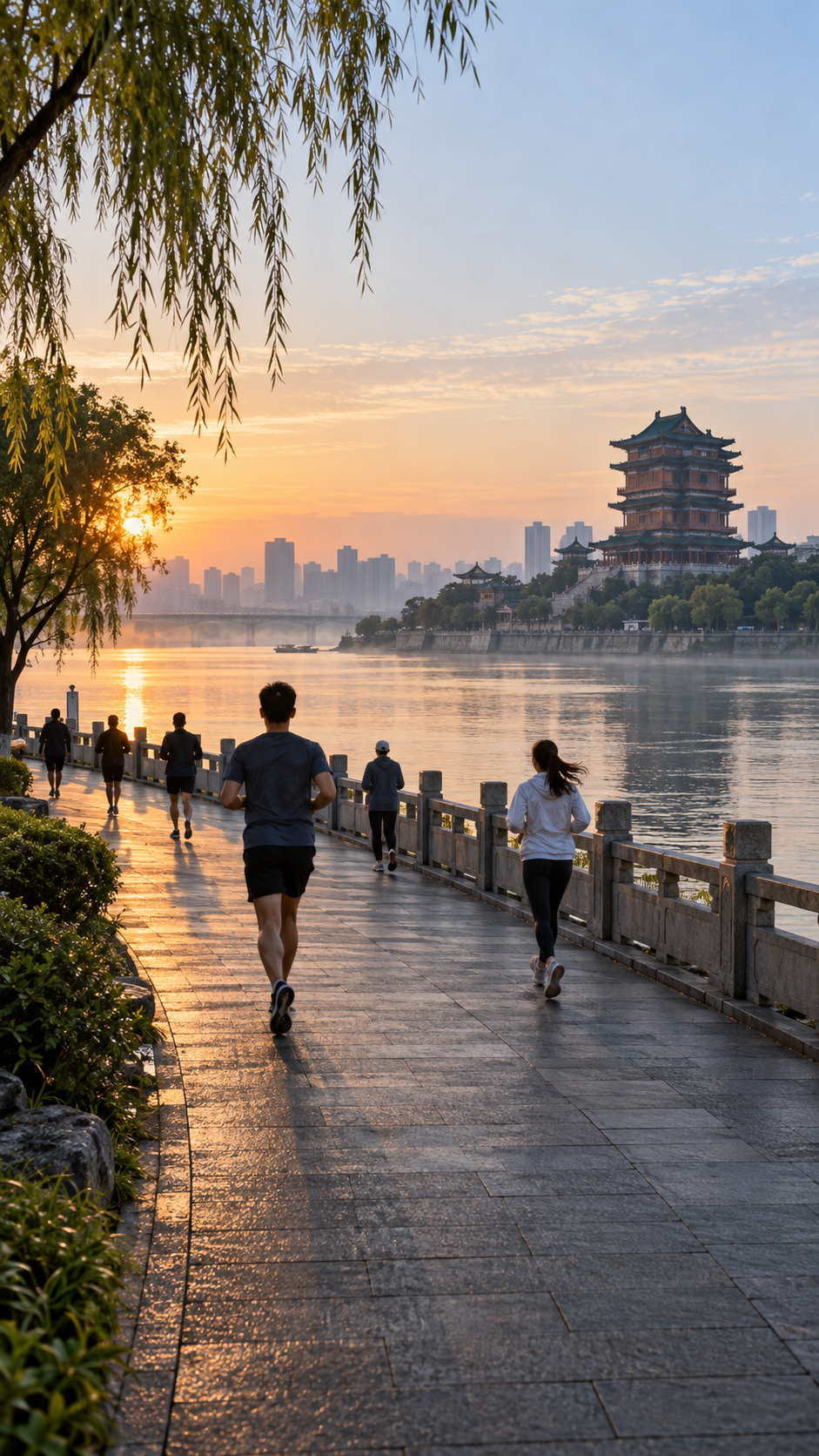
At dawn, runners move beside the Gan River as Tengwang Pavilion catches the first light.
清晨,跑步者沿赣江前行,滕王阁也迎来了第一缕阳光。
Nanchang often turns a place into a new beginning.
要读懂南昌,不妨留意这座城市多少次把一个地方变成新的起点。
Jiangxi's capital is a water city, with the Gan River running through its center.
江西省会南昌是一座水城,赣江从城市中央穿过。
The river does more than divide the map; it stages the city's history.
赣江不只划分地图上的两岸,也为南昌提供了一座可以看见历史的舞台。
Tengwang Pavilion was first built in 653 where the Gan met an old Fu River channel.
滕王阁始建于653年,坐落在赣江与抚河故道交汇处。
Tang prince Li Yuanying created it for gatherings and river views.
唐代宗室李元婴在此任职时创建了这座楼阁,用于宴集与临江远眺。
Yet it was Wang Bo's famous preface that carried the pavilion far beyond its wooden walls.
然而,真正让滕王阁越过建筑边界、走向远方的,是王勃的著名序文。
Rather than list the view, Wang Bo joined sunset clouds and a bird with autumn water and sky.
他没有简单罗列景色,而是让落霞与飞鸟、秋水与长天彼此相连。
What made the pavilion last was not wood alone, but words that generations chose to remember.
让滕王阁长久流传的不只是木石,还有一代代人愿意记住的文字。
A river view became the starting point for a famous piece of Chinese prose.
一次临江远望,就这样成为中国著名骈文名篇的起点。
Many centuries later, another beginning took shape in the streets of Nanchang.
许多个世纪之后,另一个起点在南昌街巷中形成。
At two in the morning on August 1, 1927, Communist-led forces launched the Nanchang Uprising.
1927年8月1日凌晨两点,中国共产党领导的武装力量发动了南昌起义。
The uprising marked the beginning of the Party's independent leadership of revolutionary war and the people's army.
这场起义标志着党独立领导革命战争、创建人民军队的开端。
Today, museums and historic sites keep that difficult choice within the city's public memory.
如今,博物馆与历史遗址把那次艰难抉择留在城市的公共记忆中。
It was action, rather than age alone, that gave this chapter its lasting force.
赋予这段历史持久力量的,不只是时间,更是当时采取的行动。
Nanchang has not only remembered new beginnings; it has also built them with tools and machines.
南昌不只记住新的起点,也曾用工具与机器亲手创造起点。
On July 3, 1954, a trainer aircraft called the CJ-5 rose from a runway in Nanchang.
1954年7月3日,一架名为初教-5的教练机从南昌跑道升空。
It was the first aircraft manufactured by the People's Republic of China and a major step for its young aviation industry.
它是新中国制造的第一架飞机,也是年轻航空工业迈出的重要一步。
Workers had moved from repairing aircraft and making parts to producing a complete plane.
工人们从修理飞机、制造零件,走到了生产完整飞机。
By learning while building, they turned limited conditions into the skill needed for flight.
他们边学边造,把有限条件转化为让飞机升空所需的本领。
That aviation story continues around Yaohu, where a newer airport carries forward work once centered at Qingyunpu.
这段航空故事如今延续到瑶湖一带,新机场接过了曾以青云谱为中心的航空活动。
A poem, an uprising, and an aircraft belong to different histories, and none should be reduced to the others.
名篇、起义与飞机属于不同的历史,任何一段都不应被另一段简单概括。
What links them is the way Nanchang repeatedly turned a specific place into a point of departure.
把它们联系起来的,是南昌一次次把具体地点变成出发点的方式。
Along today's river parks, people walk, exercise, rest, and begin ordinary days beside the same flowing water.
今天的滨江公园里,人们沿着同一条流动的江水散步、锻炼、休息,开始普通的一天。
While the pavilion watches the river and aircraft cross the sky, Nanchang keeps remembering, making, and beginning again.
楼阁临江,飞机越过天空,南昌也在记忆、创造,并一次次重新出发。