LANDSCAPE · E0036
慕田峪:长城如何顺山而行
Mutianyu: Where the Wall Follows the Mountain
WORD BY WORD
进入逐词听读模式
顶部配图随进度轮播,未读文字为白色,读到后逐词变黄。
沿着山脊、敌楼与双面垛口,读懂慕田峪长城怎样把地形变成防御体系,也感受今天步行其中的独特节奏。
THREE THINGS TO KNOW
- 01
联合国教科文组织将长城描述为由城墙、马道、敌楼、墙上掩体、堡垒和关隘共同构成的复杂军事防御体系,并强调其布局与地形相结合。
- 02
慕田峪现存代表性段落主要为明代长城,东接古北口、西连居庸关,是北京北部重要的军事通道。
- 03
明洪武元年(1368年),徐达在早期长城遗址基础上督建慕田峪长城;此后明代持续强化这一带的防御。
BILINGUAL TRANSCRIPT
双语全文
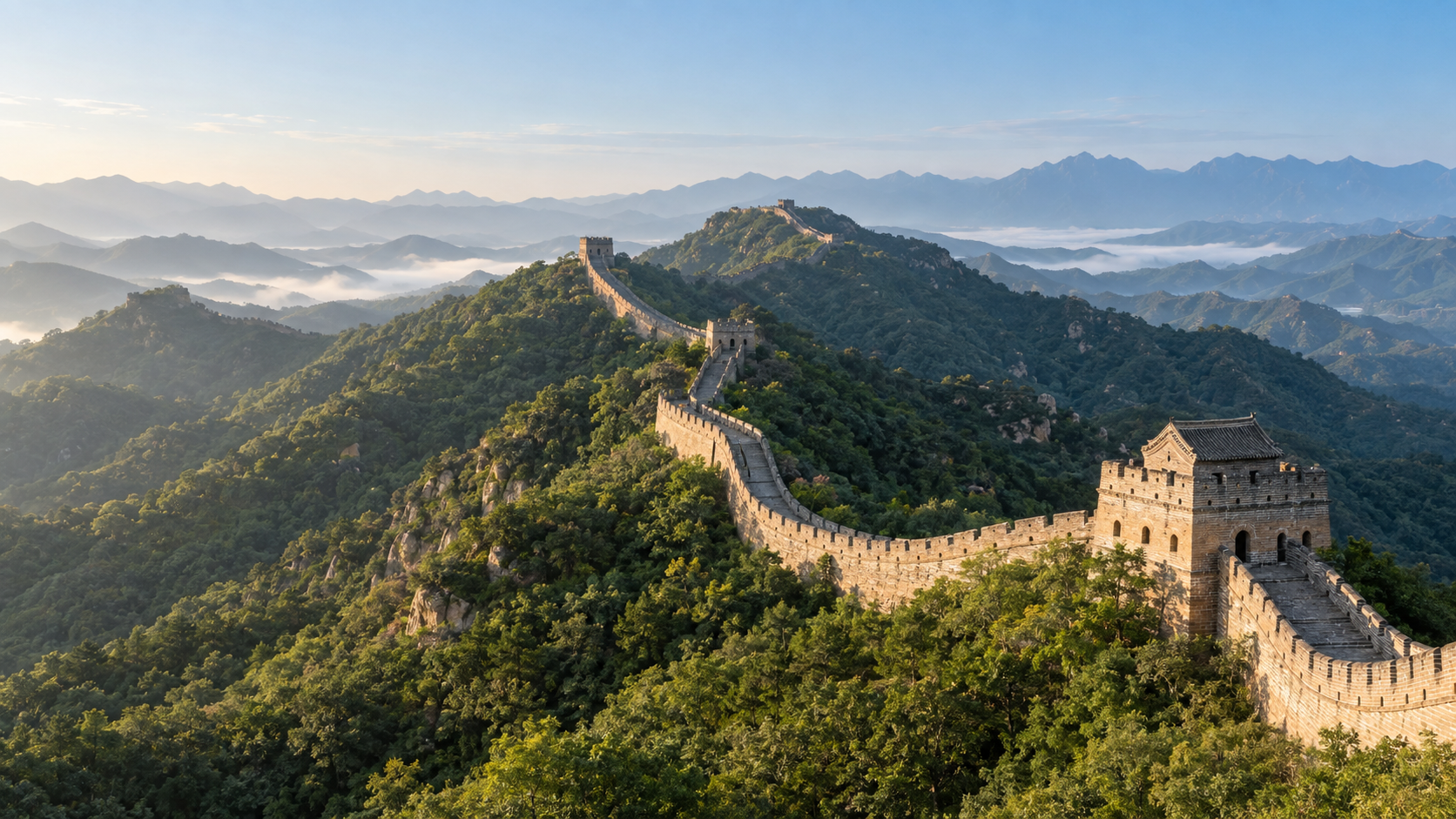
At Mutianyu, the Great Wall looks like a stone line across green mountain ridges.
远远望去,慕田峪长城仿佛一道石线,横贯青翠的山脊。
Yet it does more than follow the mountain: it turns the mountain itself into part of a defense system.
但它不只是顺山而建,更把山体本身变成了防御体系的一部分。
What makes Mutianyu special is how land and building work together.
慕田峪的特别之处,正在于地形与建筑之间紧密的关系。
The wall rises and falls with the ridge rather than cutting a straight path through it.
城墙随山脊起伏,而不是笔直地穿山而过。
Built on high ground, the wall gave soldiers wide views, while steep slopes formed a natural barrier below.
把城墙筑在高处,守军便拥有开阔视野,而下方陡坡也成为天然屏障。
It was in the Ming Dynasty that Mutianyu took the strong form we mainly see today.
慕田峪主要在明代形成了我们今天所见的坚固形制。
Work began in 1368 on older foundations, and later Ming builders strengthened this key route north of Beijing.
1368年,人们在更早的长城遗址上开始营建,此后的明代工匠又不断加固这条北京以北的要道。
The result was not only a wall, but also a network of passes, platforms, paths, and watchtowers.
最终建成的不只是一道城墙,也是一张由关隘、平台、通道和敌楼组成的网络。
The watchtowers stand unusually close: between Towers 1 and 4, four appear within less than 500 meters.
这里的敌楼分布格外密集:从1号敌楼到4号敌楼,不足500米便有四座。
Each tower gave guards a place to watch, shelter, and support nearby parts of the wall.
每座敌楼都为守军提供了新的观察、隐蔽和支援邻近城墙的位置。
Only when these parts worked together did the wall become a complete defense system.
只有这些部分彼此配合,长城才成为完整的防御体系。
Even the top of the wall shows careful planning, with battlements on both sides instead of only one.
就连墙顶也经过周密设计:两侧都设有垛口,而非只有一侧。
Together with inner and outer branch walls, this design allowed defense to respond to danger from different directions.
这种设计再配合内外支城,使防守能够应对来自不同方向的威胁。
At Zhengguan Terrace, three connected towers form one rare gate structure, built in 1404.
在正关台,三座相连的敌楼组成了罕见的关台建筑,建于1404年。
Its shape reminds us that military buildings could be practical and highly creative at the same time.
它的形制提醒我们,军事建筑也能同时兼具实用性与创造力。
Today, walking at Mutianyu means reading this old plan with your own feet.
今天,行走在慕田峪,就像用自己的脚步阅读这份古老方案。
One moment you climb long steps; the next, you cross gentler ground before the wall rises again.
前一刻,你还在攀登长长的台阶;下一刻,城墙稍稍平缓,随后又再次向上。
Because the towers are so close, the walk has a clear rhythm: effort, shelter, a new view, and then another climb.
由于敌楼相距很近,这段路便有了清晰节奏:用力攀登、进入敌楼、看见新景,再继续向上。
Over 96 percent of the scenic area is covered by plants, so forest often hides the wall and reveals it again.
景区植被覆盖率超过96%,因此森林常常先遮住城墙,又在转弯处让它重新出现。
Looking back from a higher tower, you can see how every curve answers a ridge or valley.
从更高的敌楼回望,你会看见每一道弯折都在回应山脊或山谷。
What matters is not the length you finish, but the connection you begin to notice.
重要的不是你走完了多长,而是你开始看见怎样的联系。
Stone, forest, slope, and tower are not separate sights; together, they tell one story of defense.
石墙、森林、山坡与敌楼并不是彼此分开的景物;它们共同讲述着一个关于防御的故事。
At Mutianyu, the mountain shaped the wall, and the wall now teaches us how to see the mountain.
在慕田峪,山塑造了长城,而长城也教会今天的我们如何观看这座山。