LANDSCAPE · E0037
泰山:一条写在石头上的路
Mount Tai: A Path Written in Stone
WORD BY WORD
进入逐词听读模式
顶部配图随进度轮播,未读文字为白色,读到后逐词变黄。
沿红门古道登泰山,从岱庙礼制、山中石刻、十八盘到山顶日出,读懂自然与历史如何在一条登山路上相遇。
THREE THINGS TO KNOW
- 01
泰山位于山东省中部,主峰在泰安市;1987年被列入《世界遗产名录》,同时符合文化与自然遗产标准。
- 02
泰山长期是祭祀山岳和天地的重要场所;联合国教科文组织资料记载山上有12次有历史记录的帝王祭告天地仪式。
- 03
泰山保存约1800处石碑与题刻,内容跨越多个朝代,包括祭祀记录、诗文和佛经刻文。
BILINGUAL TRANSCRIPT
双语全文
Mount Tai does more than rise above Shandong; it carries a long record of how people have understood mountains.
泰山不仅耸立在山东大地上,还承载着人们理解山岳的一段漫长记录。
Its main peak stands in Tai'an, a city in central Shandong.
它的主峰位于山东中部的泰安市。
UNESCO listed Mount Tai in 1987 for both cultural and natural value.
1987年,联合国教科文组织因泰山兼具文化与自然价值,将其列入《世界遗产名录》。
What makes the mountain special is the way natural beauty and human memory grow together.
泰山的独特之处,在于自然之美与人类记忆在这里共同生长。
For over two thousand years, rulers came here to honor Heaven and Earth.
两千多年来,帝王曾来到这里祭告天地。
UNESCO records twelve imperial ceremonies, giving the mountain an unusual place in China's history of state ritual.
联合国教科文组织记录了十二次这样的帝王仪式,使泰山在中国国家礼制史上拥有特殊地位。
At the southern foot, Dai Temple served as an important place for imperial worship and grand ceremonies.
在泰山南麓,岱庙曾是帝王祭祀和举行大典的重要场所。
The climb once joined state ceremony with personal belief.
这场攀登曾把国家典礼与个人信仰联系在一起。
Around 1,800 stone tablets and inscriptions preserve voices from many dynasties.
约1800处碑碣与题刻,保存着多个朝代留下的声音。
Some record ceremonies, while others carry poems, Buddhist texts, or words left by later visitors.
其中一些记录典礼,另一些刻着诗文、佛经,或后来游人的题词。
Rather than sitting behind glass, these words meet travelers beside cliffs, trees, and stone steps.
这些文字并非都隔着博物馆的玻璃,而是在崖壁、古树和石阶旁与旅人相遇。
By reading the mountain as they climb, visitors can see how nature became part of Chinese cultural history.
人们一边攀登,一边阅读这座山,也由此看见自然如何进入中国文化史。
The Red Gate route is the classic walking path, and it was also used by emperors in the past.
红门线路是经典徒步路线,历史上也曾是帝王登山所走的道路。
It stretches about 9.5 kilometers to Nantian Gate and includes 7,863 steps, so a steady pace matters more than speed.
从红门到南天门约9.5公里,共有7863级台阶,因此稳定的节奏比速度更重要。
Along the way, travelers pass Zhongtian Gate before facing the Eighteen Bends and Nantian Gate.
一路上,旅人先经过中天门,随后迎来十八盘和南天门。
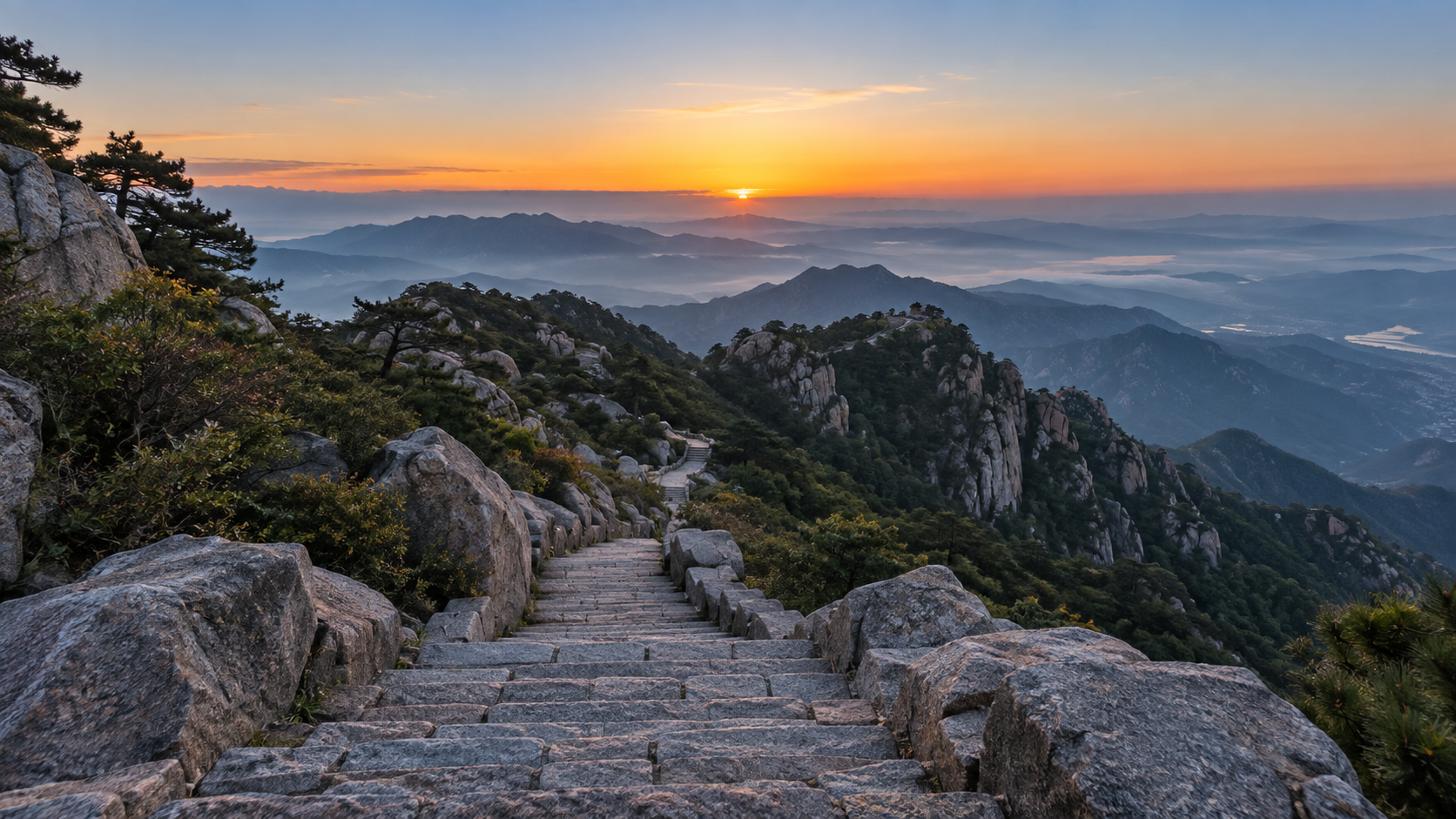
The Eighteen Bends form the steep final challenge, where the stone stairway seems to climb straight into the sky.
十八盘构成了陡峭的最后挑战,石阶仿佛直上云天。
It is there that tired legs and high stone walls make each step feel hard won.
正是在那里,疲惫的双腿和高耸的石壁,让每一步都显得来之不易。
A shorter route takes visitors by bus to Zhongtian Gate, then by cableway or on foot.
较短的路线可乘景区车到中天门,再选择索道或继续徒步。
Modern transport offers a choice, while the old path keeps its step-by-step rhythm.
现代交通提供了不同选择,而古老山路仍保留着一步一程的节奏。
At the summit, sunrise has become one of Mount Tai's best-known natural experiences.
在山顶,日出已经成为泰山最具代表性的自然体验之一。
In clear weather, the eastern sky slowly changes from darkness to white, red, and gold.
天气晴朗时,东方天幕慢慢从黑暗变成鱼肚白,再染上红色和金色。
Although the bright moment is brief, the long climb gives it weight.
虽然灿烂的一刻十分短暂,漫长的攀登却赋予了它分量。
What matters is not only the view but also the path that leads to it.
重要的不只是眼前的景色,还有通向它的那条路。
Together, nature, ancient state ritual, and words cut into stone make Mount Tai whole.
自然、古代国家礼制与刻入山石的文字,共同构成了完整的泰山。
The sun rises in minutes, yet the mountain shows how memory can be built slowly, step by step.
太阳在几分钟内升起,而泰山让人看见:记忆可以一步一步,慢慢筑成。