LANDSCAPE · E0041
庐山:一座被看见、被想象,也被生活过的山
Mount Lu: A Mountain Seen, Imagined, and Lived In
WORD BY WORD
进入逐词听读模式
顶部配图随进度轮播,未读文字为白色,读到后逐词变黄。
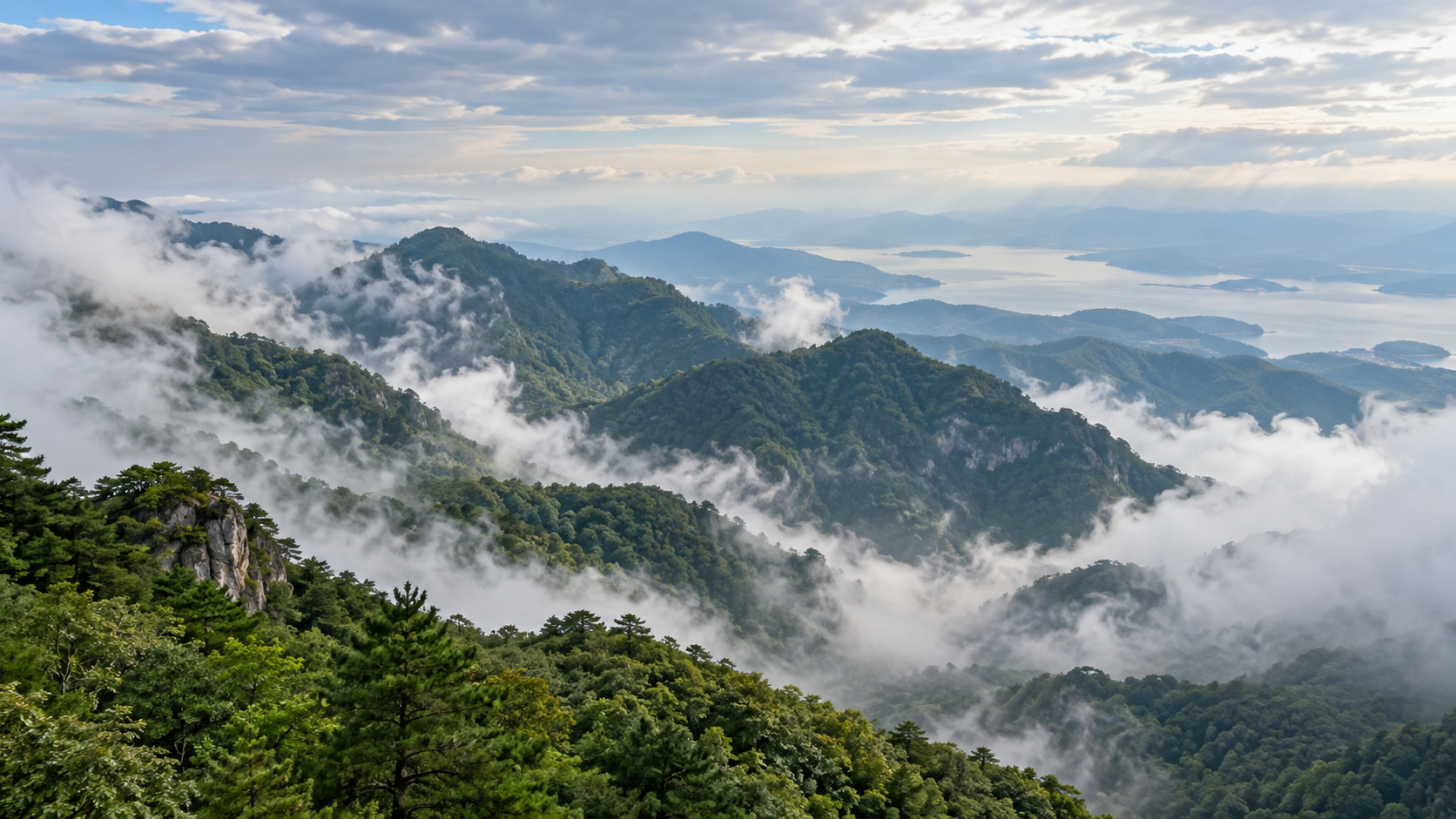
从云雾遮显山峰、李白笔下的飞瀑走到牯岭的避暑别墅,理解庐山如何把自然景观、文学想象与近现代生活连成一处文化景观。
THREE THINGS TO KNOW
- 01
庐山位于江西省九江市,1996年作为文化景观列入联合国教科文组织《世界遗产名录》。
- 02
庐山北临长江、南近鄱阳湖,最高峰大汉阳峰海拔1474米,形成大江、大湖与山岳相接的整体景观。
- 03
庐山鲜明的季风气候和山地气候会形成云海、云瀑、雾凇等天气景观。
BILINGUAL TRANSCRIPT
双语全文
Mount Lu does more than offer a beautiful view; it changes how people see and live within a mountain.
庐山不只提供一幅美景;它还改变了人们观看一座山以及在山中生活的方式。
Located in Jiujiang, Jiangxi, it became a UNESCO World Heritage cultural landscape in 1996.
庐山位于江西九江,1996年作为文化景观列入联合国教科文组织《世界遗产名录》。
The mountain rises between the Yangtze River and Poyang Lake.
庐山坐落在长江与鄱阳湖之间。
Mountain and monsoon weather create mist, cloud seas, and clouds that pour over ridges like waterfalls.
山地与季风气候形成雾、云海,以及像瀑布一样越过山脊的云瀑。
Mist hides one peak and reveals another, so the mountain never holds one fixed shape.
云雾遮住一座山峰,又显出另一座,因此庐山从来没有固定的形状。
Rather than giving visitors a single picture, this changing weather asks them to keep looking.
这种变化的天气不会只给游人一幅固定画面,而会邀请他们继续观看。
Streams bring movement, dropping from the mountain in more than twenty famous waterfalls.
溪水带来流动感,并从山间落下,形成二十多条著名瀑布。
One waterfall became unforgettable through Li Bai's poem Viewing the Waterfall at Mount Lu.
其中的瀑布景象因李白的《望庐山瀑布》而令人难忘。
Li Bai imagined the water as the Milky Way falling from heaven: poetry, not measurement.
李白把飞瀑想象成银河从天而降:这是诗意,并非测量数据。
The image turns speed, light, and distance into a feeling larger than the scene.
这一意象把速度、光线与距离化为一种超越眼前景物的感受。
For two thousand years, these views have attracted writers, artists, scholars, and spiritual teachers.
两千年来,这样的风景吸引着作家、艺术家、学者和宗教人物。
Their works made the mountain not only a natural place but also a space for cultural memory.
他们的作品让庐山不仅是一处自然空间,也成为承载文化记忆的地方。
Later, people entered this landscape by spending their summers there.
后来,人们通过在山中度过夏天,走进了这片山水。
From 1895, villas rose around Kuling as its cool climate helped turn the mountain town into a well-known summer resort.
从1895年起,一座座别墅在牯岭出现,清凉气候推动这座山城成为知名避暑地。
Around six hundred villas built by Chinese and foreign visitors remain part of Mount Lu's heritage.
由中外人士修建的约600座别墅,如今仍是庐山遗产的一部分。
They show different architectural fashions, yet many were planned to fit the slopes and trees around them.
这些别墅呈现不同建筑风格,同时又被规划得与周围山坡和树林相协调。
By fitting houses into the mountain landscape, builders turned a summer escape into a place where cultures could meet.
通过让房屋融入山地景观,建设者使避暑空间也成为文化相遇的地方。
The villas therefore tell a modern story of exchange, rather than serving only as attractive backgrounds for photographs.
因此,这些别墅讲述着近代文化交流的故事,而不只是照片里好看的背景。
It is this shared space of weather, words, and buildings that makes Mount Lu a cultural landscape.
正是天气、文字与建筑共享的这片空间,使庐山成为一处文化景观。
Mist teaches the eye to accept change, poetry carries a waterfall beyond its valley, and houses make cool air part of daily life.
云雾让眼睛接受变化,诗歌把瀑布带出山谷,房屋又让清凉空气进入日常生活。
Each layer grows from the same mountain, while each generation gives the mountain a new meaning.
每一层故事都生长于同一座山,而每一代人又赋予这座山新的意义。
Only when waterfalls, forests, poems, and villas are protected together can that long conversation continue.
只有共同保护瀑布、森林、诗篇与别墅,这场跨越时间的对话才能继续。
On Mount Lu, a cloud opens, water flashes below, and a roof appears among the trees.
在庐山,云层散开,水光在下方闪动,一处屋顶从树间显现。
The mountain is still being seen, imagined, and lived in, one changing view at a time.
人们仍在一次次变化的景色中,看见庐山、想象庐山,也在庐山生活。