LANDSCAPE · E0054
壶口瀑布:被窄口塑形的黄河
Hukou Waterfall: A River Shaped by Its Narrow Mouth
WORD BY WORD
进入逐词听读模式
顶部配图随进度轮播,未读文字为白色,读到后逐词变黄。
从三四百米宽的河面到五十多米石槽,沿桃花汛、岩层侵蚀和水沙生境理解壶口的力量与边界。
THREE THINGS TO KNOW
- 01
壶口瀑布位于黄河晋陕大峡谷,处在山西省吉县与陕西省宜川县交界处。
- 02
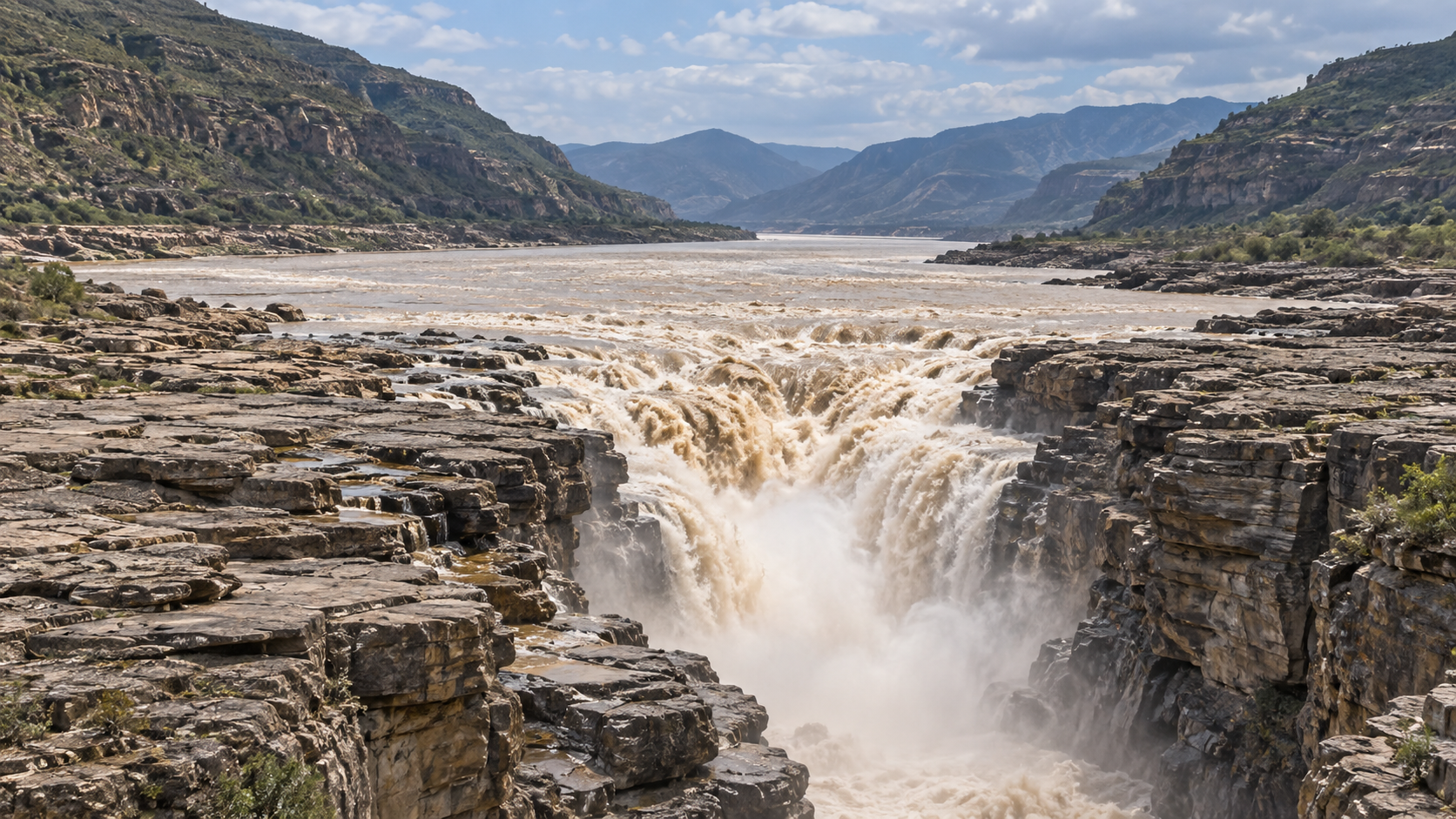
壶口处黄河水面由约三四百米宽骤然收缩为五十多米,跌入三十多米深的石槽,因形似巨壶注水而得名。
- 03
桃花汛通常在每年三月下旬至四月上旬出现,由黄河上游冰凌消融形成春汛,且与沿岸山桃花盛开相遇。
BILINGUAL TRANSCRIPT
双语全文
Hukou Waterfall begins with a question: what happens when a wide river suddenly meets a narrow mouth?
壶口瀑布可以从一个问题开始:当一条宽阔的河流突然遇到一个窄口,会发生什么?
It lies on the Yellow River in the Jin-Shaan Gorge, between Ji County in Shanxi and Yichuan County in Shaanxi.
它位于晋陕大峡谷,处在山西吉县与陕西宜川县交界的黄河上。
Before the fall, the Yellow River is about three to four hundred meters wide.
瀑布上游,黄河水面约有三四百米宽。
Then it narrows to more than fifty meters and drops into a stone slot over thirty meters deep.
接着,水面收紧到五十多米,跌入三十多米深的石槽。
From above, the squeeze looks like water poured into a giant kettle, which explains the name Hukou, or “kettle mouth.”
从上方看,这种收束像把水倒进一只巨大的壶里,这也解释了“壶口”这个名字。
The river does not simply fall; the canyon concentrates its power.
河流不只是向下跌落;峡谷让它的力量集中起来。
The second key is season: the same stone mouth changes with the water.
第二个关键词是季节:同一个石口会随着水量变化。
From late March to early April, ice upstream melts and sends a spring flood downstream.
每年三月下旬到四月上旬,上游冰凌消融,春汛向下游推进。
When it meets the mountain peach blossoms, people call this event the Peach Blossom Flood.
当这股水流遇上沿岸山桃花开放,人们把这场春汛称为“桃花汛”。
The name joins river and season: flowers mark the time, and water carries change.
这个名字把河流过程和季节画面连在一起:花朵标记时间,水流带来变化。
The banks are part of the story too.
岩岸也是故事的一部分。
A geological study describes sandstone and mudstone layers, with harder and softer rock side by side.
一项地质研究描述,瀑布附近有砂岩和泥岩层,较硬与较软的岩石彼此相邻。
Water can wear the softer layer first; unsupported blocks of harder rock may break away.
水流可能先磨蚀较软的岩层;失去支撑后,较硬的岩块可能崩落。
The edge is not a permanent frame; the river slowly redraws it.
所以岩石边缘不是永久的画框;河流正在慢慢重新描画它。
New research treats Hukou as a moving step, using old channels and river terraces to trace its change over time.
新研究把壶口看作河流中一个会移动的台阶,用古河道和河流阶地追踪它在漫长时期里的变化。
Its exact origin is debated: one study points to fault movement and erosion, while a newer study points to a sudden drop in the river's base level.
它究竟如何形成仍有讨论:一项研究强调断层运动和侵蚀,较新的研究则指向河流基准面突然下降。
We do not need to settle that debate to see the lesson.
我们不必先解决这场争论,才能看见其中的道理。
A waterfall is made by water, but its shape also depends on rock, river sand, and time.
瀑布由水塑造,但它的形状也取决于岩石、河沙和时间。
The river is a habitat too: an official assessment describes fast canyon water, slower broad-valley water, and fish species.
这条河同时也是生境:官方评估描述了峡谷急流和宽谷缓流,鱼类在其中生活。
Caring for Hukou means caring for water flow, river sand, and life in the water.
因此,保护壶口也意味着把水流、河沙和水中的生命放在一起考虑。
At Hukou, the memorable image is a wide river learning the shape of a narrow stone mouth.
在壶口,最难忘的画面不是一座孤立的瀑布,而是一条宽河学会了窄石口的形状。
Water changes with the seasons, rock with erosion, and our understanding with new evidence.
水随季节变化,岩石随侵蚀变化,而我们的理解也会随新证据变化。
A strong view should leave room for safety and the river's own force.
面对这样的河流,观景也要留出安全、安静和尊重力量的空间。
That is Hukou's power: the river shows both its voice and its boundary.
这就是壶口的力量:河流同时展示自己的声音与边界。