LANDSCAPE · E0039
西湖:一幅被共同守护的风景
West Lake: A Landscape Kept Alive
WORD BY WORD
进入逐词听读模式
顶部配图随进度轮播,未读文字为白色,读到后逐词变黄。
从疏浚治水、苏堤与西湖十景,到生态保护和环湖公园免费开放,读懂西湖怎样成为人人可以走进的文化景观。
THREE THINGS TO KNOW
- 01
杭州西湖文化景观于2011年列入《世界遗产名录》,其突出价值在于展示人工营造与自然环境相结合的文化景观传统。
- 02
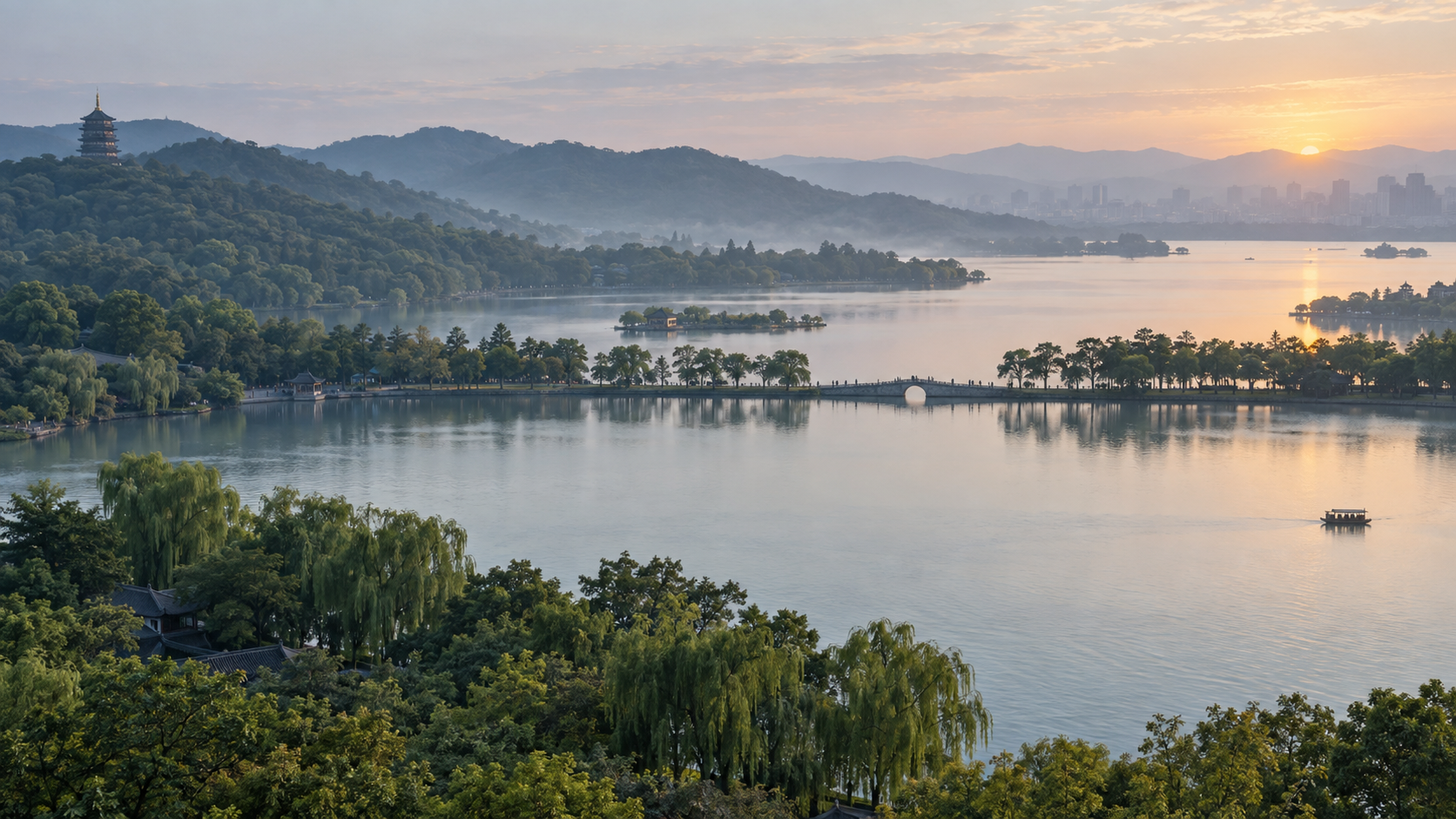
西湖三面环山、一面临杭州城,堤、岛、桥、寺塔、园林和观赏植物共同构成整体景观。
- 03
西湖两条主要堤道和三座人工岛等主要人工要素,来自公元9至12世纪间的多次疏浚。
BILINGUAL TRANSCRIPT
双语全文
West Lake is more than a natural lake; generations have kept this landscape alive, shaped, and shared.
西湖不只是一座天然湖泊;它是一片由世代人们维护、塑造并共享的风景。
UNESCO listed it in 2011 as a cultural landscape where human work and natural beauty meet.
2011年,联合国教科文组织将其作为文化景观列入《世界遗产名录》,因为人的营造与自然之美在这里融为一体。
Hills hold the lake on three sides, while Hangzhou opens along the fourth.
湖的三面被群山环抱,第四面则向杭州城展开。
What makes this view special is not untouched nature, but a long relationship between water, design, and daily life.
这片景色的独特之处,不是未经触碰的自然,而是水、设计与日常生活之间的长久关系。
Between the ninth and twelfth centuries, repeated mud clearing created two raised paths and three islands.
在9世纪至12世纪之间,人们多次清理湖底淤泥,形成了两条堤道和三座人工岛。
In 1090, Su Shi cleared mud from the lake to improve water storage and flood control.
1090年苏轼治理杭州时,他疏浚湖中淤泥,以改善蓄水和泄洪。
The removed earth became Su Causeway, a long path crossing the water from north to south.
清出的淤泥筑成了苏堤,这条长堤从北向南穿过湖面。
By solving a practical problem, people also drew a graceful line across the lake.
在解决实际问题的同时,人们也在湖面上画出了一道优美的线。
Causeways divide the water, islands add depth, and bridges open one view after another.
堤道划分水面,岛屿增添层次,桥梁则打开一幅又一幅景色。
Pagodas, pavilions, gardens, and carefully planted trees complete this large landscape garden.
宝塔、亭阁、园林与精心栽植的花木,共同完成了这座大型山水园林。
Yet design alone cannot explain West Lake's strong place in Chinese memory.
然而,单靠景观设计还不足以解释西湖为何在中国人的记忆里占据重要位置。
Since the ninth century, poets, scholars, and artists have used the lake to turn scenery into feeling.
自9世纪以来,诗人、学者和艺术家借西湖把眼前风景化为心中情感。
From the Southern Song period, ten poetically named views taught visitors where, when, and how to look.
从南宋时期开始,十个诗意题名的景目引导人们在何处、何时以及如何观看。
Spring Dawn at Su Causeway invites morning light, while Lingering Snow on Broken Bridge reveals winter's last white trace.
“苏堤春晓”邀请人们观看晨光,而“断桥残雪”让人留意冬日最后一抹白色。
These names do more than label places; they frame each scene like a painting.
这些名字不只是标记地点,还像画框一样组织每一幅景色。
Because the scene changes with weather and season, the same path never tells exactly the same story twice.
由于景色随天气与季节变化,同一条路从不会两次讲出完全相同的故事。
This way of designing and naming views later influenced gardens across China, Japan, and Korea.
这种设计并命名景观的方式,后来影响了中国各地以及日本和韩国的园林。
Today, protecting West Lake means caring for water, plants, old structures, and the views between them.
今天,保护西湖仍意味着照料水体、植物、古迹,以及它们彼此之间的景观视线。
Local rules control nearby building height, while monitoring and ecological repair help protect the lake itself.
地方规则控制周边建筑高度,监测与生态修复则帮助保护湖体本身。
Since October 2003, all lakeside parks have been open without entrance fees.
自2003年10月以来,环湖所有公园都已免费开放。
Rather than sitting behind a gate, this heritage belongs to walkers, runners, families, and visitors.
这份遗产没有被关在门后,而是属于散步者、跑步者、家庭与远道而来的游客。
What links dredging, poetry, garden design, and free access is one choice: beauty must be cared for and shared.
连接疏浚、诗歌、园林设计与免费开放的,是同一个选择:美需要被照料,也需要被分享。
At dusk, a runner crosses Su Causeway as Leifeng Pagoda catches the last light and willows move beside the water.
黄昏时,一名跑者穿过苏堤,雷峰塔接住最后一束光,湖边柳枝随风轻动。
In that moment, West Lake is both a painting people can enter and a living place they help keep alive.
就在那一刻,西湖既是一幅人们可以走进去的画,也是一个由人们共同守护的生活空间。