CITY NOTES · E0031
海口:屋檐下的城市生活
Haikou: Life Under the Arcades
WORD BY WORD
进入逐词听读模式
顶部配图随进度轮播,未读文字为白色,读到后逐词变黄。
用约三分钟英语认识海口:从南渡江入海口和热带风雨走进骑楼连廊,看华侨往来、街市商业与老爸茶如何在同一片屋檐下形成城市日常。
THREE THINGS TO KNOW
- 01
Haikou stands on the north of Hainan Island, west of the Nandu River's mouth, and its name refers to this position at the sea entrance.
- 02
Haikou has a tropical marine climate, with strong heat and rain in summer and typhoons or heavy rain more common in autumn.
- 03
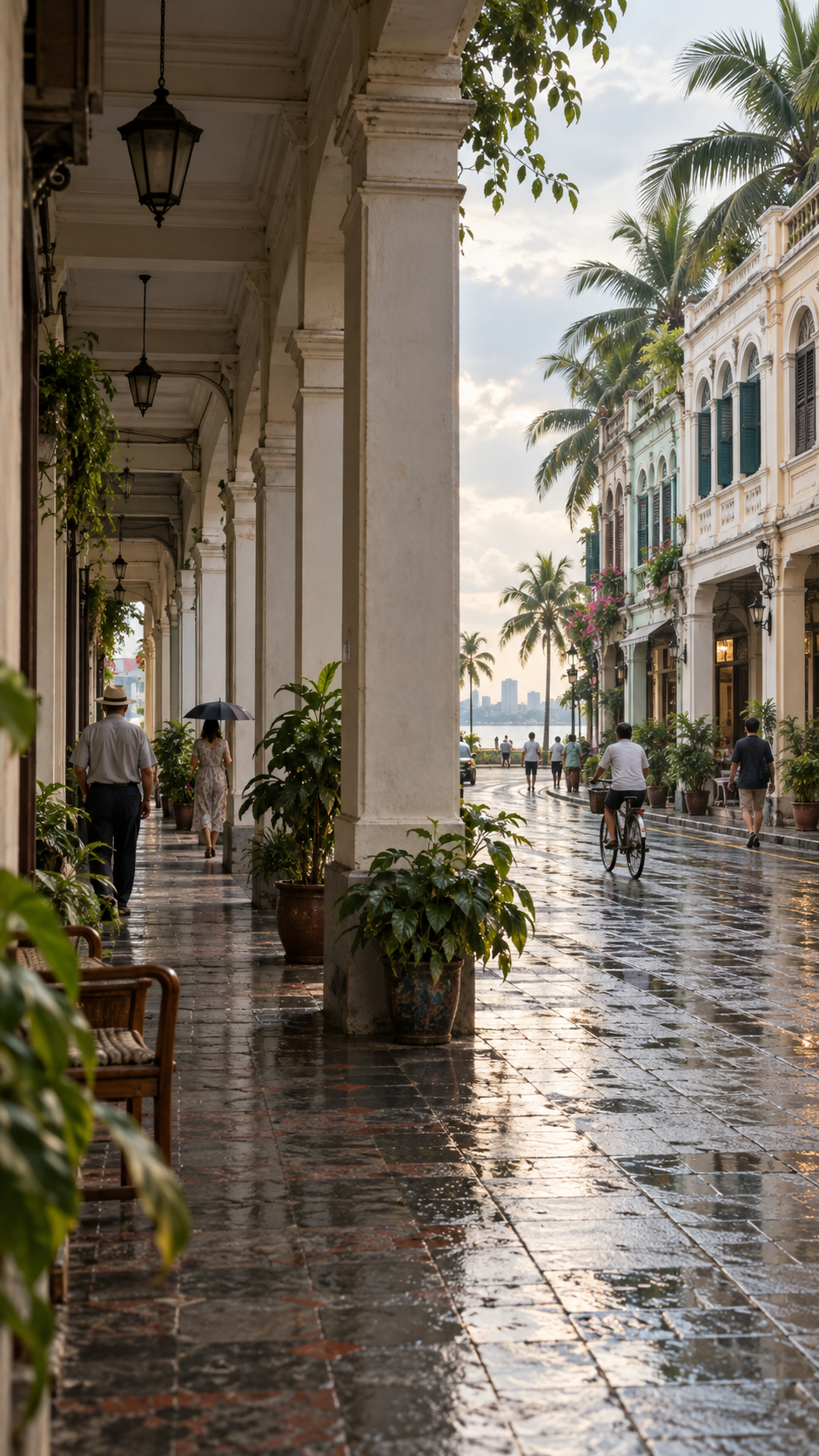
A qilou is an arcade building whose upper floor extends over the street and rests on pillars, creating a covered public walkway.
BILINGUAL TRANSCRIPT
双语全文
In Haikou, you can walk beneath a roof without entering a building.
在海口,你不用走进建筑,也能一直走在屋檐下。
This simple experience opens a path into the city's climate, history, business, and daily life.
这种简单的体验,打开了一条通往城市气候、历史、商业与日常生活的路径。
Haikou stands on northern Hainan, west of the Nandu River's mouth; its name comes from this entrance to the sea.
海口位于海南岛北部、南渡江入海口西侧,它的名字正来自这处通向海洋的入口。
With hot, rainy summers and stormy autumn weather, the tropical city needs both air and shelter.
面对炎热多雨的夏季和常有风雨的秋季,这座热带城市既需要通风,也需要遮蔽。
Climate does more than change what people wear; it shapes the street itself.
气候改变的不只是人们的穿着,也塑造了街道本身。
A qilou is an arcade building whose upper floor reaches over the pavement and rests on pillars.
骑楼是一种外廊式建筑,它的楼上部分伸过人行道,由立柱支撑。
Below it, a covered walkway lets people move between shops while avoiding strong sun and sudden rain.
下方的连廊让人们在商铺之间穿行,同时避开烈日与骤雨。
Neither fully indoors nor outdoors, the arcade turns private buildings into part of a shared street.
连廊既不完全属于室内,也不完全属于室外,它让私人建筑成为公共街道的一部分。
Yet weather alone cannot explain why Haikou has more than six hundred of these buildings.
然而,单靠天气无法解释海口为何拥有六百多座这样的建筑。
Most were built by Hainanese who had lived overseas and later invested their savings back home.
其中多数由曾在海外生活、后来把积蓄带回家乡的海南华侨建设。
Returning from Southeast Asia, they brought building ideas, business links, and new habits of drinking tea.
他们从东南亚归来,也带回建筑观念、商业联系和新的饮茶习惯。
Rather than copying one foreign style, Haikou mixed outside experience with local weather and Chinese ways of living.
海口没有照搬某一种外国风格,而是把外来经验与本地气候、中国人的生活方式结合起来。
What makes the qilou special is not its decoration alone, but the useful shade that holds city life together.
骑楼的特别之处不只在装饰,更在那片把城市生活连在一起的实用阴凉。
Under the same roof, goods could be sold, news exchanged, and journeys across the sea remembered.
在同一片屋檐下,人们可以买卖货物、交换消息,也能回忆跨海远行。
The old district still runs through Deshengsha, Bo'ai, Zhongshan, Xinhua, and Changdi roads.
这片老街区至今仍贯穿得胜沙、博爱、中山、新华和长堤等道路。
Its public role becomes clearest at a laoba tea table.
骑楼的公共作用,在一张老爸茶桌旁显得格外清楚。
Laoba tea combines a simple drink with many snacks, but conversation is often the main course.
老爸茶把一杯普通茶与多种点心放在一起,但交谈往往才是主角。
People talk about family, work, and neighborhood news, making the tea shop an everyday meeting room.
人们谈家庭、工作和街坊消息,让茶店成为日常的会客厅。
The custom entered Hainan's provincial intangible cultural heritage list in 2024, but its strength comes from ordinary repetition.
这项习俗于2024年列入海南省级非物质文化遗产名录,但它的生命力来自日复一日的普通相聚。
By sharing time rather than seeking speed, tea drinkers keep a habit shaped by overseas journeys alive today.
饮茶人共享时间、不求匆忙,让一项由跨海远行塑造的习惯延续至今。
Haikou's protection plan gives historic districts a leading place, with the old arcades among its main concerns.
海口的保护规划把历史街区放在重要位置,骑楼老街正是重点之一。
What matters is not freezing the street in time, but keeping its shade useful for shops, tea, and footsteps.
重要的不是把老街冻结在过去,而是让它的阴凉继续服务商铺、茶桌与行人的脚步。
When rain strikes the road, people move closer under the arcade, cups steam, and conversation continues.
当雨点打在路面上,人们向骑楼深处靠近,茶杯升起热气,谈话仍在继续。
That is Haikou under the eaves: a city where climate, sea journeys, business, and friendship meet in one shared space.
这就是屋檐下的海口:气候、跨海远行、商业与友情在一片共享空间里相遇。