CITY NOTES · E0006
广州:当商贸成为待客之道
Guangzhou: Where Trade Meets the Tea Table
WORD BY WORD
进入逐词听读模式
顶部配图随进度轮播,未读文字为白色,读到后逐词变黄。
用约三分钟英语理解广州最鲜明的城市性格:珠江与海贸塑造的开放传统,如何落在早茶、骑楼、粤语、粤剧和今天的商贸往来中。
THREE THINGS TO KNOW
- 01
Guangzhou has served as a major maritime trading port for more than two thousand years, and official city histories connect the Pearl River with its long commercial identity.
- 02
Guangzhou's 2026 regulation defines morning tea as tea paired with Cantonese dim sum, combining Lingnan food culture, social customs and traditional craft.
- 03
Guangzhou qilou buildings combine shops below and homes above, while their covered walkways provide shade and shelter from rain.
BILINGUAL TRANSCRIPT
双语全文
Welcome to Guangzhou, where an open mind is often expressed through a cup of tea before words are needed.
欢迎来到广州。在这里,开放的心态常常先通过一杯茶表达出来,甚至不必急着开口。
Its story begins beside the Pearl River, which connects the city to the South China Sea and distant ports.
广州的故事从珠江边开始,这条河把城市连接到南海与远方港口。
For over two thousand years, ships brought goods, travelers, languages, and new ideas through this southern port.
两千多年来,船只把货物、旅人、语言和新的观念带进这座南方港口。
Trade did more than make the port prosperous; it taught Guangzhou to meet new people without losing its own voice.
商贸不只让港口繁荣,也让广州学会与新的人群相遇,同时保留自己的声音。
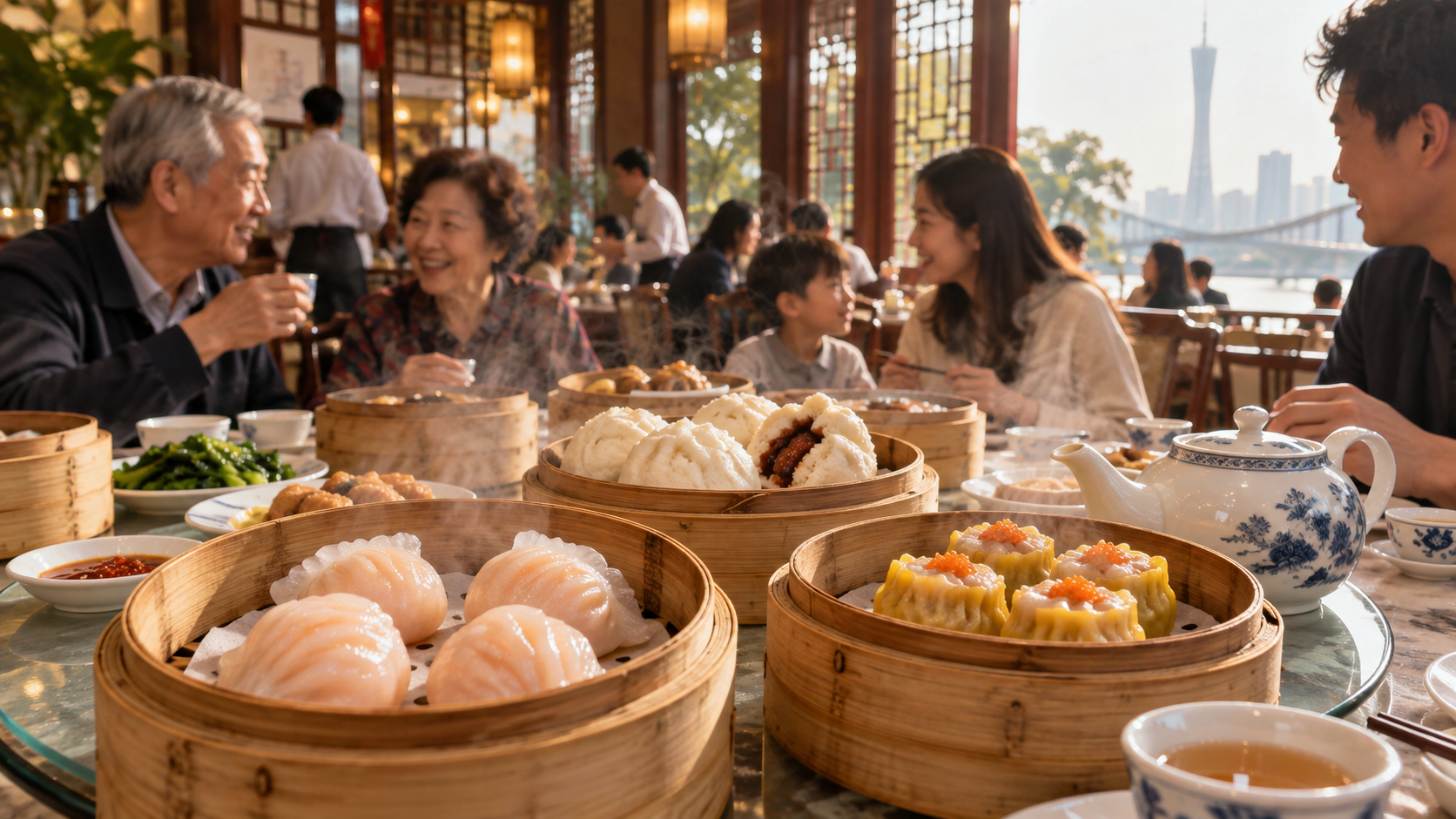
That character becomes clear at morning tea, known in Cantonese as yum cha.
这种城市性格,在早茶桌上最为清楚;粤语把饮早茶称作 yum cha。
It is rarely a quick breakfast; it is time for family, friends, news, and sometimes business.
早茶很少是一顿匆忙的早餐,它为家人、朋友、消息交流,有时也为生意留出时间。
Tea is poured again while bamboo baskets of shrimp dumplings, rice rolls, and buns are shared by everyone.
茶水一次次续上,装着虾饺、肠粉和包点的竹蒸笼则由大家一起分享。
A local rule from 2026 describes this mix of food, social life, and cooking skills as a living tradition.
2026年施行的一项地方规定,把饮食、社交生活与制作技艺的结合,视为仍在生活中的传统。
What matters is not keeping one menu unchanged, but protecting the people, skills, and warm ties around the table.
重要的不是让一张菜单永远不变,而是保护餐桌周围的人、手艺和温暖关系。
Outside the teahouse, Guangzhou's old qilou streets continue the story through buildings.
走出茶楼,广州老城的骑楼街又会通过建筑继续讲述这个故事。
Shops stand below homes, while a long covered walkway protects people from hot sun and sudden rain.
商铺位于住宅下方,长长的廊道则替行人挡住烈日和突如其来的雨。
What makes the qilou special is how it turns a foreign design into something useful, friendly, and local.
骑楼的特别之处,在于它能把外来的设计转化成实用、亲切而又本地化的生活。
Cantonese gives the city another strong mark in markets, dining rooms, family jokes, songs, and stages.
粤语又为这座城市留下鲜明印记:市场、餐厅、家庭玩笑、歌曲和舞台上,都能听见它。
In Cantonese opera, the language meets strings, drums, gongs, traditional costumes, painted faces, singing, acting, and fighting moves.
在粤剧中,粤语与弦乐、锣鼓、传统戏服、脸谱、唱念表演和武打身段相遇。
UNESCO calls this art an important link among Cantonese-speaking people in different parts of the world.
联合国教科文组织把这门艺术视为连接世界各地粤语人群的重要纽带。
The same trading tradition continues at the Canton Fair, held in Guangzhou every spring and autumn since 1957.
同一种商贸传统也延续在广交会上;自1957年以来,它每年春秋两季都在广州举行。
Seen in 2026, new products and visitors keep arriving, but Guangzhou's habit of exchange is much older than the fair.
从2026年观察,新产品和新访客仍不断到来,但广州交流互通的习惯,远比广交会本身古老。
At dawn, steam rises from bamboo baskets; by noon, trade moves under qilou; at night, river lights travel toward the sea.
清晨,热气从竹蒸笼升起;中午,生意在骑楼下流动;夜晚,珠江灯火向大海延伸。
What links these scenes is one idea: make room for different people, keep talking, and turn each meeting into a lasting relationship.
这些场景由同一种观念连接起来:为不同的人留出空间,让交谈继续,并把每次相遇变成长久关系。
Guangzhou's open mind is more than an empty saying; it can be heard in Cantonese, seen under a qilou, and tasted from a shared plate.
广州的开放不只是一句空话;它能从粤语里听见,能在骑楼下看见,也能从共享的小碟中尝到。
In Guangzhou, welcoming the world can begin with the simplest act: sit down, pour the tea, and share the table.
在广州,欢迎世界可以从最简单的行动开始:坐下来,斟上茶,一起分享这张餐桌。