LANDSCAPE · E0058
贡嘎山:有观看边界的垂直生态系统
Gongga Mountain: A Vertical Ecosystem with a Viewing Edge
WORD BY WORD
进入逐词听读模式
顶部配图随进度轮播,未读文字为白色,读到后逐词变黄。
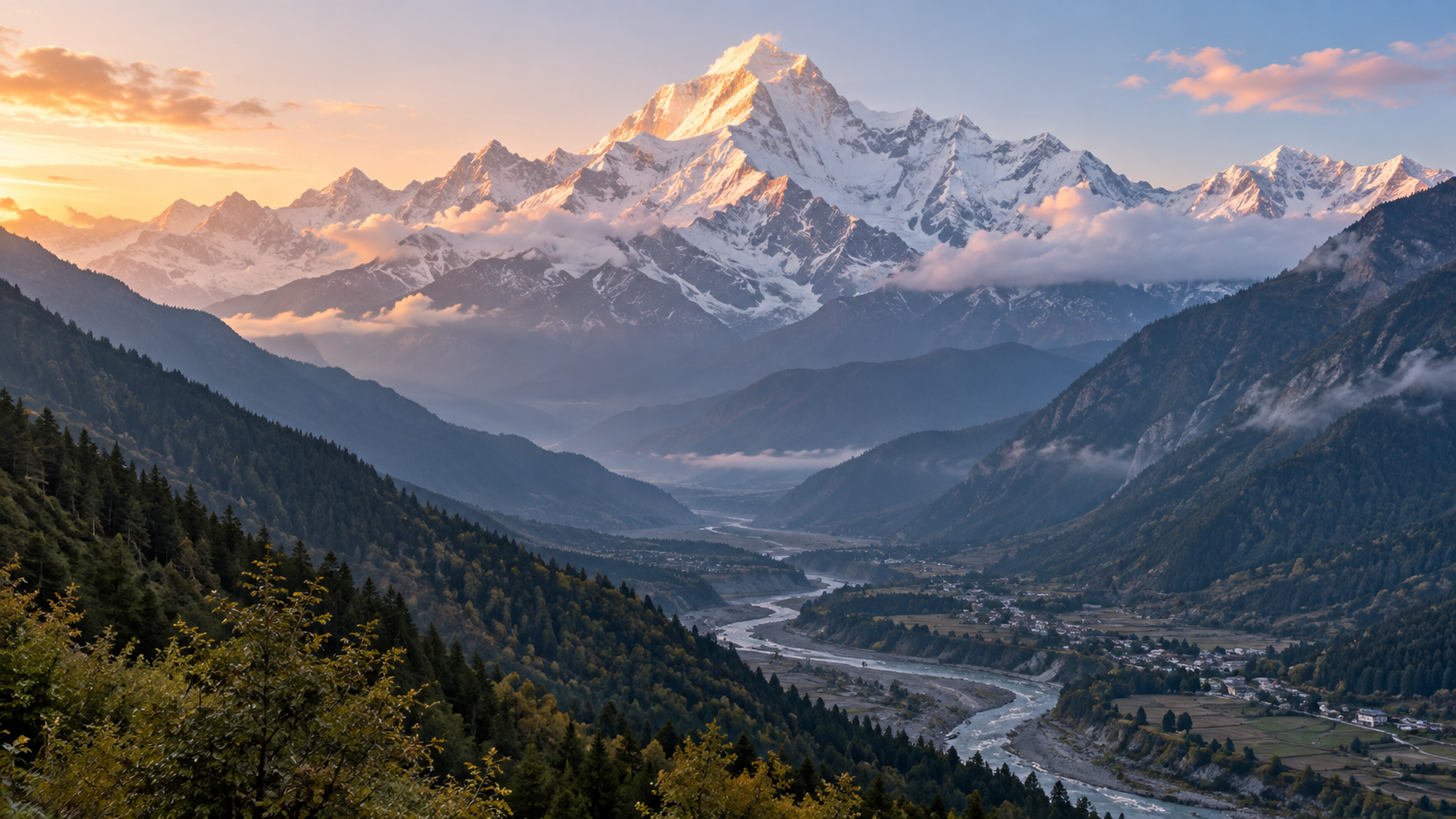
从7508.9米的现行官方高程和极大峰谷高差走进海螺沟冰川、冰川水、长期监测与峡谷村落,理解贡嘎山为何需要有边界的观看。
THREE THINGS TO KNOW
- 01
自然资源部公布并经国务院批准的贡嘎山等山峰高程数据中,贡嘎山主峰现行官方高程为7508.9米;该口径用于行政管理、新闻宣传、对外交流和教学科研。
- 02
贡嘎山主峰附近约30公里范围内的局地峰谷相对高差超过6500米,形成显著的高山垂直梯度。
- 03
东坡海螺沟冰川在一项科学调查中长约13.1公里、面积约25.71平方公里,并呈现从积累区、冰瀑到消融区的高山冰川分段。
BILINGUAL TRANSCRIPT
双语全文
-
See Gongga Mountain as a vertical journey, rather than a single white peak.
请把贡嘎山看成一次垂直旅程,而不是一座孤立的白色山峰。
-
Its current official elevation is 7,508.9 meters.
目前官方公布的主峰高程是7508.9米。
-
Within about 30 kilometers, relief from peak to valley exceeds 6,500 meters.
从主峰到附近的深切河谷,约30公里范围内的相对高差超过6500米。
-
This sharp relief stacks snow, ice, forest, river, and valley villages along one slope.
这种陡峭的起伏,把积雪、冰川、森林、河流和峡谷村落叠在同一条生态坡面上。
-
Gongga's identity comes not only from height, but from the differences it creates.
所以,贡嘎山的辨识度不只来自高度,也来自高度制造的差异。
-
On the eastern slope, Hailuogou Glacier is about 13.1 kilometers long and covers about 25.71 square kilometers in one inventory.
在东坡,一份科学调查测得海螺沟冰川长约13.1公里,面积约25.71平方公里。
-
It is a monsoonal temperate glacier, and parts of its surface are covered by rock debris.
它是一条受季风影响的温冰川,部分表面覆盖着岩石碎屑。
-
Ice reaches a forested valley, making frozen water and living ground easy to compare.
冰体一路伸向有森林的河谷,让冰冻的水与有生命的土地之间的边界清晰可见。
-
Hailuogou meltwater feeds the Moxi River, which joins the Dadu and Yangtze systems.
海螺沟冰川的融水是磨西河的重要水源,磨西河再汇入大渡河水系,最终进入长江水系。
-
A glacier, therefore, is more than a white view; it is also a record of change.
因此,冰川不只是一片白色风景,也是变化的记录。
-
An official Sichuan assessment says the reserve lost about 38.94 square kilometers of glacier area from 1990 to 2020, or 14.4 percent of its 1990 area.
四川官方评估报告指出,1990年至2020年,贡嘎山国家级自然保护区冰川面积减少约38.94平方公里,约占1990年面积的14.4%。
-
When ice retreats, it leaves moraine, a rough mix of stones and soil.
当冰川退缩,它会留下冰碛物,也就是由石块和土壤组成的粗糙地面。
-
Over time, this ground can support plant succession, from bare land toward fir forest.
随着时间推移,这种地面可以支持植物演替,从裸地逐步走向冷杉林。
-
The mountain shows not only retreat, but the slow rebuilding of living ground.
这座山展示的不只是退缩,也展示着一片有生命的地表如何慢慢重建。
-
Since 1987, a Hailuogou research station has watched climate, glaciers, water, forests, soil, and mountain hazards.
自1987年以来,海螺沟的一个研究站持续观测气候、冰川、水、森林、土壤和山地灾害。
-
Its long record makes the mountain an open classroom for links between ice, water, and ecology.
它的长期记录让这座山成为观察冰、水与生态联系的开放课堂。
-
Local plans place the towns of Moxi and Yanzigou, villages, and nature protection in one eastern landscape.
在东侧峡谷,当地规划把磨西镇、燕子沟镇、村落和自然保护放在同一幅景观中。
-
A village is not decoration; it is part of the boundary between daily life and a protected ecosystem.
村落不是山脚的一件装饰品,而是日常生活与受保护生态系统之间边界的一部分。
-
For visitors, the useful lesson is to read the mountain in layers.
对游客来说,一个有用的启示是分层阅读这座山。
-
At Hailuogou, ordinary visitor activity stays roughly between 1,680 and 3,550 meters, while the main peak area is uninhabited and beyond sightseeing.
在海螺沟,普通游客活动大致集中在1680米到3550米之间,而主峰区域无人居住,也不属于普通观光范围。
-
The more carefully we respect that edge, the more clearly ice, water, and forest can speak.
我们越认真尊重这条边界,就越能从冰、水和森林中听清山的声音。
-
A good view does more than bring the summit closer; it shows where our approach should stop.
好的观看不只是把山顶拉得更近,也会告诉我们应该在哪里停下接近的脚步。
-
What matters is not every height, but how the heights depend on one another.
重要的不是站到每一个高度,而是理解这些高度如何彼此依存。
-
Gongga is a vertical ecosystem: glacier above, village below, and respectful distance between them.
贡嘎山留给我们的,是一个垂直生态系统:上方是冰川,下方有村落,中间留着一段尊重的距离。